
- Plastic Surgery
Congenital Symmastia: What is it? What is the Treatment?
- July 20, 2025
- By Fernando Amato
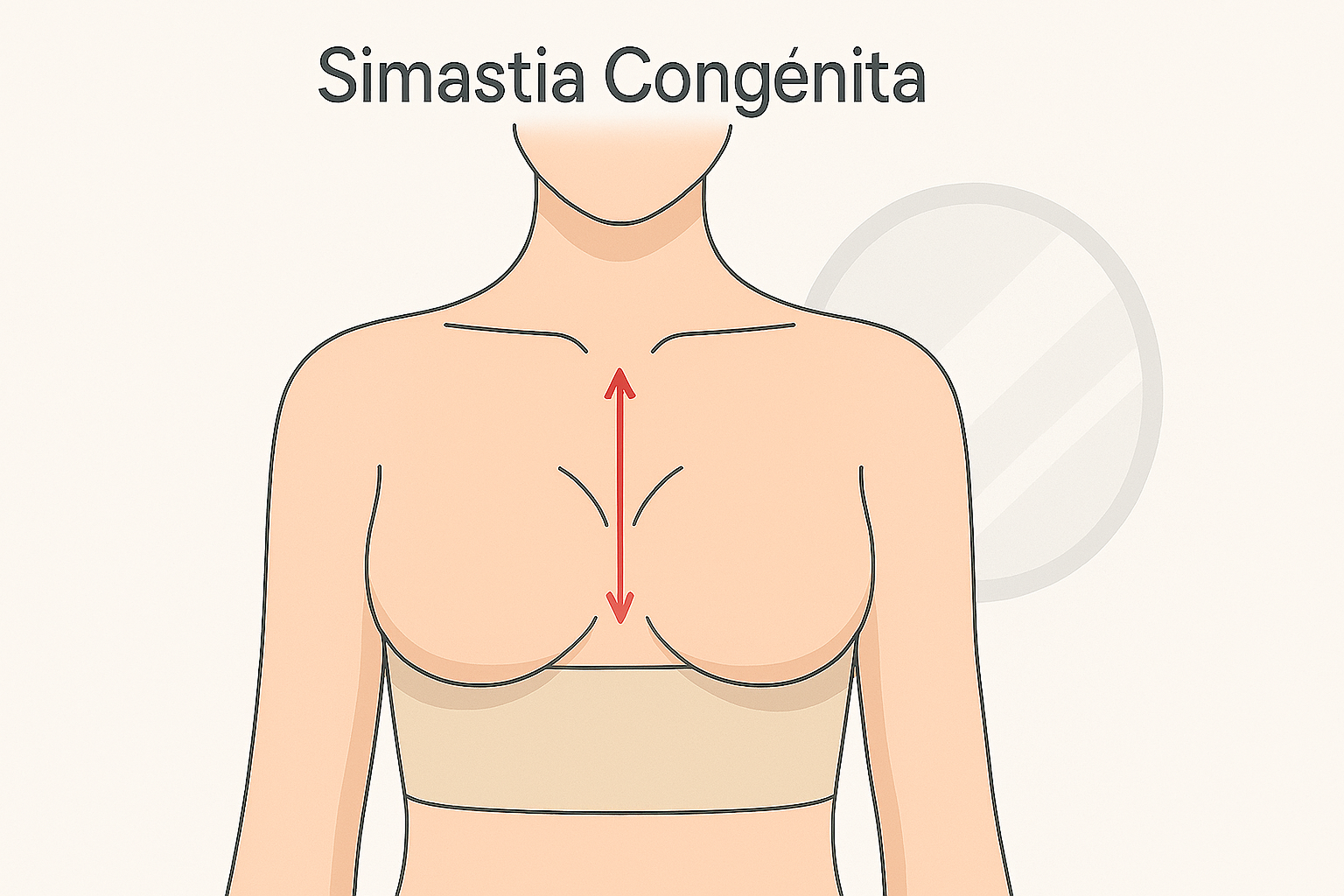
Congenital symmastia is a rare and little-known condition, characterized by the abnormal union of the breasts in the center of the chest, usually present from birth. This condition can thus cause aesthetic and emotional discomfort, especially in women, and frequently leads to seeking corrective surgical treatment.
Although better known in cases resulting from complications after surgeries with implants, symmastia can also be congenital, meaning it arises without any prior medical intervention. Correct diagnosis and therapeutic planning, however, are fundamental to ensure satisfactory results and preserve the patient's self-esteem.
Thus, in this article, we will thoroughly clarify what congenital symmastia is, its causes, when to seek medical help, and what the treatment options are, with an emphasis on reconstructive plastic surgery.
📝
Article Highlights
🔍 Understand what congenital symmastia is and why it happens
👶 Discover how this condition can arise from birth
🏥 See how the diagnosis is made and when to seek a specialist
🔪 Learn all about surgical treatment and what to expect from recovery
📌 Important information for those considering aesthetic correction
What is Congenital Symmastia?
Symmastia, therefore, is the condition in which the two breasts merge in the center of the chest, meaning there is no natural space between them. In its congenital form, this alteration is present from birth and occurs due to a malformation of the breast tissue or subcutaneous tissue in the sternal region (area between the breasts).
This union can then be composed of fat, breast tissue, skin, or even muscle fibers. However, congenital symmastia can be mild or more pronounced, and the signs usually become more visible during puberty, when the breasts develop.
Why Does Congenital Symmastia Happen?
Congenital symmastia has an embryonic origin, meaning it arises during fetal development. Possible causes include:
- Genetic alterations during breast formation
- Excess glandular or adipose tissue in the center of the chest
- Abnormal insertion of pectoral muscles
- Adhesion of cutaneous or subcutaneous tissues to the sternum
However, in many cases, there is no clearly identifiable cause, being classified as idiopathic (without a known cause). Nevertheless, it is worth remembering that this condition is not caused by trauma, surgery, or implant use in its congenital form.
How to Differentiate it from Acquired Symmastia?
Acquired symmastia generally occurs after breast surgeries, such as the improper placement of silicone implants or due to postoperative complications, such as:
- Prosthetic pockets that are too close
- Excessive dissection of the sternal region
- Tissue reabsorption
- Capsular contracture
However, in congenital symmastia, the patient has never undergone prior breast surgery, and the condition has been present since childhood or adolescence.
Symptoms and Emotional Impact
Although congenital symmastia does not pose a direct risk to physical health, it can cause aesthetic discomfort, difficulty finding suitable bras, and even psychological impact, such as:
- Low self-esteem
- Shame in wearing low-cut clothing
- Social anxiety
- Isolation in environments like gyms or beaches
These effects can thus be significant and justify seeking a plastic surgeon for evaluation and treatment planning.
Diagnosis of Congenital Symmastia
The diagnosis, however, is clinical, made through a detailed physical examination and observation of breast characteristics. It can be complemented by imaging exams such as:
- Ultrasound: To assess the type of tissue present between the breasts
- Magnetic resonance imaging: In complex cases or for detailed surgical planning
- CT scan: If there is suspicion of muscle or structural alterations
Furthermore, the medical consultation also allows for the exclusion of other aesthetic or functional breast conditions, such as thoracic deformities.
Treatment: Is Surgery the Solution?
Yes, surgery is the standard treatment for congenital symmastia. However, there are no effective clinical treatments for this condition. The procedure aims to:
- Separate the breasts
- Restore the intermammary sulcus
- Correct the positioning of implants (if present)
- Reposition or remove excess tissues
🔍 Types of Surgery Used:
- Subcutaneous Tissue Dissection: Separation of the tissues connecting the breasts.
- Mammary Sulcus Repositioning: Reconstruction of the division between the breasts.
- Implant Placement (optional): In some cases, implants are used to improve symmetry.
- Correction of Muscles or Skin: Adjustment of the local anatomy.
The choice of technique depends on the degree of symmastia, type of tissue involved, and the patient's anatomy.
What is the Postoperative Period like for Congenital Symmastia? 🩺
The postoperative period for congenital symmastia surgery thus requires special care to ensure the success of the procedure. Among the main cares are:
- Use of a compressive dressing between the breasts
- Specific breast support bra
- Avoid exercise for at least 4 to 6 weeks
- Relative rest as per medical guidance
- Weight management and diet care
Follow-up with the surgeon is essential to ensure good healing and prevent recurrence.
Expected Results 🎯
The results of surgery for congenital symmastia are usually very satisfactory, with:
- Restoration of the natural separation of the breasts
- Greater aesthetic harmony
- Significant improvement in self-esteem
- Reduction of emotional discomfort
The scar is generally discreet and positioned in strategic areas, such as the inframammary fold.
When to Seek a Plastic Surgeon?
Thus, if you notice from a young age that there is no natural separation between your breasts or feel aesthetic and emotional discomfort because of it, seek a plastic surgery specialist. Therefore, early diagnosis and individualized assessment are fundamental to decide the best therapeutic approach.
👉 Schedule a consultation with Dr. Fernando Amato, a plastic surgeon with extensive experience in breast procedures and correction of congenital deformities.
Other Factors to Consider
- Smoking: Avoid cigarettes before and after surgery. Smoking compromises healing.
- Anesthesia: Surgery is performed under general anesthesia or sedation, as appropriate.
- Support structure: Choose a hospital with adequate support and experienced professionals.
- Pre-operative: Perform all exams and follow the doctor's guidelines for maximum safety.
- Tips: Prepare well for the day of surgery with detailed medical instructions.
Conclusion
Congenital symmastia and surgical treatment are rarely discussed topics, but they make a big difference in the lives of affected patients. The good news is that there are effective and safe solutions to restore breast aesthetics and regain self-esteem.
🔔 If you identify this condition in your body or have questions about the shape of your breasts, schedule an evaluation with Dr. Fernando Amato and receive specialized guidance.
Questions and Answers about Congenital Symmastia:
1. Is congenital symmastia dangerous?
No, congenital symmastia does not pose direct risks to physical health, but it can impact self-esteem.
2. Is surgery mandatory?
It is not mandatory, but it is the only effective way for aesthetic correction.
3. Is it possible to correct symmastia without surgery?
No. There are no effective clinical or physiotherapeutic methods for this case.
4. How is symmastia surgery performed?
With techniques that involve tissue separation and, when necessary, reconstruction of the mammary sulcus.
5. How long does the procedure take?
The surgery lasts between 1 to 3 hours, depending on complexity.
6. When can I return to physical activities?
About 4 to 6 weeks after surgery, with medical clearance.
7. Does the surgery leave scars?
Yes, but generally discreet and located in strategic areas.
8. Can I get implants at the same time?
Yes, if there is an aesthetic or functional indication.
9. Can children have symmastia?
Yes, the congenital form can be noticed in childhood or adolescence.
10. Which specialist should I seek?
A plastic surgeon with experience in breast corrections.
Related articles


Agendar consulta
Precisa de orientação personalizada?
Marque uma avaliação com o Dr. Fernando Amato e tire as suas dúvidas sobre cirurgia plástica.
Falar no WhatsApp