- Plastic Surgery
Post-Bariatric Body Contouring: How to Plan Cosmetic Surgeries
- August 23, 2025
- By Fernando Amato
After significant weight loss with bariatric surgery, excess skin can compromise self-esteem and well-being. Thus, body contouring is the next step to recover harmony and quality of life.
Post-bariatric body contouring is therefore the subsequent step to bariatric surgery for many patients who achieve great weight loss. Although weight loss provides numerous health benefits, excess skin can cause discomfort, chafing, difficulty in physical activities, and a significant impact on self-esteem.
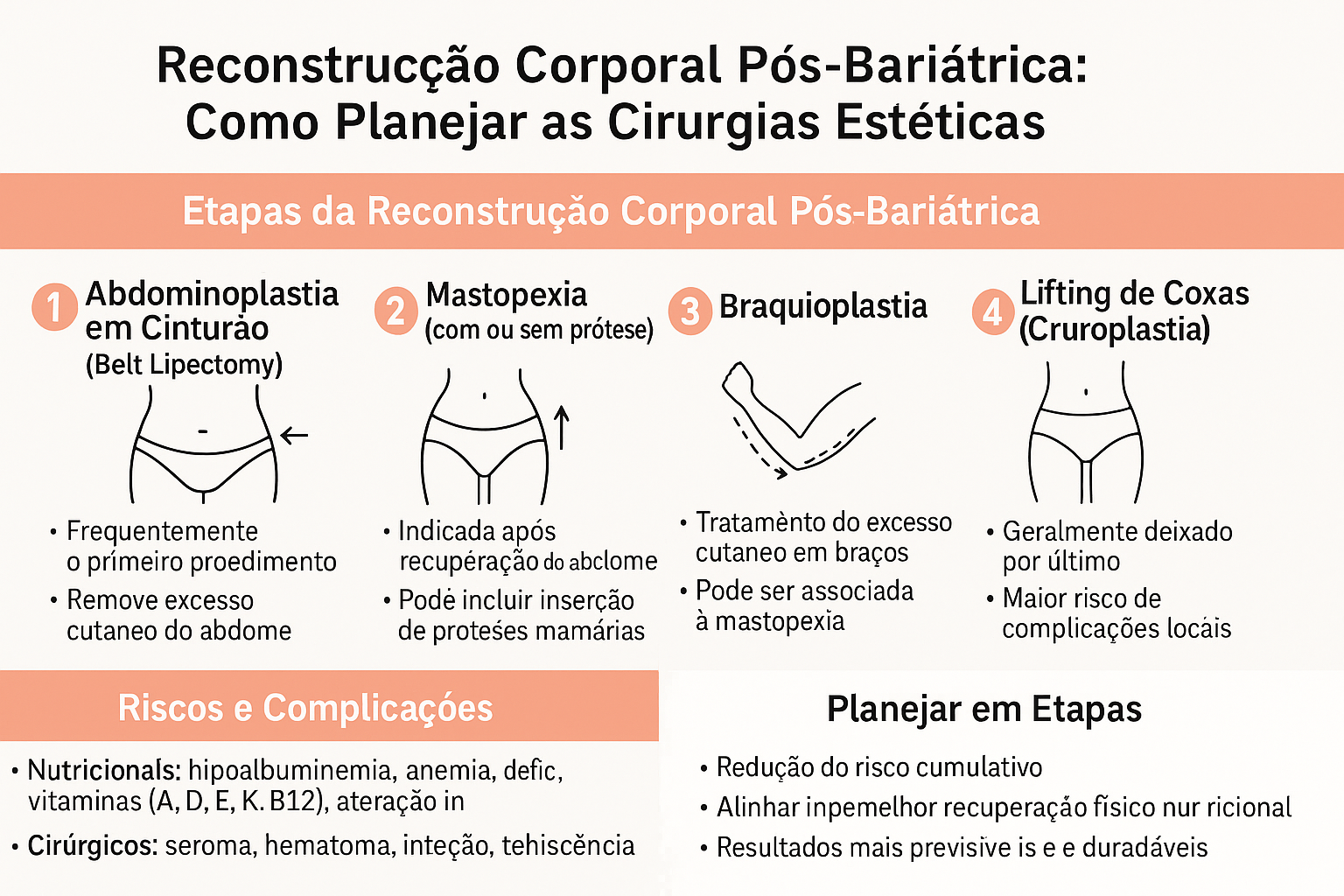
The goal of contouring is to restore body shape harmonically and functionally. However, the success of the treatment depends on careful planning, considering:
- Time elapsed since bariatric surgery (minimum 12 to 18 months).
- Weight stability (BMI between 25–30 kg/m²).
- Correction of nutritional deficiencies (iron, protein, vitamins, and minerals).
- Prioritizing safety over the desire for multiple simultaneous surgeries.
Quick Highlights
- ✅ Weight must be stable for at least 12–18 months before contouring.
- ✅ The surgeon plans in stages, prioritizing the abdomen, breasts, arms, and thighs.
- ✅ Nutritional deficiencies increase the risk of infection and delayed healing.
- ✅ Smoking and poor diet should be corrected preoperatively.
- ✅ Combined procedures increase risks, requiring individualized assessment.
Stages of Post-Bariatric Body Contouring
1. Belt Lipectomy
This is often the first procedure in post-bariatric body contouring. It removes excess skin from the abdomen, flanks, and back, providing functional and aesthetic improvement.
In addition to improving posture, this procedure creates the foundation for future surgeries. Learn more about abdominoplasty.
2. Mastopexy (with or without silicone implants)
Breasts often suffer from volume loss and sagging after weight loss. Mastopexy repositions and reshapes the breasts, possibly including the use of silicone implants to restore volume.
This stage is usually performed after recovery of the abdominal area. Details in mastopexy.
3. Brachioplasty (Arm Lift)
Excess skin on the arms is common and can cause aesthetic and functional discomfort. Brachioplasty removes laxity and restores proportion to the body contour. It can be associated with other procedures, but with caution.
4. Thigh Lift (Cruroplasty)
Usually performed last, thigh lifts treat laxity in the legs. It is therefore considered to have a higher risk for local complications such as seromas, dehiscence, and infections.
Therefore, it should only be indicated when the patient is in optimal nutritional and clinical condition. Learn more about cruroplasty.
Risks and Complications
Nutritional
Deficiencies in proteins, zinc, iron, and vitamins compromise healing, increase the risk of infection, and increase the chances of necrosis. Prior supplementation is essential (preoperative exams).
Surgical
- Seroma (fluid accumulation).
- Hematoma.
- Infection.
- Wound dehiscence.
- Venous thromboembolism.
The type of anesthesia must also be carefully evaluated, as post-bariatric patients may present greater clinical fragility.
Aesthetic
- Widened or hypertrophic scars.
- Asymmetry between sides.
- Recurrence of laxity over time.
Planning and Safety
Although many patients want to undergo multiple surgeries at the same time, this practice increases cumulative risks. The ideal is to plan in stages, allowing for better recovery and more predictable results.
In addition, surgeries should be performed in accredited day hospitals, with a multidisciplinary team and adequate support.
Lifestyle and Preoperative Preparation
- Adequate nutrition: ensure protein and vitamin intake (recommended diet).
- Avoid smoking: know the risks of smoking in the healing process.
- Physical exercise: fundamental for weight maintenance.
- Multidisciplinary follow-up: nutritionist, endocrinologist, and psychologist can help with preparation.
Conclusion
In short, post-bariatric body contouring is a process that requires careful planning, clinical preparation, and well-defined stages. Therefore, respecting the time of weight stabilization, correcting nutritional deficiencies, and following the ideal sequence of procedures are indispensable steps to ensure safety and satisfactory aesthetic results.
If you have undergone bariatric surgery and wish to improve your quality of life through plastic surgery, seek an experienced plastic surgeon for an individualized evaluation and definition of the best strategy.
Frequently Asked Questions
1. What is post-bariatric body contouring?
It is the set of plastic surgeries performed after significant weight loss, to remove excess skin and restore body contour.
2. When can I start contouring?
After 12 to 18 months of bariatric surgery, when weight is stable.
3. Which is the first surgery to be performed?
Normally, the belt lipectomy.
4. Can I have mastopexy with implants?
Yes, when there is mammary volume loss.
5. Do I need exams before surgery?
Yes, especially laboratory tests to assess nutritional status.
6. Does smoking interfere with healing?
Yes, it increases the risks of necrosis and infection.
7. How many procedures can be done together?
This depends on clinical conditions, but it is safest in stages.
8. Do I need to maintain a special diet after surgeries?
Yes, a balanced diet is fundamental for healing.
9. Where should I have body contouring?
In accredited hospitals and clinics, with specialist plastic surgeons.
Recommended Video
Related articles

Diet before and after plastic surgery

Healthy eating in post-operative plastic surgery
Agendar consulta
Precisa de orientação personalizada?
Marque uma avaliação com o Dr. Fernando Amato e tire as suas dúvidas sobre cirurgia plástica.
Falar no WhatsApp