- Plastic Surgery
LIPEDEMA: Relationship between alpha and beta receptors and diet, what science shows 🧬🥗
- February 23, 2026
- By Fernando Amato
The relationship between alpha and beta receptors and diet is attracting increasing interest, especially in conditions influenced by hormones, such as lipedema. However, many patients wonder: can what I eat alter my hormone receptors or modify body fat behavior?
The answer is more subtle than a simple yes or no — and it's worth understanding why.
What are hormone receptors?
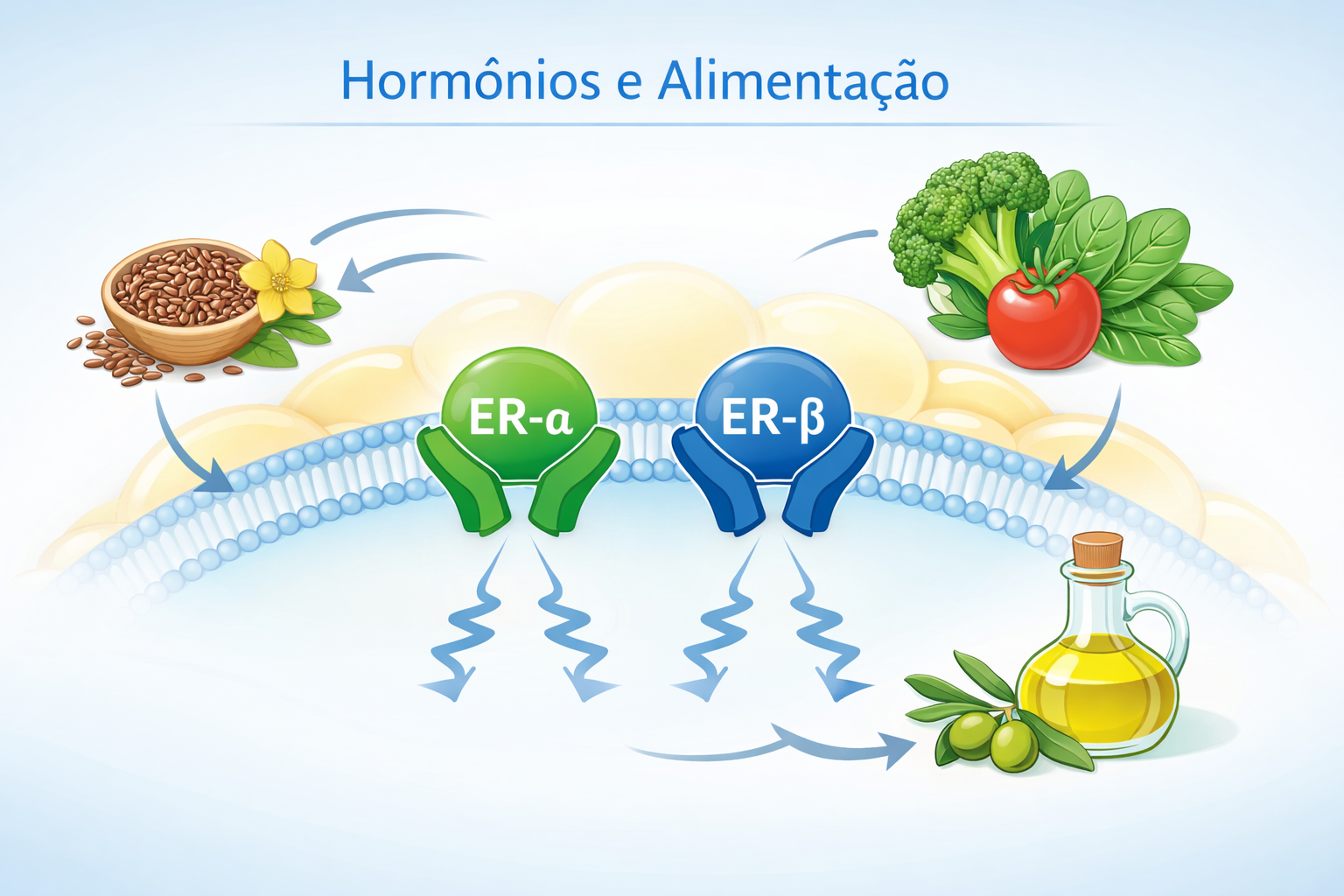
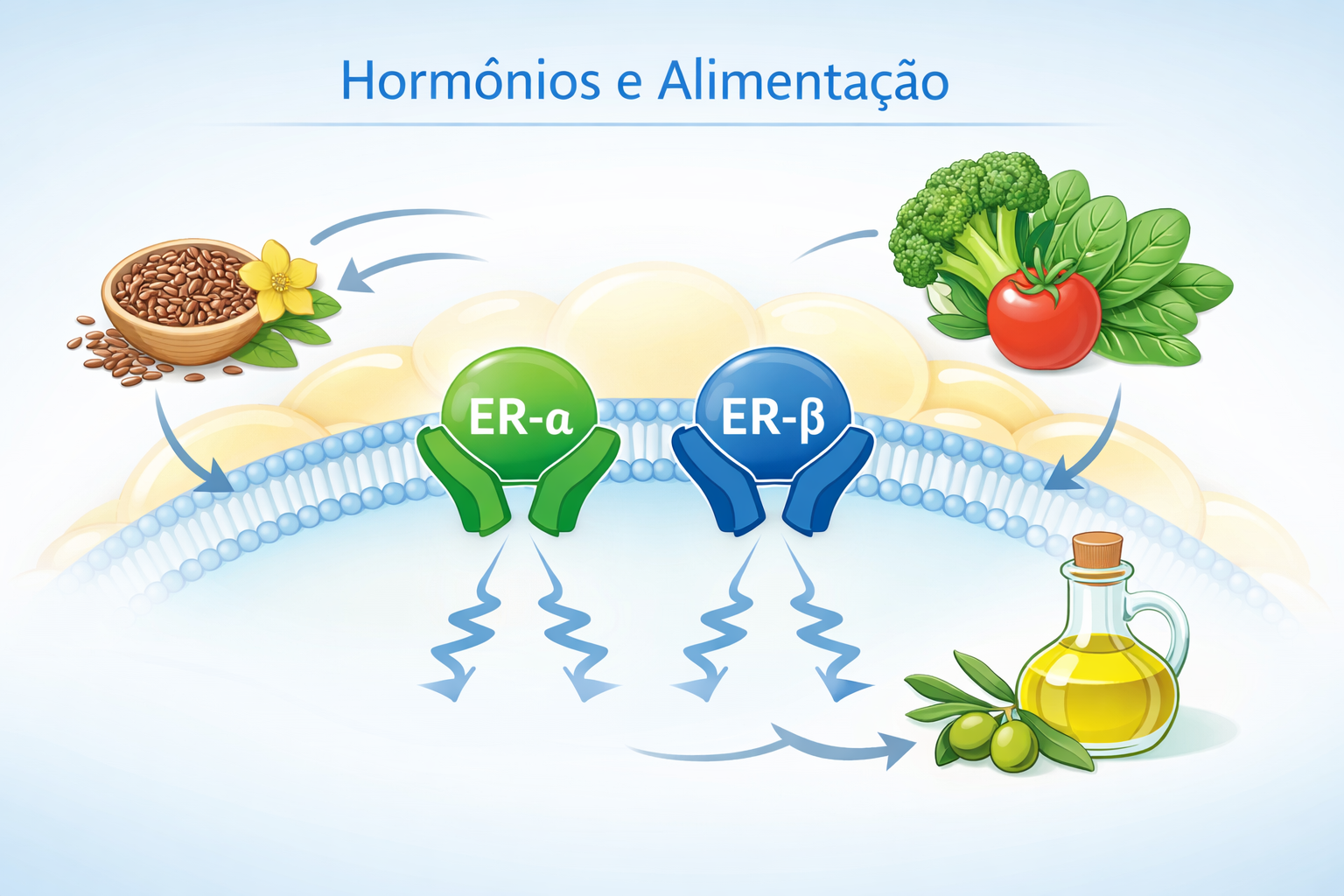
Receptors are proteins located on cells that function like “locks”. Hormones are the “keys”. Thus, when estrogen binds to its receptors — ER-α (alpha) and ER-β (beta) — it activates signals that influence cell growth, inflammation, fat storage, and metabolism.
The structural quantity of these receptors is genetically based. However, diet can influence how they are stimulated, the intensity of the cellular response, and even the expression of genes involved in this process.
What are alpha (ER-α) and beta (ER-β) receptors? 🧪
ER-α and ER-β receptors are the two main types of estrogen receptors. Although they respond to the same hormone, their effects vary depending on the tissue.
Simply put:
- ER-α is usually associated with greater proliferative stimulation (cell growth).
- ER-β can exert a modulating or regulating effect.
- The balance between them influences inflammation and adipose tissue metabolism.
In the context of lipedema, there is evidence that adipose tissue hormonal signaling is altered. Thus, this can contribute to disproportionate fat accumulation and the characteristic pain of the condition.
Genetics define the base, but expression can vary 🔬
The genetic structure that determines the presence of receptors tends to be stable. However, gene expression — that is, how much a given gene is activated — can change throughout life.
Thus, this phenomenon is studied by epigenetics: mechanisms that “turn on” or “turn off” genes without altering the DNA sequence.
Among the main mechanisms are:
- DNA methylation
- Histone modification
- Regulation by microRNAs
Nutrigenomics studies how nutrients interact with these processes. However, scientific reviews available on the National Institutes of Health (NIH) show that dietary patterns can influence metabolic and inflammatory pathways related to hormones.
This does not mean that diet completely changes the receptors. It means that it can modulate the intensity of the hormonal response.
Phytoestrogens: natural modulators 🌱
Phytoestrogens are plant compounds with a structure similar to human estrogen. They are present in:
- Soy
- Flaxseed
- Lentils
- Chickpeas
- Various seeds
They can bind to ER-α and ER-β receptors. As they have a weaker action than natural estrogen, they often exert a modulating effect.
Depending on the hormonal context, they can:
- Partially compete with circulating estrogen
- Act as mild stimulators in low hormone production environments
The effect depends on the dose, gut microbiota, and individual profile. Therefore, it is not possible to generalize that phytoestrogens “increase” or “decrease” estrogen in an absolute way.
Diet, fiber, and circulating estrogen 🥦
Diet also interferes with blood estrogen levels.
Diets rich in fiber:
- Increase intestinal excretion of estrogens
- Reduce hormonal recirculation
- May decrease excessive receptor stimulation
Excess body fat, on the other hand, increases peripheral estrogen production. Therefore, adipose tissue contains the enzyme aromatase, which converts androgens into estrogen.
Thus, dietary patterns rich in saturated fats and refined carbohydrates can:
- Favor fat gain
- Increase aromatase activity
- Intensify hormonal stimulation on ER-α and ER-β
Insulin and fat storage 🍞
Insulin, however, is another central hormone in this discussion. Frequent insulin spikes — common in diets rich in high glycemic index carbohydrates — stimulate fat storage.
Insulin:
- Activates lipogenesis (fat formation)
- Inhibits lipolysis (fat breakdown)
However, in conditions like lipedema, there may be greater difficulty in mobilizing adipose tissue.
Dietary strategies with a lower glycemic load can reduce hyperinsulinemia. However, diets such as low-carb or ketogenic should be individualized and supervised by a qualified professional.
Therefore, before procedures such as liposuction or cruroplasty, nutritional adjustment is part of the pre-operative care. However, adequate dietary guidance improves recovery and safety, especially in a hospital setting.
Does diet alter the number of receptors? ⚖️
Directly, no. Diet does not “create” or “remove” estrogen receptors.
What it can do is:
- Modulate gene expression
- Alter circulating hormone levels
- Reduce inflammation
- Influence metabolic sensitivity
In other words, diet modifies the environment in which receptors act — and this already has significant clinical impact.
The role of diet in clinical management 🍽️
In lipedema, diet is thus part of a broader therapeutic strategy. It can:
- Reduce chronic low-grade inflammation
- Improve glycemic control
- Decrease peripheral hormonal stimulation
- Aid in overall weight control
However, it does not replace medical supervision. Treatment can thus involve clinical measures, physical therapies, and, in selected cases, surgical approach.
Each patient has their own metabolic and hormonal profile. Therefore, all decisions must be individualized.
Frequently asked questions
1. Can diet change my hormone receptors? It can modulate expression and activity, but it does not directly alter the structural genetic basis.
2. Are phytoestrogens dangerous? In natural foods, they are generally safe. Supplements should be evaluated individually.
3. Does obesity increase estrogen? Yes. Adipose tissue produces aromatase, thus increasing peripheral estrogen production.
4. Does a fiber-rich diet reduce estrogen? It can increase intestinal excretion and reduce hormonal recirculation.
5. Is low-carb mandatory for lipedema? No. It can benefit some patients, but it is not a universal rule.
6. Does insulin interfere with estrogen receptors? It influences the metabolic environment and fat storage, but does not directly alter the receptor.
7. Do polyphenols alter genes? They can modulate gene expression through epigenetic mechanisms.
8. Does diet treat lipedema alone? No. It is part of an integrated therapeutic plan.
9. Does surgery resolve hormonal imbalance? Procedures remove fat, but do not modify the genetic or hormonal basis.
10. Do men also have alpha and beta receptors? Yes. Estrogen receptors are present in both sexes, with distinct functions.
References
Ehrlich C, Iker E, Herbst KL, Kahn LA, Sears DD, Kenyon M, et al. Lymphedema and Lipedema Nutrition Guide: foods, vitamins, minerals, and supplements. San Francisco: Lymph Notes; 2015.
Katzer K, Hill JL, McIver KB, Foster MT. Lipedema and the potential role of estrogen in excessive adipose tissue accumulation. Int J Mol Sci. 2021;22(21):11720.
Szél E, Kemény L, Groma G, Szolnoky G. Pathophysiological dilemmas of lipedema. Med Hypotheses. 2014;83(5):599-606.
Al-Ghadban S, Isern SU, Herbst KL, Bunnell BA. The expression of adipogenic marker is significantly increased in estrogen-treated lipedema adipocytes differentiated from adipose stem cells in vitro. Biomedicines. 2024;12:1042.
Gavin KM, Cooper EE, Hickner RC. Estrogen receptor protein content is different in abdominal than gluteal subcutaneous adipose tissue of overweight-to-obese premenopausal women. Metabolism. 2013;62(8):1180-8.
Kruglikov IL, Joffin N, Scherer PE. The MMP14-caveolin axis and its potential relevance for lipoedema. Nat Rev Endocrinol. 2020;16:669-74.
Di Renzo L, Cinelli G, Romano L, Zomparelli S, Lou De Santis G, Nocerino P, et al. Potential effects of a modified Mediterranean diet on body composition in lipoedema. Nutrients. 2021;13(2):358.
Keith L, Seo CA, Rowsemitt C, Pfeffer M, Wahi M, Staggs M, et al. Ketogenic diet as a potential intervention for lipedema. Med Hypotheses. 2021;146:110435.
Jeziorek M, Szuba A, Kujawa K, Regulska-Ilow B. The effect of a low-carbohydrate, high-fat diet versus moderate-carbohydrate and fat diet on body composition in patients with lipedema. Diabetes Metab Syndr Obes. 2022;15:2545-61.
Related articles


Agendar consulta
Precisa de orientação personalizada?
Marque uma avaliação com o Dr. Fernando Amato e tire as suas dúvidas sobre cirurgia plástica.
Falar no WhatsApp