After plastic surgery, the most frequent question is not “how long does recovery last?”, but rather “what is expected today, on the day I am in?”. This article organizes recovery by time — first hours, first week, first month, first months — to serve as a reading reference.
First of all: the periods below are editorial organizers, not clinical promises. Different procedures have different recoveries; two people operated on the same day can evolve at different speeds; complications change the timeline. Your surgeon's individual clearance prevails over any deadline presented here. To understand how follow-up, returns, and warning signs work, see the post-operative care guide.
First 24 hours
Safety phase. The focus is analgesia as prescribed, hydration, untouched dressing, and early movement of feet and legs still in bed, to reduce thrombotic risk. Drowsiness, a feeling of heaviness in the operated area, and controllable discomfort with medication are expected. Someone should stay with you.
2 to 3 days after surgery
This is when edema usually peaks and ecchymoses (bruises) become more evident. Pain tends to progressively subside. Dressings and eventual drains follow the team's protocol, and the first follow-up usually occurs within this interval.
7 days after surgery
In most cases, swelling has already begun to decrease from its peak, and light domestic routines gradually resume. It is not yet a phase for strenuous activity, heavy lifting, or exercise. Driving depends on being free of drowsy analgesics and being able to perform emergency maneuvers without pain — usually between 7 and 14 days, depending on the surgery.
10 to 14 days
Period when external stitches, if indicated, are usually removed, and light activities and low-demand physical work can be resumed. The wound closes, but it is still fragile: no direct sun, swimming pool, sea, or massage over the incision without clearance.
3 to 4 weeks
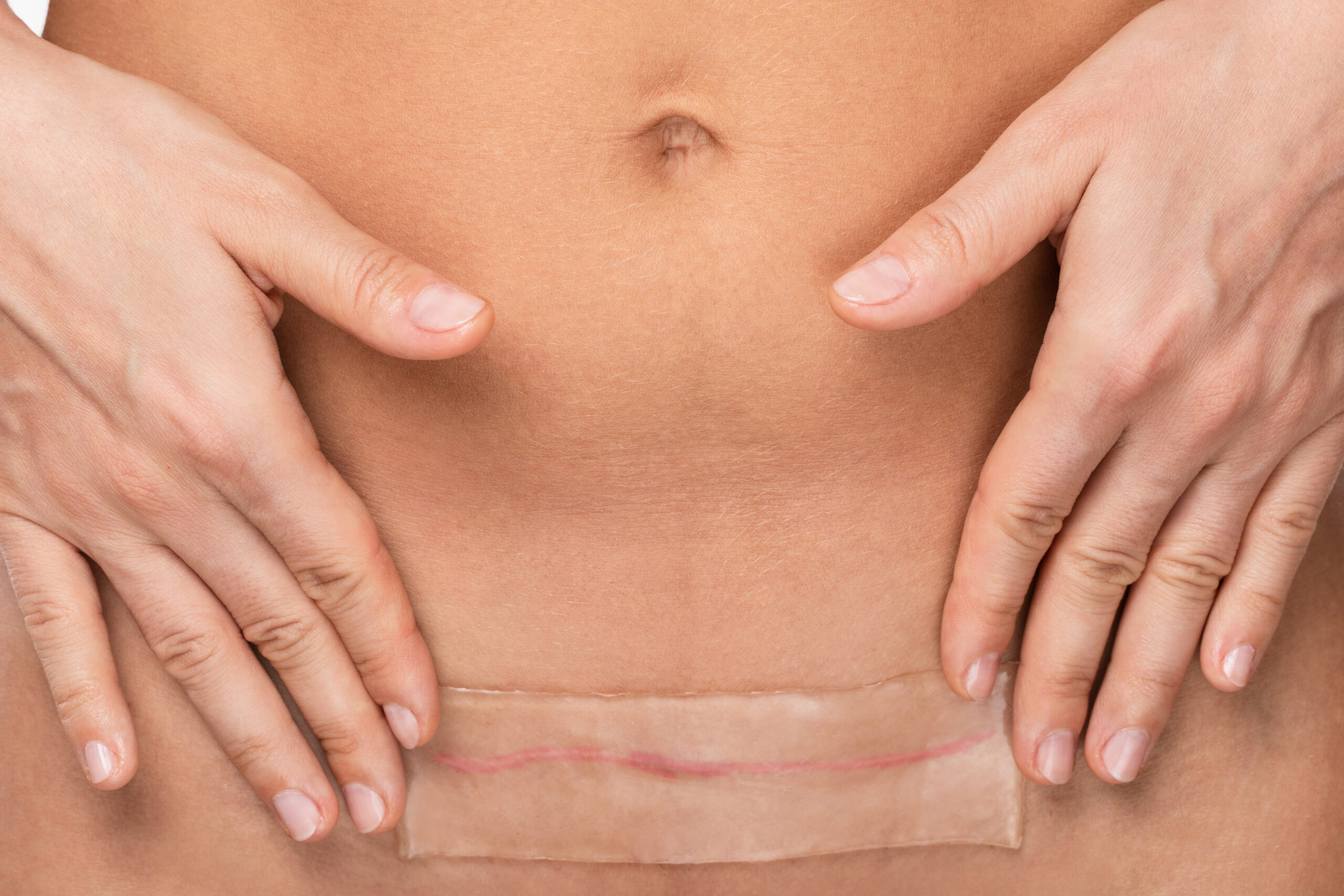
With the wound completely closed and cleared, the phase of scar quality care begins — generally between the 2nd and 4th week. Low-impact exercises may be progressively released. Prescribed compression usually continues.
30 days after surgery
One month is the mark when most people feel “functionally recovered” — which does not mean the final result. Residual edema, hardened areas, and sensitivity changes are still common. More intense physical activity is usually released between 30 and 60 days, always on a case-by-case basis.
2 months after surgery
At 60 days, the contour begins to be more faithful to the intended result and edema perceptibly reduces. The scar, on the other hand, is usually in its reddest and firmest phase — this is part of the process, not a sign of failure.
3 to 6 months
Maturation phase: the scar gradually lightens and softens, residual edema resolves, and the result stabilizes. In body contouring surgeries, a portion of swelling may persist for longer.
When does the definitive result appear?
For most plastic surgeries, the result is considered consolidated between 6 and 12 months, when the edema resolves and the scar matures. Combined surgeries and larger procedures extend this period. Follow-up evaluations remain important even after you feel well.
Cronograma de recuperação pós-cirúrgica
Quando começar cada cuidado. Os prazos são orientativos — a liberação depende sempre do seu cirurgião.
Semana 1–2
Cicatrização inicial
- Higiene com água e sabonete neutro, secando bem a região
- Curativo exatamente conforme a orientação do cirurgião
- Repouso relativo e controle da dor prescrito
- Ainda não use fita ou placa de silicone
- Não exponha a cicatriz ao sol
- Não aplique cremes ou óleos por conta própria
Produtos: Apenas o curativo indicado pela equipe médica.
Frequência: Trocas conforme prescrição.
Semana 3–4
Ferida fechada
- Com a ferida totalmente fechada e liberada, inicie o silicone
- Use 12 a 24 horas por dia, sem esticar a pele
- Aceite a vermelhidão inicial — faz parte do processo
- Não aplique sobre crostas, pontos ou secreção
- Não interrompa nos primeiros dias por impaciência
Produtos: Fita básica ou reforçada, conforme a região.
Frequência: Troca a cada 3–5 dias nas fitas descartáveis.
Mês 2–3
Cicatrização ativa
- A cicatriz começa a clarear e amaciar
- Considere migrar para fita reutilizável (menor custo por dia)
- Inicie fotoproteção diária na área, mesmo sob a fita
- Não abandone o uso só porque melhorou
- Não bronzeie a região
Produtos: Fita reutilizável + protetor solar FPS 50+.
Frequência: Lavagem diária com sabão neutro e reaplicação.
Mês 4–6
Maturação
- Mantenha o silicone enquanto houver relevo ou vermelhidão
- Massagem suave, se liberada pelo cirurgião
- Hidratação diária da pele ao redor
- Não conclua que o resultado é definitivo antes de 12 meses
Produtos: Fita reutilizável + hidratante + fotoproteção.
Frequência: Conforme necessidade e conforto.
Mês 6+
Manutenção
- Cicatriz madura: use silicone apenas se persistir relevo
- Fotoproteção continuada — cicatriz escurece com sol por até 1 ano
- Reavaliação médica se houver piora
- Não inicie tratamentos agressivos sem avaliação
Produtos: Protetor solar + hidratante.
Frequência: Diária.
Topics with their own guide
Three topics appear in almost every post-operative period and are covered in depth in specific content — here are just the indications:
For follow-ups, dressings, drains, physical therapy when indicated, and signs that require immediate contact, the proprietary content is the hub for post-operative care.
Frequently asked questions about the timeline
How is the first week usually?
The first days concentrate the peak of edema and ecchymoses, with pain controlled by prescribed medication. Throughout the week, discomfort tends to decrease and light domestic activities gradually resume, without strenuous effort or heavy lifting.
What changes after 30 days?
At 30 days, most people have already resumed their routine, and a good part of the edema has regressed. More intense physical activity is usually released between 30 and 60 days, and the scar enters the maturation phase, which is much longer.
Is it normal to still have edema after a month?
Yes. Residual edema after a month is common, especially in body contouring surgeries, and progressively reduces. What is not expected is a sudden increase in volume, increasing pain, or new asymmetry — in these cases, contact the team the same day.
When can recovery be considered complete?
Usually between 6 and 12 months, when the edema resolves and the scar matures. Combined procedures may take longer.
Why can two people operated on the same day evolve differently?
Because the timeline depends on the extent and type of surgery, individual inflammatory response, pre-existing clinical conditions, smoking, adherence to compression and rest, and the occurrence or not of complications.
Dúvidas sobre a sua cicatriz?
Avaliação presencial em São Paulo com o Dr. Fernando Amato, cirurgião plástico (CRM-SP 133826).
Clinical references
- Mustoe TA, Cooter RD, Gold MH, et al. International clinical recommendations on scar management. Plast Reconstr Surg. 2002;110(2):560-571.
- Monstrey S, Middelkoop E, Vranckx JJ, et al. Updated scar management practical guidelines: non-invasive and invasive measures. J Plast Reconstr Aesthet Surg. 2014;67(8):1017-1025.
- Gold MH, Berman B, Clementoni MT, et al. Updated international clinical recommendations on scar management: part 1 — evaluating the evidence. Dermatol Surg. 2014;40(8):817-824.
Technical responsible: Dr. Fernando Amato — Plastic Surgeon (CRM-SP 133826), Member of SBCP, practice in São Paulo. Informative content; does not replace an in-person medical consultation.
Agendar consulta
Precisa de orientação personalizada?
Marque uma avaliação com o Dr. Fernando Amato e tire as suas dúvidas sobre cirurgia plástica.
Falar no WhatsApp