
- Plastic Surgery
Reduced Scar Mammoplasty: What is Possible with Current Techniques
- November 26, 2025
- By Fernando Amato
Less scarring and more safety: the evolution of techniques that transformed breast reduction
Reduced scar mammoplasty: what is truly possible?
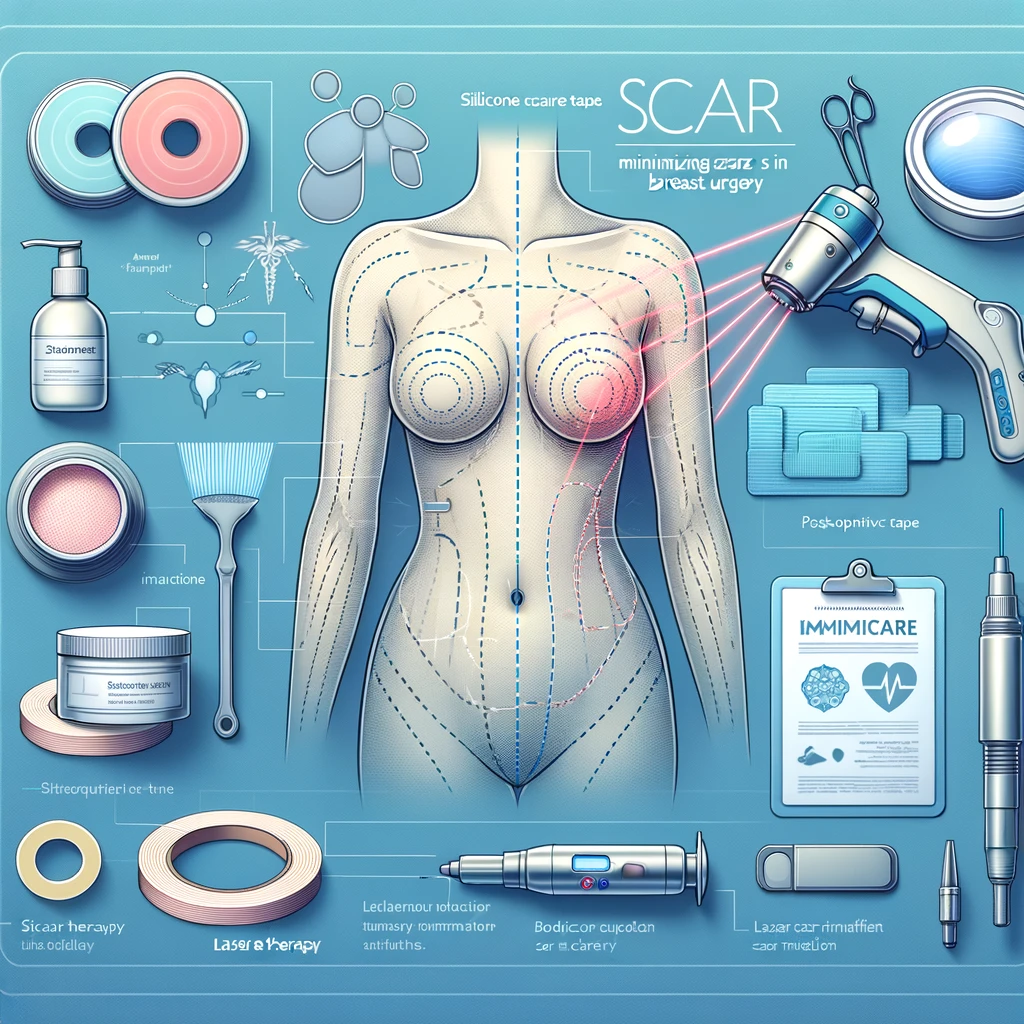
Reduced scar mammoplasty is an evolution of traditional breast reduction techniques. For many years, it was believed that reducing breast volume necessarily required long scars in an “inverted T” shape. However, with the advancement of multi-plane surgical techniques and the improvement of internal support maneuvers, it has become possible to achieve satisfactory results with shorter incisions — such as the short-scar, the L-scar, and the J-scar.
Immediately after this first block, I include the highlights according to your guidelines.
Quick content summary
- ✨ Modern techniques allow for smaller scars in many cases.
- 🩺 Multi-plane planning improves support and reduces skin tension.
- 📉 Scar reduction depends on breast size, sagging, and aesthetic goals.
- 🔍 Not all patients are candidates for a pure short-scar.
- 🏥 The choice of technique must consider safety, vascularization, and body proportion.
What does “reduced scar” mean in mammoplasty?
Reduced scar mammoplasty encompasses techniques where the surgeon limits the length of the horizontal incision. Thus, the surgery prioritizes results with less visible marks in the inframammary fold area.
The most commonly used variations include:
Short-scar (vertical scar or mini-T)
- Periareolar + vertical incision
- Avoids the horizontal scar in the inframammary fold.
- Indicated for moderate breasts with minimal sagging.
L-scar
- Similar to the short-scar, but with a small inferior lateral extension.
- Suitable for larger breasts that require more skin removal.
These techniques became possible thanks to the development of multi-plane approaches, which distribute the force of breast weight across deep tissues instead of solely tensioning the skin.
How do multi-plane techniques work?
Multi-plane surgery works by supporting the breast from within. Instead of relying on the skin to maintain the result, the surgeon remodels deep structures, reduces the need for skin retraction, and therefore allows for smaller scars.
Among the technical principles are:
Internal fixation (structural support)
Anchoring points are created in the deep tissues, ensuring prolonged support.
Three-dimensional removal of breast tissue
Excess tissue is removed in depth, which improves breast shape and reduces residual sagging.
Skin redistribution
The skin is repositioned without excessive tension, reducing the need for long incisions.
When is reduced scar mammoplasty possible?
Generally, ideal conditions include:
- Small to moderate sized breasts
- Mild to moderate sagging
- Good skin quality
- Realistic expectations regarding shape and projection
- Desire to minimize scars
For very voluminous breasts, extremely ptotic (sagging) breasts, or those with significant excess skin, the inverted T still offers better aesthetic and functional control.
Even so, hybrid techniques can reduce the horizontal extension, resulting in a “smaller T”.
Benefits of reduced scarring
- Smaller scar extension (vertical and eventually small L/J)
- More comfortable recovery
- Better preservation of breast shape
- More natural lower pole
- Lower risk of widened scars due to tension
Furthermore, modern techniques avoid reliance on the skin as the sole element of support, which reduces the risk of “premature sagging”.
Limitations and contraindications
Despite the benefits, reduced scar mammoplasty is not suitable for all patients. Limitations include:
- Large mammary hypertrophies
- Severe ptosis
- Very lax skin
- Need for extensive skin removal
- History of poor scarring
- Active smoking (increases risks) — see smoking risks
- Diseases that compromise vascularization
- Desire to significantly elevate the nipple-areola complex
In such cases, the traditional technique allows for greater precision and safety.
Preparation for surgery
Thus, the pre-operative stage has a great impact on the result. For a safe evaluation, laboratory and imaging tests are usually requested. Learn more at:
– Appropriate diet before surgery
It is also essential to understand details about anesthesia. More information at:
– Anesthesia in plastic surgery
Stages of surgery
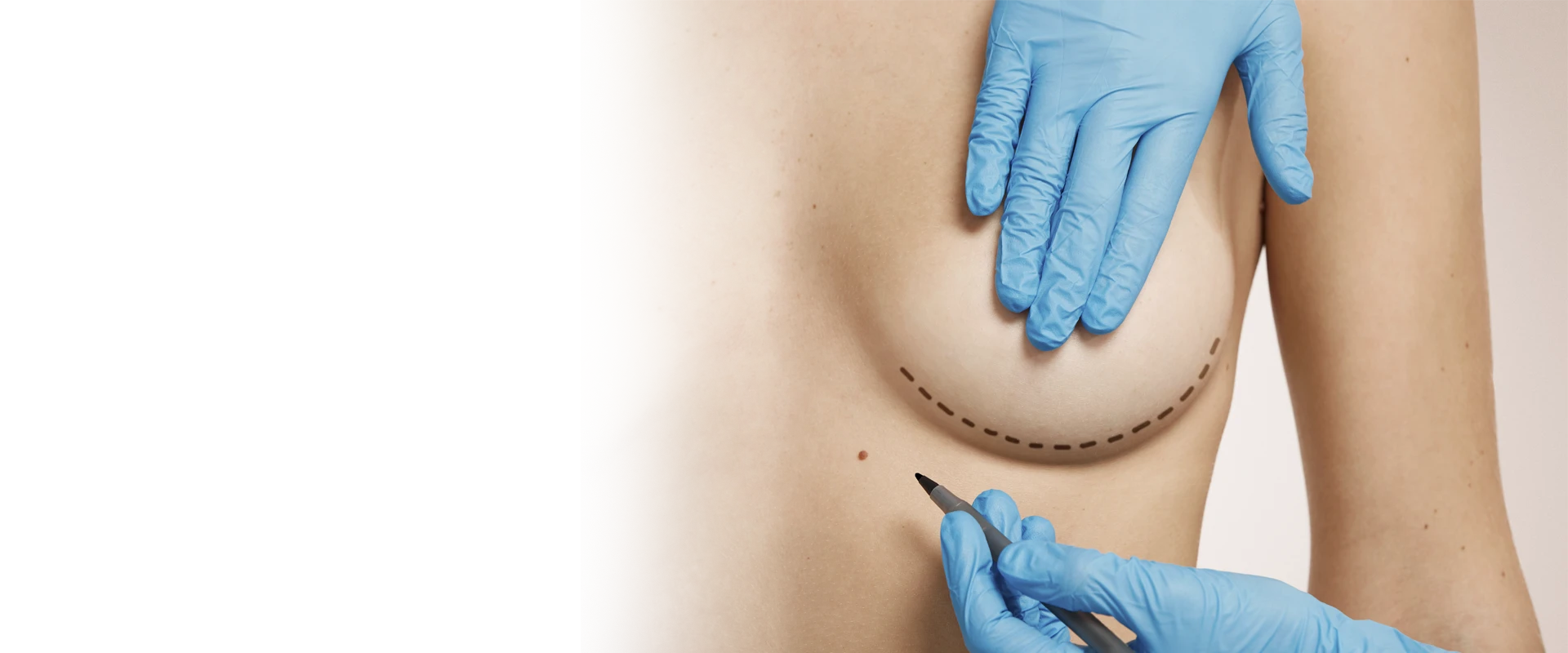
1. Pre-operative marking
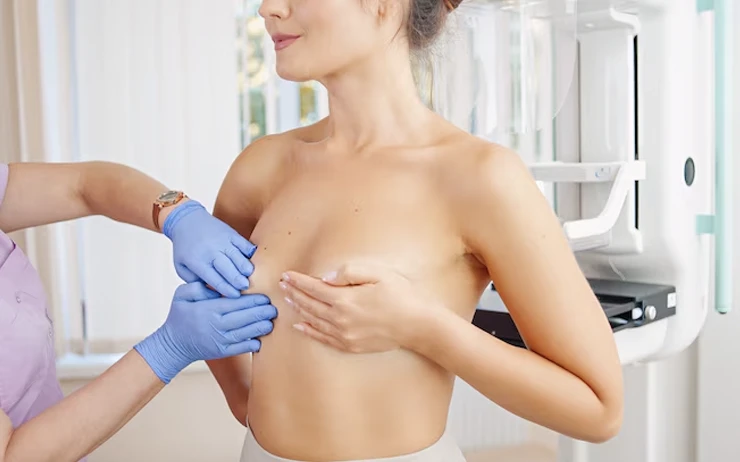
Performed with the patient standing to assess sagging, symmetry, and excess tissue.
2. Anesthesia
Usually general anesthesia or combined blocks. The procedure then takes place in a safe environment, such as an accredited day hospital.
3. Resection of excess breast tissue
The surgeon then defines strategic areas for three-dimensional removal, preserving sensitivity and vascularization.
4. Internal remodeling (multi-planes)
This step is essential for allowing a reduced scar, as it distributes support forces.
5. Areola repositioning
Done carefully to preserve blood flow and symmetry.
6. Closure and dressings
Closure is performed with attention to linear tension, reducing the risk of widened scars.
Expected results
Reduced scar mammoplasty provides:
- More harmonious shape
- Natural projection
- Better body proportion
- Reduction of cervical and dorsal pain
- Greater lightness and comfort
It is important to remember that scar quality depends on:
- Genetics
- Surgical technique
- Post-operative care
- Not smoking
- Maintaining skin hydration
- Following medical guidelines
Relationship between reduced scar and long-term support
Multi-plane techniques provide better support for the lower pole of the breast. Thus, even with smaller incisions, the shape tends to remain more stable over the years.
What supports the breast is:
- Ligaments
- Remodeled internal tissue
- Deep anchoring
- Not the skin
This concept is essential to understand why scars could be reduced without compromising the result.
Comparison between reduced scar and inverted T
| Criterion | Reduced Scar | Inverted T |
|---|---|---|
| Scar extent | Smaller | Larger |
| Indication | Small to medium breasts | Large or very saggy breasts |
| Skin reduction | Moderate | Extensive |
| Final shape | Natural, more rounded | More controlled, greater precision |
| Projection maintenance | Very good | Excellent |
In summary: less scarring does not always mean a better result, especially for large breasts.
Relationship with other breast surgeries
For those seeking breast augmentation after reduction or complementary remodeling, the links below provide further insight:
Post-operative care
Proper care helps ensure good scar appearance. Recommendations include:
- Wearing a surgical bra
- Avoiding intense exercise for 30 days
- Sleeping on your back
- Caring for hydration
- Avoiding sun for 6 months
- Not smoking
- Following medical instructions
The recovery period is usually smooth when well-guided.
Is it always possible to avoid a horizontal scar?
Although desired by many patients, the complete absence of a horizontal scar is not possible in all cases. Thus, when there is a lot of excess skin, isolated removal via the vertical approach would create a deformity known as a “dog ear.” In these cases, a small horizontal L or J incision offers better refinement.
The focus should be on balancing:
- Safety
- Vascularization
- Proportion
- Symmetry
- Scar aesthetics
The surgeon therefore plays an essential role in guiding which technique delivers the best result for each anatomy.
Conclusion
Therefore, reduced scar mammoplasty is a reality, especially due to modern multi-plane techniques, which allow for internal breast remodeling and reduce the need for long incisions. However, each anatomy has unique characteristics, and only a detailed medical evaluation can confirm if the vertical, L, or J technique is truly suitable.
Thus, if you wish to understand if you are a candidate for a reduced scar, schedule a consultation with a specialized plastic surgeon. This is the best way to align expectations, explore possibilities, and plan the surgery safely.
Suggested video (about mammoplasty and reconstruction):
➡️ Mastectomy and Reconstruction: Dr. Fernando Amato Explains

Related articles


Agendar consulta
Precisa de orientação personalizada?
Marque uma avaliação com o Dr. Fernando Amato e tire as suas dúvidas sobre cirurgia plástica.
Falar no WhatsApp