- Plastic Surgery
Lip lift and the need for individualized planning
- April 14, 2026
- By Fernando Amato
Individualized lip lift has been gaining prominence in facial plastic surgery by addressing a significant limitation of traditional techniques: the use of fixed measurements for all patients. This standardization, especially in the elderly population, can lead to disproportions and an artificial appearance. Lip aging is a complex process involving anatomical, functional, and aesthetic changes, requiring careful and personalized evaluation.
Over the years, the upper lip tends to lengthen, the vermilion — the reddish part of the lip — loses projection, and dental exposure progressively decreases. These factors, combined, contribute to a more aged appearance. While fillers can improve volume, they do not correct excess skin or lip position — and it is precisely here that the lip lift becomes indispensable.
What is an individualized lip lift?
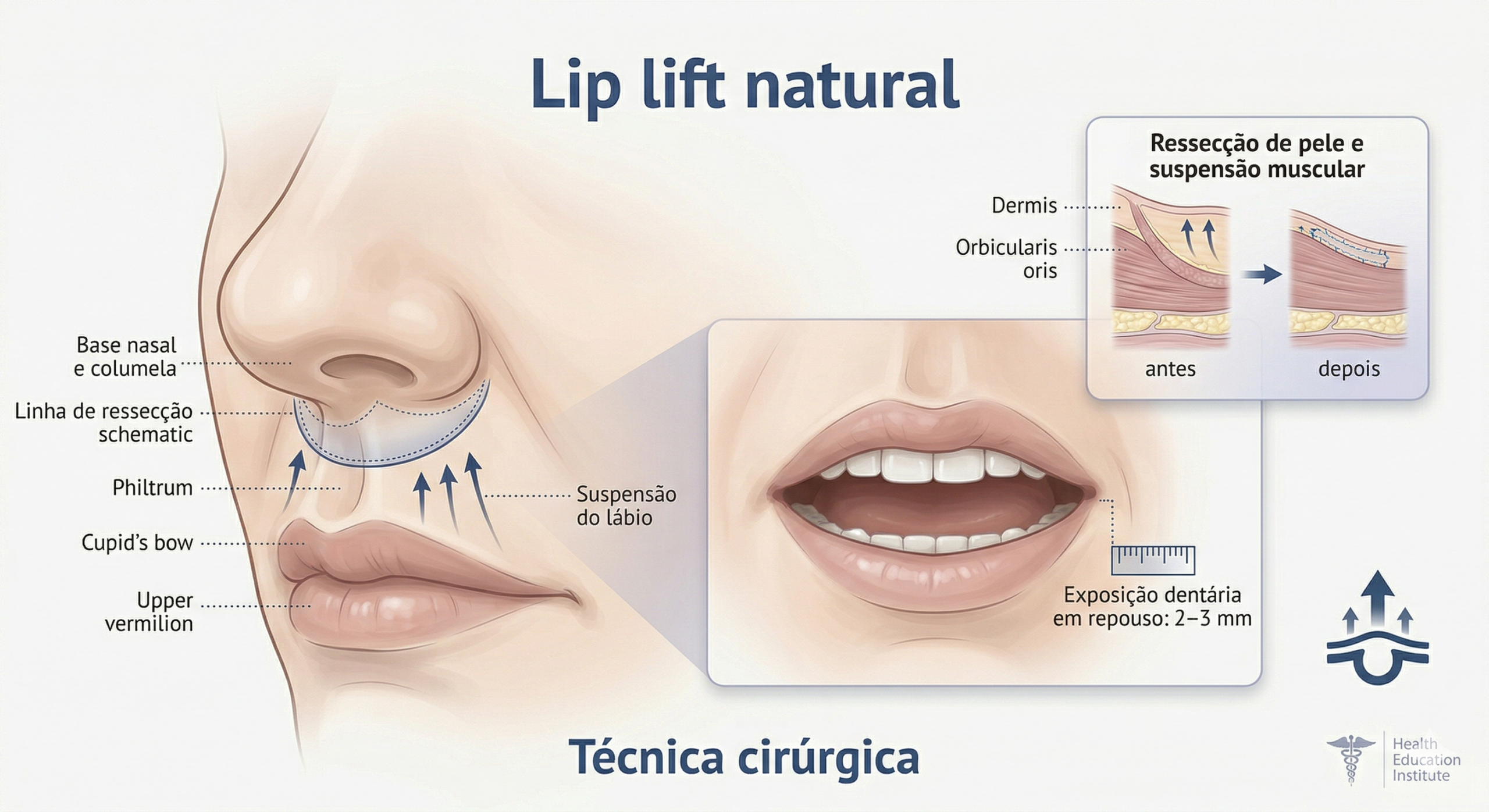
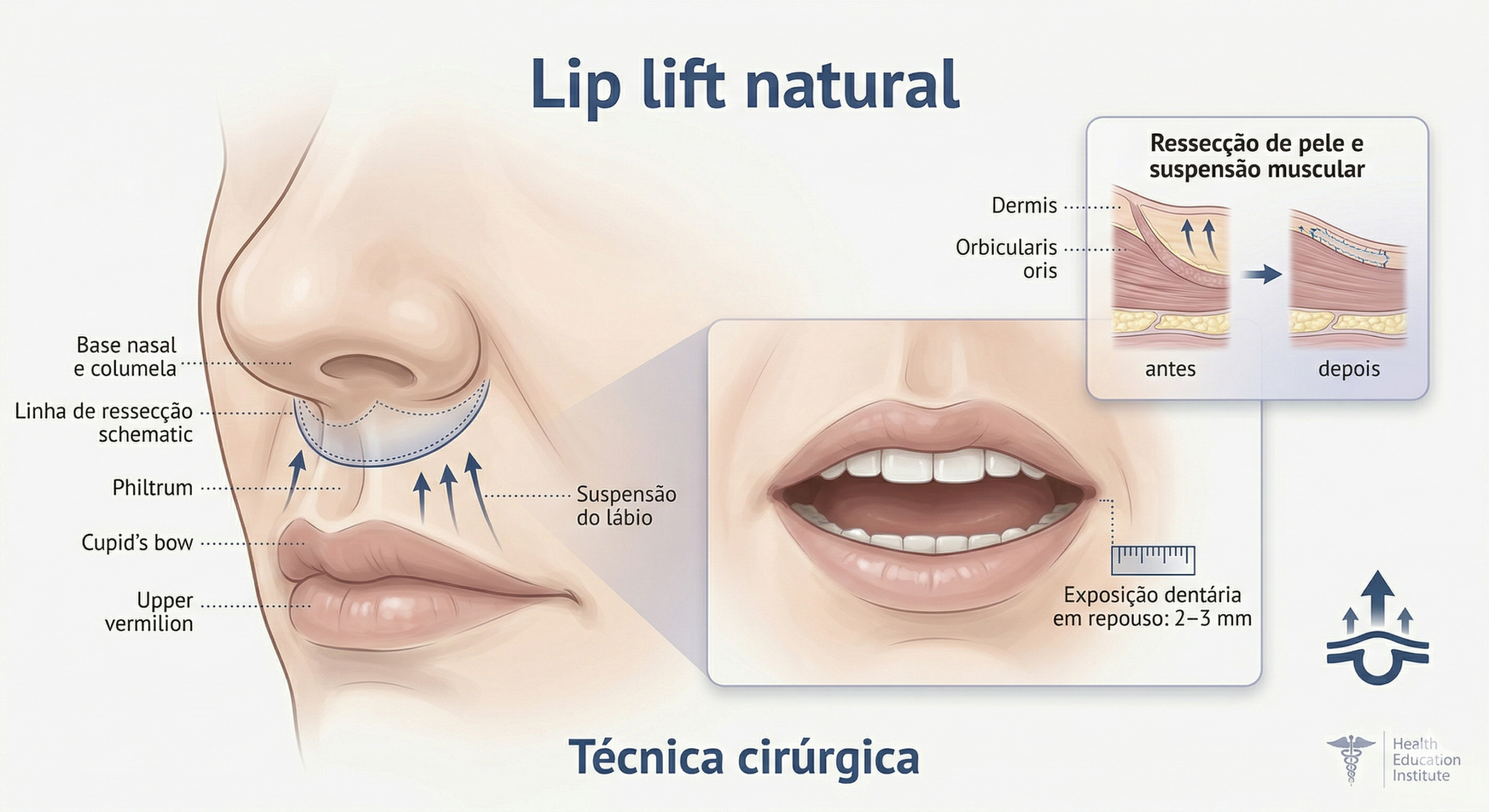
A lip lift is a surgical procedure that reduces the distance between the nose and the upper lip, elevating it and increasing the exposure of the upper teeth. In the concept of an individualized lip lift, planning does not follow fixed measurements, but rather anatomical and functional parameters specific to each patient.
This means evaluating facial proportions, smile dynamics, and, especially, dental exposure at rest — one of the main indicators of aesthetic naturalness.
Why avoid standardized measurements in lip lift
Historically, some authors suggested fixed measurements, such as resecting approximately 11 mm from the central portion of the upper lip. This approach, however, ignores fundamental variables such as:
- Patient's age
- Facial length
- Lip thickness
- Degree of laxity
- Previous dental exposure
In patients between 65 and 70 years old, for example, dental exposure may be naturally reduced. Applying a standard measurement can result in excessive elevation, leaving the teeth excessively exposed or creating an artificial look.
In facial aesthetic surgery, the goal is not to highlight the intervention, but to restore natural proportions.
Dental exposure: the main aesthetic guide
The exposure of the upper central incisors at rest is one of the most important parameters in individualized lip lift planning. In young adults, it is common for 2 to 3 mm of the upper teeth to be visible with the mouth relaxed — a standard often used as an aesthetic reference.
This value, however, should not be applied rigidly. The ideal is to adapt this goal to the patient's context, considering:
- Sex (women tend to show more teeth)
- Age (exposure decreases with aging)
- Facial structure
- Labial dynamics
The focus is not on achieving an exact number, but on restoring a harmonious and natural appearance.
Detailed pre-operative evaluation
Individualized lip lift planning requires a careful evaluation, which includes:
- Static analysis (face at rest)
- Dynamic evaluation (smile and speech)
- Millimeter measurements of the philtrum
- Manual lip traction test (simulation of the result)
This analysis can be supplemented with pre-operative exams, which help ensure surgical safety, and general guidelines available in preparation tips. In addition, understanding the patient's response to anesthesia and choosing an appropriate environment, such as a day hospital, are fundamental factors for a safe procedure.
Technical aspects of the procedure
In a lip lift, skin resection usually occurs at the base of the nose — a subnasal technique — with careful design to minimize visible scars. Among the most relevant technical points are:
Suturing is a critical part of the procedure. Clinical evidence points to a higher risk of dehiscence — opening of stitches — with absorbable sutures in lips. Therefore, many specialists prefer fine non-absorbable sutures, such as nylon or Prolene, which offer better support during healing.
Importance of the red border and the mucocutaneous junction
The red border is the transition between the skin and the mucous membrane of the lip. Changes in this region can generate visible irregularities and compromise the aesthetic result. Inadequate closure can cause:
- Contour irregularities
- Texture changes
- Artificial appearance
For this reason, respect for anatomy and technical precision are essential in all stages of the procedure.
Lip aging: more than aesthetics
Aging lips are not just an aesthetic issue. It also affects functions such as speech, chewing, and facial expression. Restoring lip position can, therefore, contribute to both appearance and functionality.
This principle of a functional approach also applies to other surgeries, such as rhinoplasty and blepharoplasty, where aesthetics and function go hand in hand.
Individualization: a principle of modern surgery
The idea that each patient is unique is not just a theoretical concept. In practice, it means abandoning rigid protocols and adopting decisions based on personalized analysis. This principle applies equally to other areas of plastic surgery, such as:
- Mammoplasty
- Mastopexy
- Use of implants
In all these cases, individualized planning improves the predictability and naturalness of the results.
Evidence and clinical practice
While strict guidelines for a lip lift may not always exist, the consensus among specialists reinforces the importance of individualization. Medical literature highlights the relevance of global facial analysis and dentolabial proportion — and scientific reviews available on PubMed extensively discuss perioral aesthetics and facial aging.
In clinical practice, the surgeon's experience and detailed evaluation remain the fundamental pillars of a good outcome.
Risks and limitations of the procedure
Like any surgery, a lip lift presents risks that must be discussed with the patient before the procedure:
- Visible scar
- Asymmetry
- Excessive dental exposure
- Suture dehiscence
Factors such as smoking can increase the risk of complications. In addition, adequate eating habits contribute directly to more efficient and safe recovery.
Naturalness: the main objective
The biggest challenge of a lip lift is to achieve a natural result. This means avoiding exaggeration, respecting facial proportions, and maintaining harmony with the rest of the face. When well indicated and executed, the procedure rejuvenates the perioral region subtly and elegantly — without the result appearing forced.
FAQ
What is an individualized lip lift?
It's a surgical approach that adapts the procedure to the patient's unique characteristics, instead of following standardized measurements.
What is the ideal measure for dental exposure?
Generally, 2 to 3 mm at rest, but this value should be adjusted for each patient individually.
Why avoid fixed measurements like 11 mm?
Because they do not consider anatomical variations and can lead to artificial or disproportionate results.
Does lip lift replace fillers?
Not necessarily. They can be complementary, depending on the clinical case.
Does the surgery leave a visible scar?
The scar is positioned at the base of the nose and is usually discreet, but can vary from patient to patient.
What type of thread is best for suturing?
Many specialists prefer fine non-absorbable sutures to reduce the risk of dehiscence.
Is the procedure indicated for the elderly?
Yes, especially when there is upper lip lengthening and little dental exposure.
How long does recovery take?
Generally between one and two weeks for return to light activities.
Is the result permanent?
Yes, although natural aging continues over time.
Is it possible to overdo the result?
Yes. Therefore, careful planning is essential to avoid an artificial appearance.
Key Takeaways
- An individualized lip lift adapts the procedure to each patient's unique characteristics, avoiding fixed measurements.
- Dental exposure at rest is a key factor in planning, varying with age, sex, and facial structure.
- Pre-operative evaluation should be detailed, including static and dynamic analysis, aiming for natural and harmonious results.
- A lip lift seeks to restore lip position and facial harmony, contributing not only to aesthetics but also to functions such as speech and chewing.
- The main objective of an individualized lip lift is to achieve a natural result, respecting facial proportions and avoiding exaggeration.
Related articles


Agendar consulta
Precisa de orientação personalizada?
Marque uma avaliação com o Dr. Fernando Amato e tire as suas dúvidas sobre cirurgia plástica.
Falar no WhatsApp