
- Plastic Surgery
Clitoromegaly Treatment: Causes, Diagnosis, and Surgical Solutions
- August 7, 2025
- By Fernando Amato
Clitoromegaly treatment. The abnormal enlargement of the clitoris can have hormonal, genetic, or tumor-related causes — and treatment requires specialized evaluation.
- Early identification allows for effective approach
- Congenital adrenal hyperplasia is the most common cause in childhood
- Exposure to hormones and virilizing tumors should also be investigated
- Preserving clitoroplasty is the modern technique of choice
- Psychological support and ethical evaluation are essential
Introduction
The treatment of clitoromegaly therefore requires an individualized approach. This condition, however, manifests as an abnormal enlargement of the clitoris and can arise at any stage of life — from newborns to adulthood. It is essential to understand the cause, perform a careful clinical and laboratory evaluation, and then offer safe, ethical, and effective therapeutic options.
Causes and Initial Evaluation
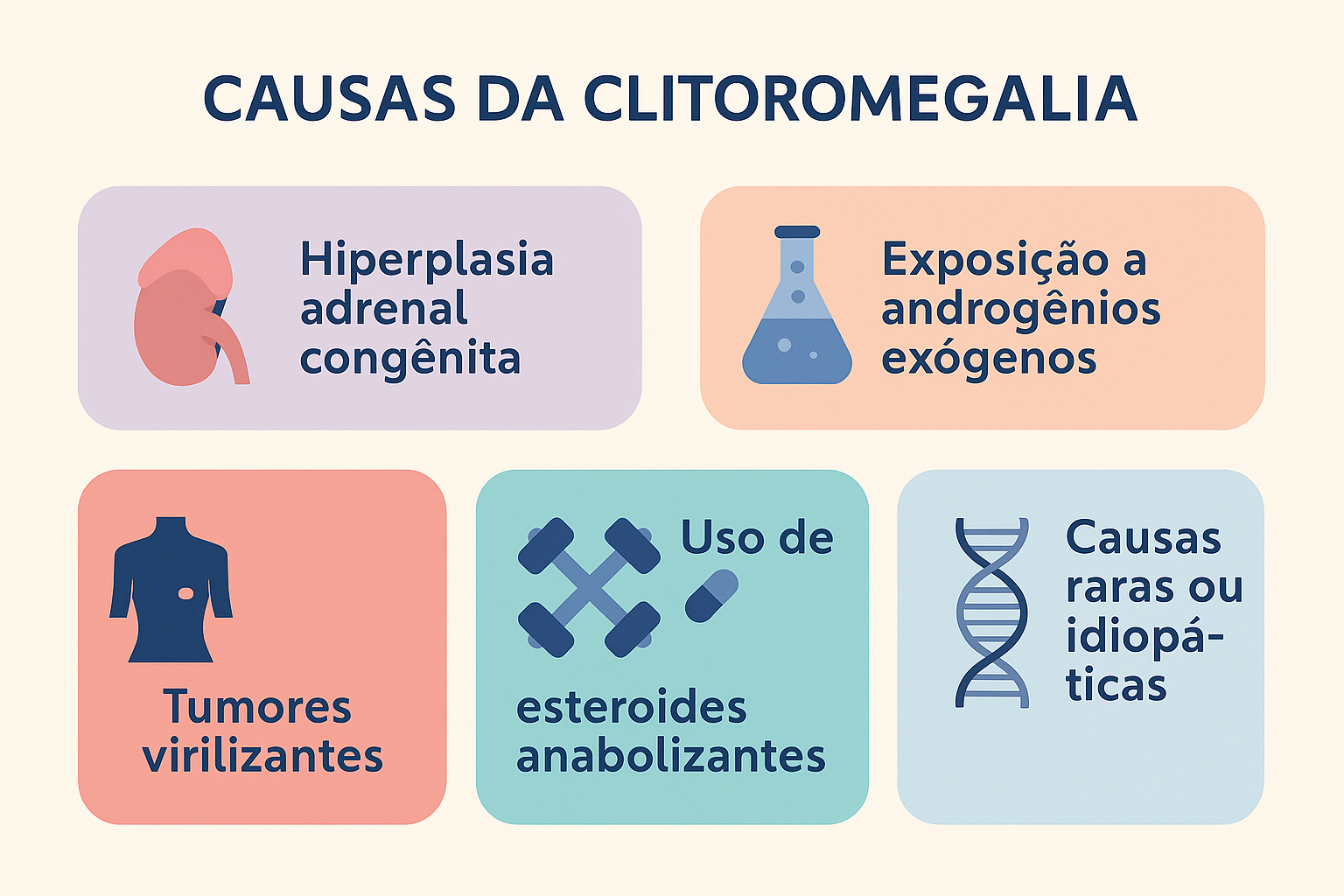
Most common causes
- Congenital adrenal hyperplasia (CAH): principal congenital etiology, with excess androgens, associated with 21-hydroxylase deficiency.
- Exposure to exogenous androgens: such as medication use by the pregnant woman.
- Virilizing tumors: secrete androgens (e.g., Sertoli-Leydig tumor).
- Use of anabolic steroids: in athletes or bodybuilders.
- Rare or idiopathic causes: such as Fraser syndrome or without identifiable cause.
Differential Diagnosis
Includes labial fusion, inclusion cysts, clitoral hood hypertrophy, and other forms of disorders of sex development (DSD).
Tests and Investigation
- Detailed clinical history: antecedents, medication use, signs of virilization, menstrual cycles.
- Physical examination: genital evaluation, Prader scale, clitoral length measurements.
- Laboratory: 17-OH progesterone (to investigate CAH), total and free testosterone, DHEA-S, androstenedione, FSH, LH, estradiol, basal and stimulated cortisol.
- Imaging: pelvic/adrenal ultrasound, magnetic resonance imaging in complex cases.
- Genetics: karyotype in cases with ambiguous genitalia; molecular testing (such as CYP21A2).
Individualized Treatment
1. Treatment of the Cause
- CAH → corticosteroid therapy with hydrocortisone (+ fludrocortisone if necessary).
- Tumors → surgical resection.
- Discontinuation of exogenous androgens when indicated.
2. Surgical Treatment
Preserving clitoroplasty of the neurovascular bundle is, however, the gold standard. Thus, older techniques that amputated or resected the cavernous body have a high potential to compromise sexual function and are now discouraged.
Ethical and Psychological Aspects
The decision for surgery in minors is delicate. It should involve:
- Ethics committee
- Informed consent and, when possible, patient assent
- Continuous psychological support until adulthood
However, in adults with acquired clitoromegaly, treatment must respect autonomy, promoting options that preserve sensitivity and sexuality.
Final Considerations
The treatment of clitoromegaly is not just a technical intervention, but a process that requires rigorous diagnostic evaluation, respect for sexual functionality, and psychosocial support. A multidisciplinary approach — involving endocrinology, genetics, plastic surgery, gynecology, psychology, and bioethics — is essential to achieve safe and satisfactory results.
In short, if you or someone you know experiences this condition, seek specialized evaluation. Schedule a consultation with an endocrinologist or specialist gynecologist, and learn more in our section on Tips for preparing
FAQ
- What is clitoromegaly? It is the abnormal enlargement of the clitoris that can have hormonal, anatomical, or tumor-related causes.
- What are the warning signs? Boy with ambiguous genitalia, adolescence with virilization, menstrual changes.
- What is the most important test for diagnosis? 17-OH progesterone, in case of suspected CAH, in addition to other hormones and imaging tests.
- Does clitoroplasty affect sensitivity? If performed preserving the neurovascular bundle, it preserves sensitivity and sexual function.
- Does all clitoromegaly require surgery? No; the cause should first be investigated, and clinical and psychosocial factors considered.
- Is it possible to identify the cause in childhood? Yes, especially in cases of CAH or ambiguous genitalia at birth.
- Is surgery irreversible? Yes; it requires careful and ethical evaluation before being recommended.
- Who participates in the treatment team? Endocrinologist, geneticist, gynecologist/plastic surgeon, psychologist, and ethics committee.
- Does clitoromegaly affect fertility? Indirectly, depending on the cause, but the main focus is functionality and hormonal health.
- How to seek emotional support? Specialized psychotherapy and support groups can offer essential support.
Related articles


General Guide: this article delves into a specific aspect of the topic. For the complete picture — reference measurements, hormonal causes (PCOS, CAH, testosterone, tumor), investigation tests, and surgical decision — read the guide Enlarged Clitoris: what it can be and when to investigate.
Agendar consulta
Precisa de orientação personalizada?
Marque uma avaliação com o Dr. Fernando Amato e tire as suas dúvidas sobre cirurgia plástica.
Falar no WhatsApp