
- Cirurgia plástica
Técnica ONE S.T.E.P com o laser 1210nm para coleta de gordura
- novembro 17, 2025
- By Fernando Amato
1. O que é a técnica one s.t.e.p. 1210 nm
1.1 Definição
A Inovação na lipoescultura: menos trauma, mais células aproveitáveis e cicatrização acelerada
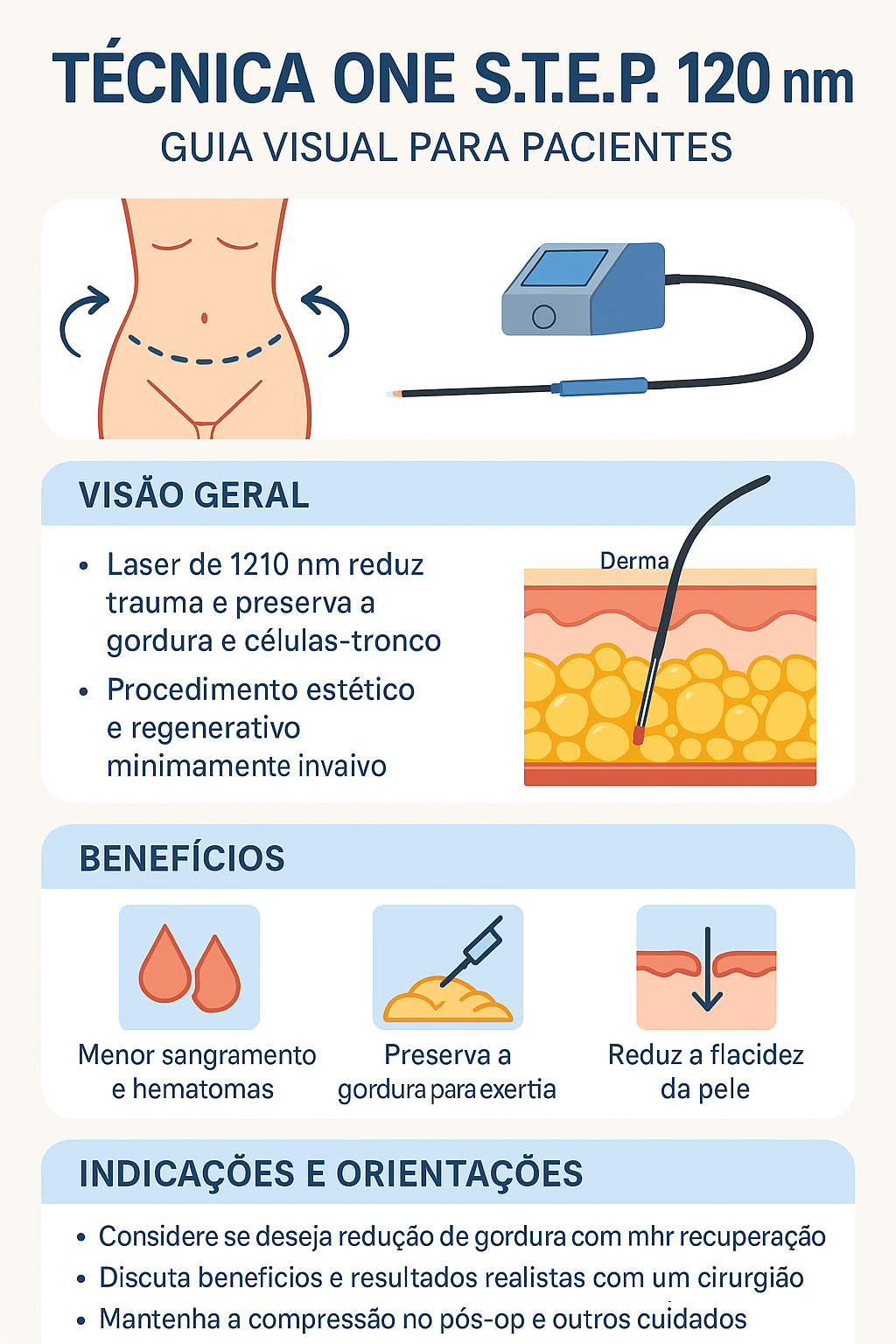
A técnica one s.t.e.p. 1210 nm representa portanto um avanço no campo da cirurgia plástica estética e regenerativa, especialmente nos procedimentos de lipoaspiração ou lipoescultura. Assim, com base no uso de um laser de diodo de comprimento de onda 1210 nm, ela visa reduzir trauma, preservar células adiposas e células‑tronco, e permitir recuperação mais rápida. Neste artigo iremos então explicar de forma técnica‑acessível como ela funciona, suas indicações, benefícios, riscos, comparação com técnicas convencionais, e cuidados no pré e pós‑operatório.
- 🔬 Preservação de adipócitos e células‑tronco por meio do laser 1210 nm
- 🩹 Menor trauma cirúrgico, hematomas e desconforto pós‑operatório
- 📦 Possibilidade de enxertia ou uso em medicina regenerativa com tecido gorduroso de qualidade
- 📉 Redução de flacidez cutânea pela estimulação de colágeno e retração da pele
- 🧭 Indicação precisa: não substitui automaticamente todas as liposaspirações — avaliação individual é fundamental
A técnica one s.t.e.p. 1210 nm (“Selective Tissue Engineering Photostimulation Technique”) utiliza um laser de comprimento de onda 1210 nm para atuar no tecido adiposo‑subcutâneo com afinidade para as gorduras. (“Selective Tissue Engineering Photostimulation Technique”) utiliza um laser de comprimento de onda 1210 nm para atuar no tecido adiposo‑subcutâneo com afinidade para as gorduras.
Diferente de técnicas tradicionais de lipoaspiração que visam somente remoção de gordura, esta técnica incorpora também a ideia de aproveitar o tecido aspirado para enxertia ou regeneração.
1.2 Princípio de funcionamento
- O laser em 1210 nm é introduzido por meio de fibra óptica através de cânula fina no tecido adiposo.
- Durante a aplicação, há fotoestimulação seletiva das células de gordura e da matriz extracelular, liberando adipócitos e células‐tronco viáveis sem promover lise (destruição) extensiva dos tecidos.
- O tecido gorduroso aspirado mantém alta viabilidade celular, com viabilidade de adipócitos e fração vascular estromal (SVF) acima de 90% em alguns estudos.
- Em muitos casos, o tecido coletado pode ser enxertado imediatamente (lipoenxertia) ou empregado em medicina regenerativa (feridas, reconstruções) sem extensa manipulação.
1.3 Diferença para outras técnicas a laser
Enquanto outros lasers de lipoaspiração atuam por emulsificação ou destruição térmica da gordura (lipo‐laser convencional), a técnica one s.t.e.p. 1210 nm busca não destruir, mas preservar tecido adiposo e componente regenerativo.
Além disso, a seletividade do comprimento de onda 1210 nm favorece adipócitos sem afetar tanto músculos, nervos ou água do tecido, segundo relatos de especialistas.
2. Indicações e aplicações clínicas
2.1 Indicações estéticas
- Lipoaspiração ou lipoescultura convencional com menor trauma.
- Lipoenxertia (por exemplo em glúteos, mamas ou outras áreas de volume) com tecido gorduroso de alta qualidade.
- Procedimentos de contorno corporal, redução de flacidez cutânea.
2.2 Indicações regenerativas e reconstrutivas
- Regeneração de tecidos como pele, subcutâneo, cartilagem, mucosas segundo descrito nos materiais da técnica.
- Reconstrução mamária com lipoenxertia em pacientes pós‐mastectomia.
- Tratamento de feridas complexas, lesões crônicas, medicina regenerativa geral com uso da gordura aspirada e células derivadas.
2.3 Limitações e seleção de paciente
Como toda técnica, a one s.t.e.p. exige avaliação cuidadosa: o cirurgião plástico deve verificar a condição clínica do paciente, presença de flacidez excessiva, qualidade da pele, volume de gordura disponível para remoção/enxertia, saúde geral. Não é indicado como técnica substituta automática para todos os casos de lipoaspiração.
3. Benefícios principais
- Menor trauma cirúrgico: menor sangramento, menor edema e hematomas, recuperação mais confortável.
- Preservação de células‑tronco e adipócitos viáveis, o que maximiza o aproveitamento do tecido para enxertia ou regeneração. Exemplo: em estudo dos autores foi alcançada média de ~15,6 milhões de células viáveis por grama de tecido aspirado, viabilidade ~92,5%.
- Melhoria na retração de pele e menor flacidez, pela ação fotobiomoduladora que estimula colágeno.
- Versatilidade: pode ser aplicada em procedimentos estéticos e reconstrutivos, um “procedimento em um passo” segundo um dos brochuras.
- Tempo de processamento rápido: segundo estudo, o processamento da fração vascular estromal foi inferior a 20 minutos, facilitando enxertia imediata.
4. Riscos, contraindicações e cuidados
4.1 Riscos comuns à lipoaspiração
Mesmo com técnica mais “amigável”, persistem riscos típicos de lipoaspiração: infecção, sangramento, irregularidades de contorno, assimetrias, cicatrizes, possibilidade de flacidez residual dependendo da pele.
4.2 Riscos específicos ou potenciais
- Embora seja menos invasiva, ainda requer cânula, laser e manipulação — há necessidade de cirurgião experiente.
- Como se trata de técnica relativamente nova, embora haja estudos, o volume de longo‑prazo (10‑20 anos) ainda é menor comparado a técnicas tradicionais.
- A eficiência da técnica depende da correta indicação e da qualidade da pele e tecido do paciente. Se houver flacidez grave, pode não resolver sozinha.
4.3 Contraindicações
- Pacientes com condições clínicas que contraindiquem cirurgia (má condição cardiovascular, falências orgânicas, problemas de coagulação).
- Pacientes com expectativas irreais ou que não aceitam uso de gordura aspirada para enxertia ou regeneração.
- Áreas com pele muito flácida ou sem boa qualidade que podem exigir concomitante abdominoplastia ou lifting.
4.4 Cuidados no pós‑operatório
- Tração da malha compressiva conforme orientação do cirurgião.
- Mobilização precoce, hidratação, alimentação equilibrada.
- Monitorização de sinais de infecção, hematoma ou irregularidade.
- Acompanhamento de evolução da textura da pele, contorno, volume da área enxertada (se houver).
5. Comparação com lipoaspiração convencional ou outras tecnologias a laser
| Técnica | Abordagem | Preservação das células/adipócitos | Recuperação | Ideal para enxertia/regeneração |
|---|---|---|---|---|
| Lipoaspiração convencional (aspiração + cânula) | Remoção mecânica de gordura | Menor preservação, maior trauma | Pode ter mais hematomas/edema | Menos ideal |
| Lipo‑laser convencional (emulsificação da gordura) | Laser para liquefazer gordura | Pode haver destruição de adipócitos | Trauma moderado | Há uso, mas menor qualidade do tecido |
| Técnica one s.t.e.p. 1210 nm | Fotoestimulação seletiva + aspiração | Alta preservação (ex: ~98% adipócitos, 10‑20 milhões células/g) | Recuperação mais rápida, menos hematomas | Excelente para enxertia/regeneração |
Portanto, a técnica one s.t.e.p. 1210 nm se destaca justamente por combinar remoção de gordura com preservação de células e tecidos, abrindo possibilidades tanto estéticas quanto regenerativas.
6. Como é o procedimento – passo a passo simplificado
- Avaliação pré‑operatória do paciente pelo cirurgião: exames, contratos, expectativas.
- Marcação das áreas de gordura a ser removida.
- Anestesia (geral ou local + sedação) conforme caso.
- Infiltração da próxima área: solução com adrenalina para minimizar sangramento (em estudo: solução fria + adrenalina 1:500.000)
- Introdução da fibra óptica do laser 1210 nm na camada adiposa profunda, acima da fáscia muscular.
- Emissão do laser para soltar o tecido gorduroso por fotoestimulação seletiva.
- Aspiração do tecido gorduroso com cânula (em geral calibre menor) preservando células e matriz.
- No caso de lipoenxertia ou regeneração, o tecido pode ser centrifugado e aplicado conforme protocolo (e.g., fração vascular estromal).
- Finalização, aplicação de drenagem ou compressão conforme protocolo, e iniciação do pós‑operatório.
- Acompanhamento: uso de malha, restrições de atividade, sessões de massagem ou drenagem linfática se indicadas.
7. Evidências científicas
- Estudo publicado comparou células estromais derivadas através da técnica one s.t.e.p. com outras técnicas, mostrando melhor preservação celular.
- Em reportagem e artigo técnico, relatam que o laser 1210 nm apresenta afinidade seletiva por adipócitos e promove regeneração da hipoderme.
- Brochura técnica da empresa desenvolvedora menciona possibilidade de uso em enxertos e regeneração com “enxerto composto”.
Embora os resultados iniciais sejam promissores, é importante que o paciente verifique com seu cirurgião os dados de longo prazo, e que o profissional tenha experiência comprovada com a técnica.
8. Perguntas frequentes (prévia)
- Esta técnica é apropriada para todos os pacientes que querem lipoaspiração? Nem todos. A indicação depende de fatores como volume de gordura a remover, qualidade da pele, expectativas e condições clínicas.
- Posso usar o tecido removido para enxertia? Sim — esse é um dos diferenciais: o tecido aspirado de forma preservada pode ser usado para enxertia ou aplicações regenerativas.
- É mais caro do que a lipo tradicional? Em geral sim, devido ao equipamento específico, à tecnologia envolvida e à necessidade de profissional treinado.
- O pós‑operatório é muito mais curto? Em muitos relatos, sim — menor hematoma/edema, menos dor, mas ainda requer cuidados normais de pós‑lipoaspiração.
- Existe risco maior de flacidez de pele? Todo procedimento de lipoaspiração tem esse risco se a pele for de má qualidade ou houver remoção muito extensa. A técnica one s.t.e.p. busca reduzir esse risco a partir da estimulação de colágeno.
- Qual o tempo para ver o resultado final? Geralmente alguns meses para contorno e até 6‑12 meses para enxertia/regeneração completa.
- Preciso de compressão pós‑operatória? Sim — malha ou cinta conforme indicação do seu cirurgião.
- Há registro na agência regulatória brasileira? Alguns métodos com laser de 1210 nm estão descritos e mencionados como aprovados para determinadas indicações (ex: “Laser Regenera”) localmente.
- Pode ser usado para flacidez facial ou corporal leve? Sim — alguns relatam uso em lifting corporal ou facial com essa tecnologia.
- Quais as complicações mais comuns? Mesmo com técnica mais avançada, podem ocorrer irregularidades de contorno, assimetria, dor, sangramento, pequenos hematomas, necessidade de retoque.
9. Conclusão
A técnica one s.t.e.p. 1210 nm representa uma evolução na lipoaspiração e na lipoenxertia ao combinar remoção de gordura com preservação de células e tecido utilizável para regeneração. Para quem procura contorno corporal ou regeneração com qualidade celular, pode ser uma excelente opção desde que o cirurgião tenha experiência e o paciente esteja bem indicado.
Se você está considerando cirurgia plástica ou lipoenxertia, recomendo agendar uma consulta com um cirurgião plástico experiente nessa técnica, para avaliar seu caso, entender os riscos, benefícios e ver portfólio de resultados.
Artigos relacionados
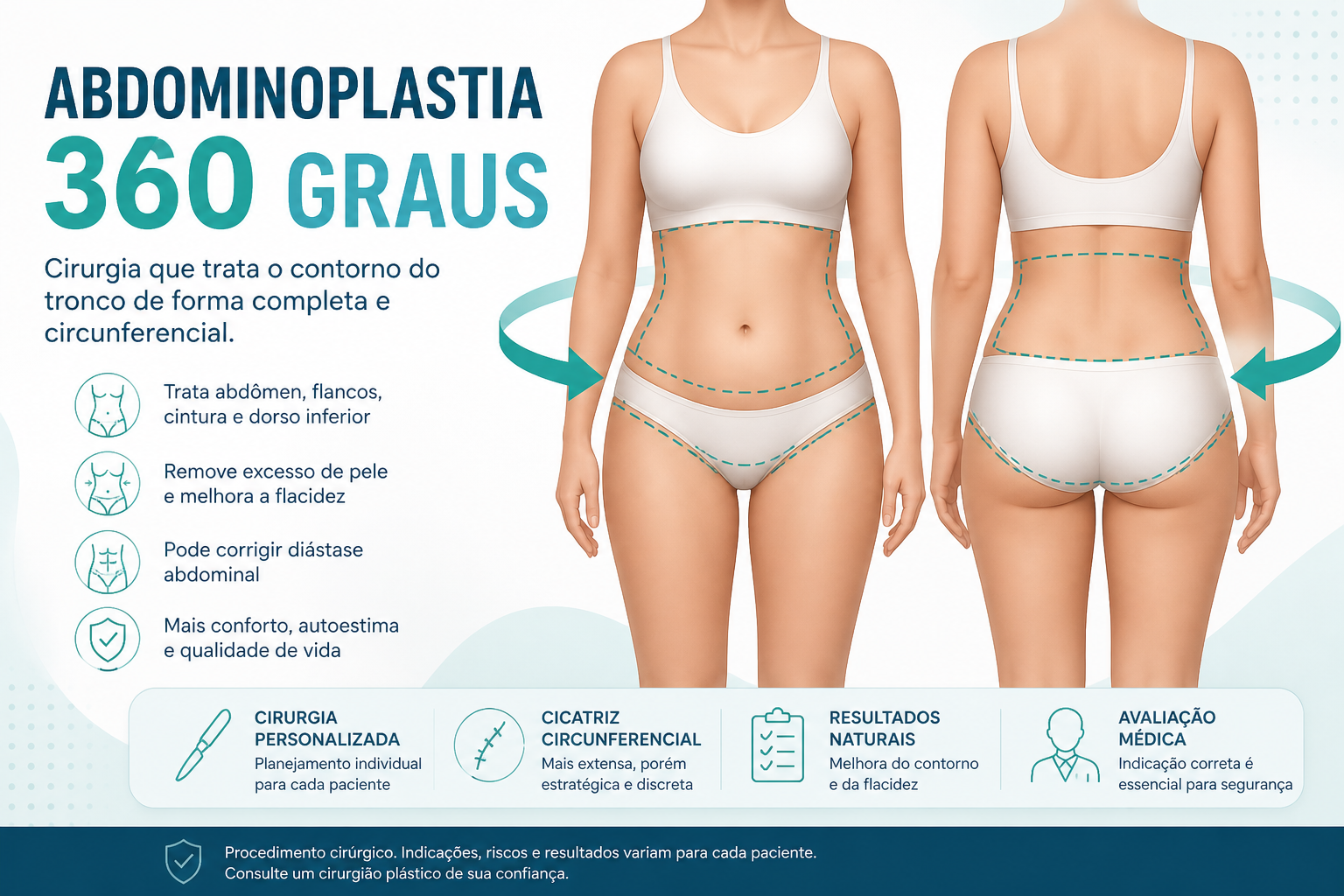
Abdominoplastia 360 graus: o que é, para quem é indicada e o que esperar

Alimentação antes e depois da cirurgia plástica

Alimentação saudável no pós-operatório de cirurgia plástica
Agendar consulta
Precisa de orientação personalizada?
Marque uma avaliação com o Dr. Fernando Amato e tire as suas dúvidas sobre cirurgia plástica.
Falar no WhatsApp