- Plastic surgery
Poland Syndrome and Breast Asymmetry: Causes and Treatments
- August 29, 2025
- By Fernando Amato
Poland syndrome is therefore a rare congenital malformation that can cause breast asymmetry, especially in women, in addition to thoracic and hand alterations. Although it does not compromise life expectancy in most cases, the condition has a strong aesthetic, functional, and psychosocial impact, motivating the search for reconstructive treatments.
🌟 Quick Highlights
- 👩⚕️ Rare disease: 1 in every 20,000 to 30,000 live births.
- 💪 Characterized by partial or total absence of the pectoralis major muscle.
- 🫁 May involve ribs, muscles, and even respiratory function.
- 👩 In women, the main impact is breast asymmetry or absence.
- 🛠️ Reconstructive surgical treatment restores self-esteem and quality of life.
What is Poland Syndrome?
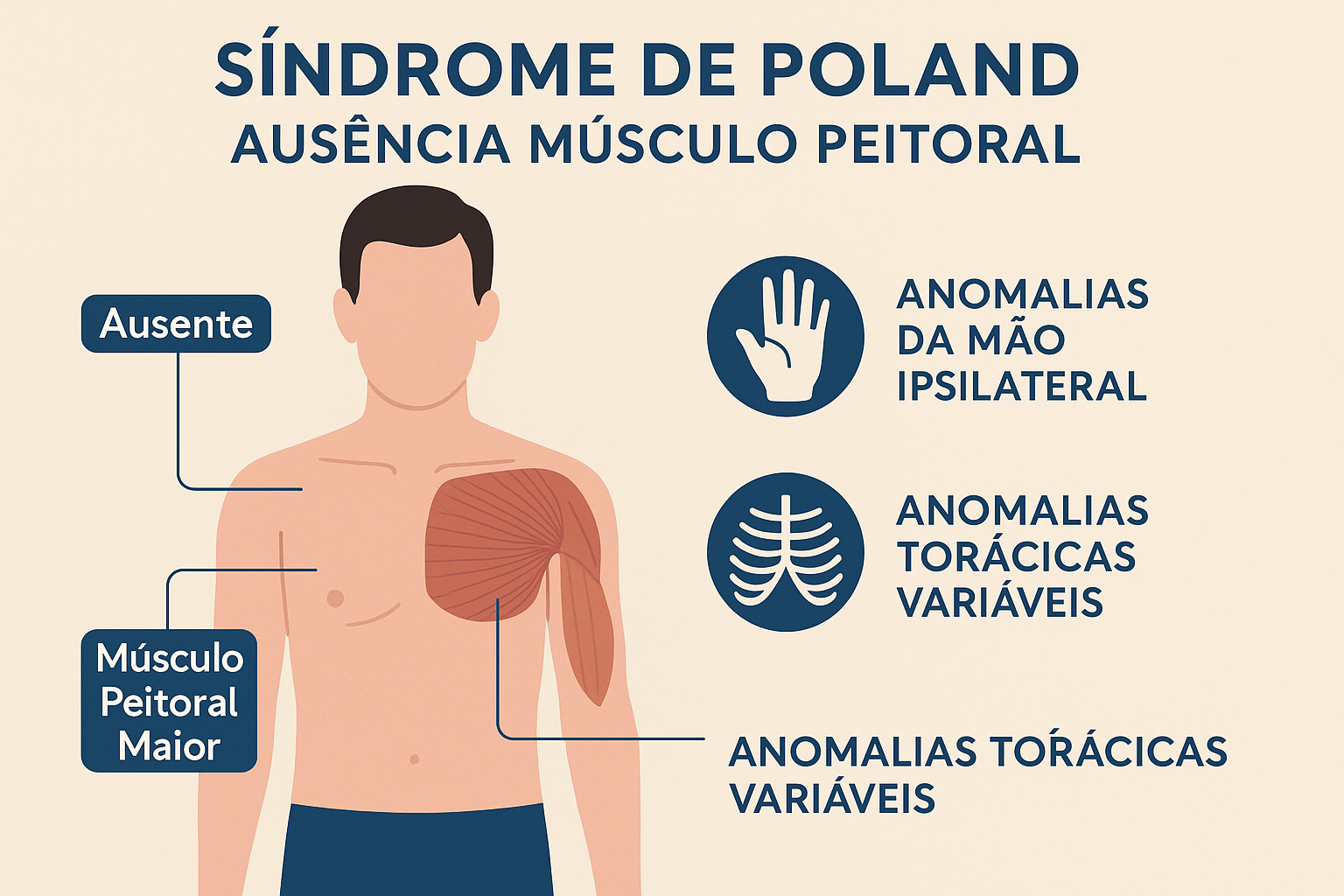
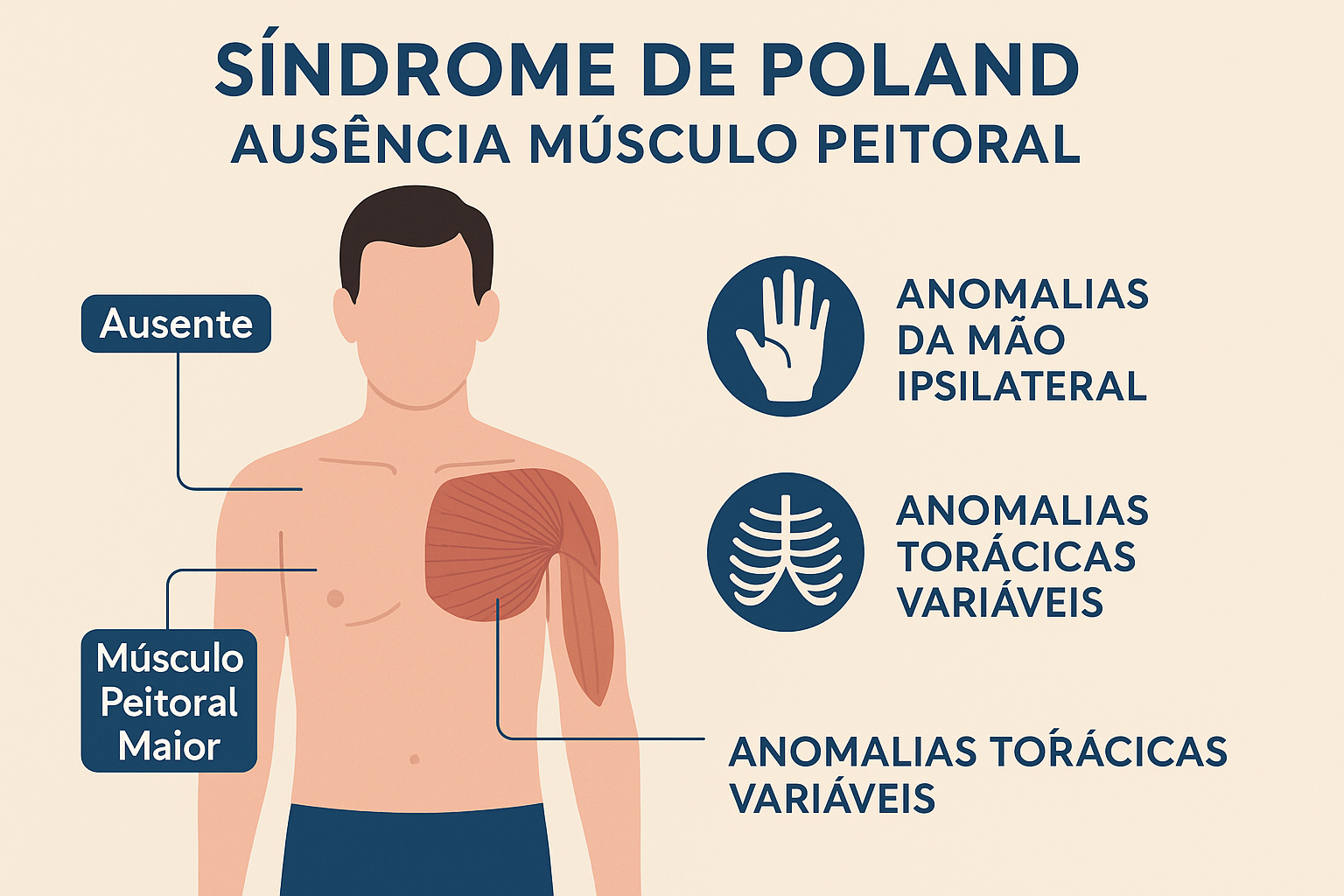
Poland syndrome is mainly characterized by the partial or complete absence of the pectoralis major muscle on one side of the body, usually associated with hand anomalies on the same side.
Severity varies: in mild cases, it manifests only as mammary hypoplasia (insufficient breast development), while in severe forms it can include rib deformities and significant hand alterations.
Epidemiology
- Occurs in 1:20,000 to 1:30,000 births.
- It is more common in men (2:1).
- Usually affects the right side of the body (up to 75%).
- Bilateral cases are extremely rare.
Cause of Poland Syndrome
The most accepted cause is a vascular event during gestation, between the 6th and 7th week, which interrupts the blood flow of the subclavian artery. This then impairs the development of the thoracic wall and upper limb, leading to the malformation.
Clinical Manifestations
🫁 Thoracic Alterations
- Partial or total absence of the pectoralis major muscle.
- Obvious thoracic asymmetry.
- In severe cases, absence of ribs and thoracic instability.
👩 Breast Alterations
- Hypoplasia or absence of the mammary gland.
- Small or absent nipple-areola complex.
- Aesthetically more relevant in women, who notice breast asymmetry.
✋ Hand Alterations
- Syndactyly (fused fingers).
- Short fingers (brachydactyly).
- Absence of fingers in extreme cases.
Psychosocial Impact
- In men, there is an aesthetic impact, especially in athletes and thin individuals.
- In women, breast asymmetry is the main complaint, affecting self-esteem and social relationships.
- Functional alterations of the hand can compromise daily activities.
Diagnosis
Diagnosis is mainly clinical, based on inspection of asymmetry and anomalies. Thus, imaging exams, such as radiography, tomography, and magnetic resonance imaging, detail muscles, ribs, and tissues.
Treatment of Poland Syndrome and Breast Asymmetry
Treatment is individualized and may include:
🏥 Thoracic and Breast Reconstruction
- Customized silicone implants to correct the chest.
- Breast implants in women, with or without expanders.
- Muscle flaps, such as the latissimus dorsi, to replace absent muscles.
- Lipofilling (the patient's own fat) for minor adjustments.
- Hybrid techniques (implant + fat graft) for better symmetry.
✋ Hand Correction
- Early surgery to release fused fingers (syndactyly).
- Bone and tendon reconstructions as needed.
🫁 Rib Corrections
- In severe cases, use of rib grafts or prostheses to stabilize the chest.
Prognosis
Poland syndrome does not reduce life expectancy, but it can affect breathing in severe cases. Surgical treatment therefore brings excellent aesthetic and functional results, improving self-esteem and quality of life.
Useful Related Links
- Implant
- Mammoplasty
- Mastopexy
- Anesthesia
- Day Hospital
- Pre-operative Tips
- Pre-operative Exams
- Diet before and after surgery
- Risks of Smoking
Frequently Asked Questions
- What is Poland syndrome? It is a congenital malformation characterized by the partial or total absence of the pectoralis major muscle, usually associated with breast asymmetry and hand alterations.
- Is Poland syndrome hereditary? There is no consistent evidence of heredity; it is believed to occur due to a vascular event during gestation.
- Why does Poland syndrome cause breast asymmetry? Because it affects the development of the mammary gland and thoracic musculature on the affected side.
- Does Poland syndrome affect more men or women? It affects men more, but in women the aesthetic impact is usually greater due to breast asymmetry.
- Is it possible to correct breast asymmetry caused by Poland syndrome? Yes. With implants, lipofilling, or muscle flaps, it is possible to restore symmetry and volume.
- What is the ideal age to treat breast asymmetry in Poland syndrome? Treatment is generally indicated after complete breast development, in adolescence or early adulthood.
- What exams are necessary to confirm the diagnosis? Radiography, tomography, and magnetic resonance imaging help assess absent muscles, bones, and tissues.
- Does Poland syndrome affect life expectancy? No, except in severe cases with absence of ribs or pulmonary hypoplasia.
- What surgical techniques are used for breast reconstruction in these cases? Silicone implants, latissimus dorsi muscle flap, lipofilling, and hybrid techniques.
- Does the SUS (Brazil's public healthcare system) cover breast reconstruction surgery for Poland syndrome? Yes, in many cases it is possible to request treatment through the public healthcare system.
Related articles



Agendar consulta
Precisa de orientação personalizada?
Marque uma avaliação com o Dr. Fernando Amato e tire as suas dúvidas sobre cirurgia plástica.
Falar no WhatsApp