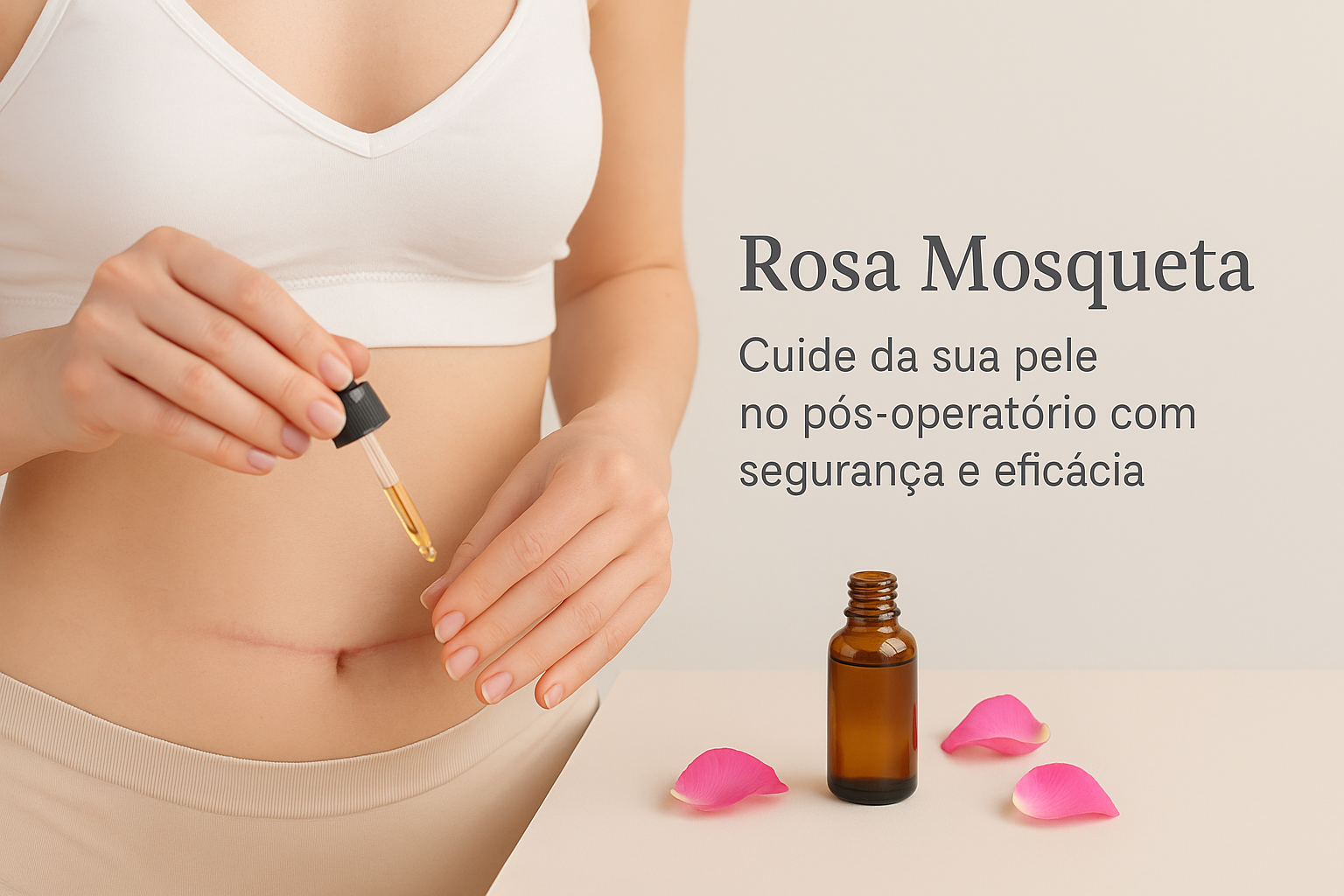

- Plastic Surgery
Rosehip: What Type to Use on the Skin and Post-Surgery?
- July 18, 2025
- By Fernando Amato
Rosehip is a plant recognized for its therapeutic properties, especially in skin care. Therefore, the oil extracted from its seeds is widely used by professionals in aesthetic medicine and in the post-operative period of plastic surgeries, due to its healing, regenerating, and moisturizing action. However, it is essential to understand what types of rosehip exist and how to choose the most suitable for each situation.
In this article, you will discover:
- The main types of rosehip
- How they act in skin recovery
- What is the ideal time to apply in the post-operative period
- Tips for choosing a safe and effective product
🌟
Article Highlights
🌹 Aids in skin regeneration post-surgery
💧 Deeply moisturizes and improves elasticity
🧴 Difference between pure, cold-pressed oil and cosmetics
🛡️ Rich in fatty acids, vitamins, and antioxidants
⏱️ Ideal for use after the initial healing phase
Introduction: Why is rosehip so valuable for the skin?
The continuous search for healthier skin and efficient surgical recovery has led many patients and healthcare professionals to turn to rosehip. Rich in essential fatty acids, vitamin A (natural retinol), and antioxidants, rosehip oil has been used to improve skin texture, treat scars, attenuate stretch marks, and even prevent keloids.
Among its many uses, its application in plastic surgeries such as mammaplasty, mastopexy, thigh lift and body contouring procedures stands out. However, to obtain the expected benefits, it is crucial to choose the correct type of product and know when and how to use it.
🌹 What is Rosehip?
Rosehip is the popular name for some species of wild roses, especially Rosa rubiginosa and Rosa canina, native to Europe and South America. Its fruit is used to produce the famous rosehip oil, rich in nutrients that aid in skin regeneration.
The oil is extracted from the fruit's seeds, and its composition includes:
- Linoleic and linolenic acid (omega 6 and omega 3) – aid in epidermal reconstruction
- Natural Vitamin A (retinol) – stimulates cell renewal
- Vitamin C and antioxidants – protect against premature aging
- Tocopherols (vitamin E) – have anti-inflammatory and moisturizing effects
🌱 Types of Rosehip and Their Differences
There are different forms of rosehip available on the market. Knowing the types of rosehip for the skin is essential to choose the most effective product.
1. Pure Rosehip Oil (Cold-Pressed)
It is the most recommended for therapeutic purposes. Extracted by cold pressing, it retains all the plant's properties.
✅ Indicated for:
- Surgical scars
- Stretch marks
- Wrinkles
- Dryness
⚠️ Attention: it must be stored in a cool place, protected from light. Being natural, it oxidizes quickly.
2. Rosehip in Cosmetics (Cream or Serum)
Mixed with other ingredients in cosmetic products, rosehip oil is incorporated into creams, lotions, or serums.
✅ Indicated for:
- Hydration of sensitive skin
- Prevention of fine lines
- Daily use on skin that has not yet undergone surgery
🔍 Tip: check the concentration of rosehip oil in the formula. The higher, the better the efficacy.
3. Rosehip Oil Capsules (oral use)
Dietary supplements that promise benefits from the inside out. However, studies on their oral efficacy are still limited.
✅ Indicated as a nutritional supplement, but does not replace topical application in the post-operative period.
🩺 Rosehip in the Post-Operative Period: When and How to Use?
The application of rosehip oil in patients who have undergone plastic surgery must respect the time of initial healing, to avoid complications such as inflammation or dehiscence.
⏳ When to start using?
The ideal is to start after primary healing, that is, about 15 to 21 days after surgery, with your doctor's authorization. Before that, the skin is still in the reorganization phase and vulnerable to infection.
Always consult the plastic surgeon before starting any topical product, especially in incision areas.
📌 How to apply?
- Clean the area with neutral soap
- Apply a small amount of oil with gentle movements
- Massage with fingertips until completely absorbed
- Use 2 times a day, preferably morning and night
💡 Benefits of Rosehip for the Skin
Using rosehip in the post-operative period or in aesthetic skin care offers a series of proven benefits:
- ✅ Accelerates cell regeneration
- ✅ Prevents the formation of hypertrophic scars
- ✅ Improves scar color and texture
- ✅ Reduces inflammation and flaking
- ✅ Increases skin elasticity
In addition, it is an excellent adjuvant in the treatment of lipedema, growth or pregnancy stretch marks, and old scars.
⚠️ Cautions When Using Rosehip
Not every product that calls itself “natural” is safe. Therefore:
- Avoid applying to open wounds or recent stitches
- Prefer 100% pure, cold-pressed products with an expiration date
- Do not expose skin to the sun after application
- Check for the presence of preservatives or synthetic fragrances, which can cause allergies
For patients in surgical recovery, correctly following the surgeon's recommendations and the care routine is fundamental. We recommend reading the article with tips to prepare for the post-operative period.
👨⚕️ Conclusion: How Can Rosehip Help Your Skin?
The use of rosehip, especially in the form of pure cold-pressed oil, is one of the most effective natural allies in plastic surgery recovery and skin regeneration. Knowing the types of rosehip for the skin and how to use them correctly is essential to ensure positive results without risks.
If you are in the post-surgical period or want to improve the appearance of your skin, talk to a specialist. Dr. Fernando Amato, a plastic surgeon, can guide you on the best time and ideal way to use rosehip in your case.
📞 Schedule your consultation with Dr. Fernando Amato and receive safe and personalized care!
Questions and Answers:
- Does rosehip lighten spots? Yes, it helps to even out skin tone and reduce spots, especially post-inflammatory ones.
- Can I use rosehip immediately after surgery? No. It is recommended to wait at least 15 to 21 days and receive medical clearance.
- What is the best type of rosehip for scars? Pure, cold-pressed, 100% natural oil is the most indicated.
- Can rosehip be used on the face? Yes, especially to treat wrinkles, acne scars, and for hydration.
- Does rosehip help with stretch marks? Yes. It improves elasticity and promotes skin regeneration.
- Can rosehip oil cause acne? It is rare, but can occur on oily skin. Test on a small area first.
- Is it safe to use rosehip during pregnancy? Yes, for topical use. But always with medical guidance.
- What is cold-pressed? It is an extraction method that preserves the natural properties of the oil.
- Can rosehip be used with other scar creams? Yes, but consult your doctor to ensure compatibility.
- Does rosehip have contraindications? It is not indicated for skin with open wounds, infections, or known allergies to the product.
Related articles



Agendar consulta
Precisa de orientação personalizada?
Marque uma avaliação com o Dr. Fernando Amato e tire as suas dúvidas sobre cirurgia plástica.
Falar no WhatsApp