- Surgeries, Diseases, Face
Craniosynostosis: Understanding the Implications and Treatment Options
- April 30, 2024
- By Fernando Amato
🔍 What is Craniosynostosis and How Does it Affect Development?
Article written with the help of ChatGPT-4 and reviewed by Dr. Fernando Amato.
👶 Craniosynostosis is a serious medical condition that involves the premature fusion of one or more cranial sutures in infants. This can lead to deformities in the growth of the skull and face, as well as functional complications that require immediate medical intervention.
🌟 Article Highlights:
- 🧠 Functional Impact: Increased intracranial pressure and potential visual changes.
- 🚑 Alarming Symptoms: Headache and irritability, which may signal increased pressure in the brain.
- 🩺 Accurate Diagnosis: Use of X-rays and CT scans for appropriate surgical planning.
- 🏥 Treatment Options: From early cerebral decompression to craniofacial remodeling.
- 🔄 Necessary Follow-up: Regular examinations are crucial to monitor development after treatment.
What is Craniosynostosis?
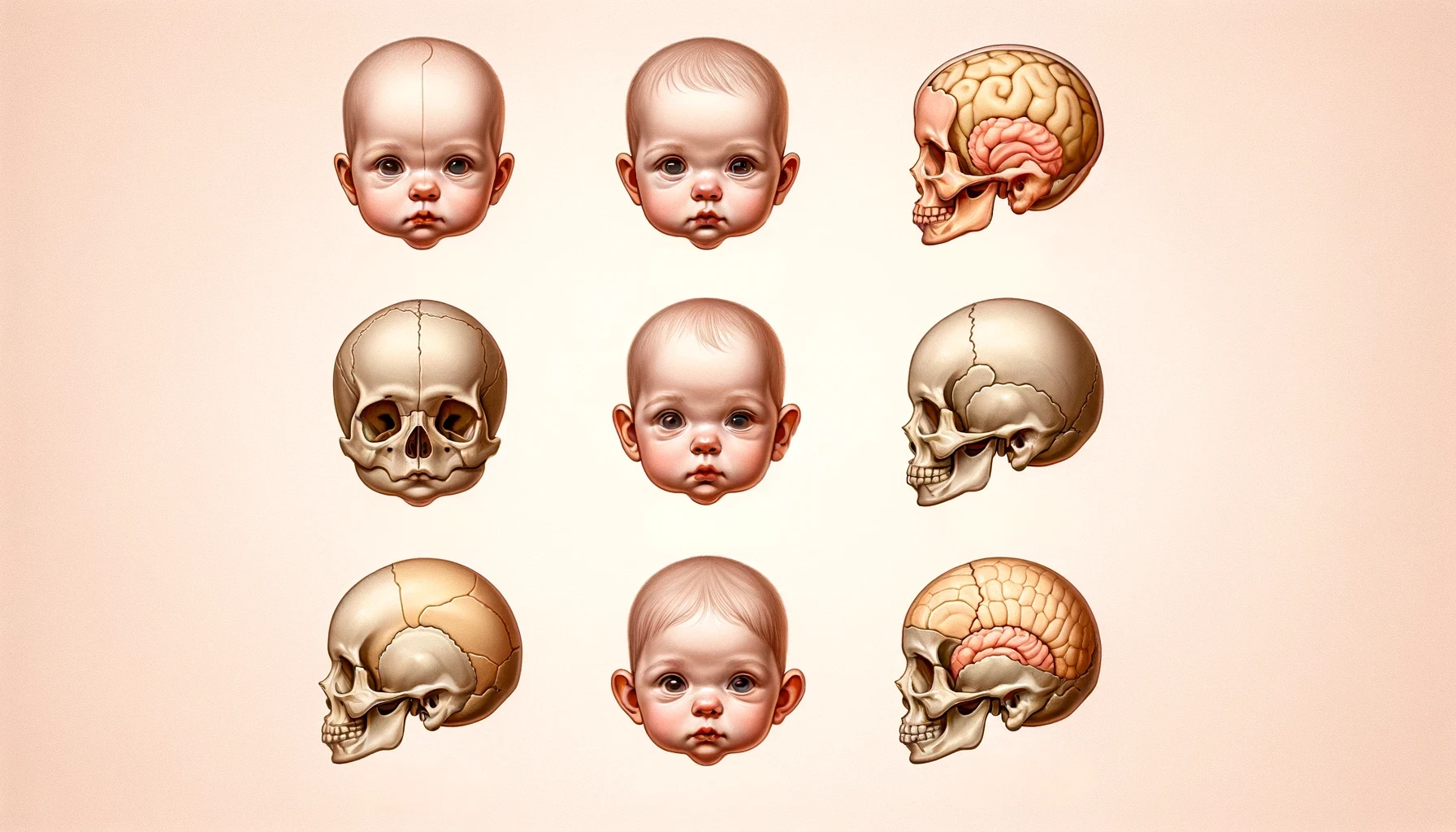
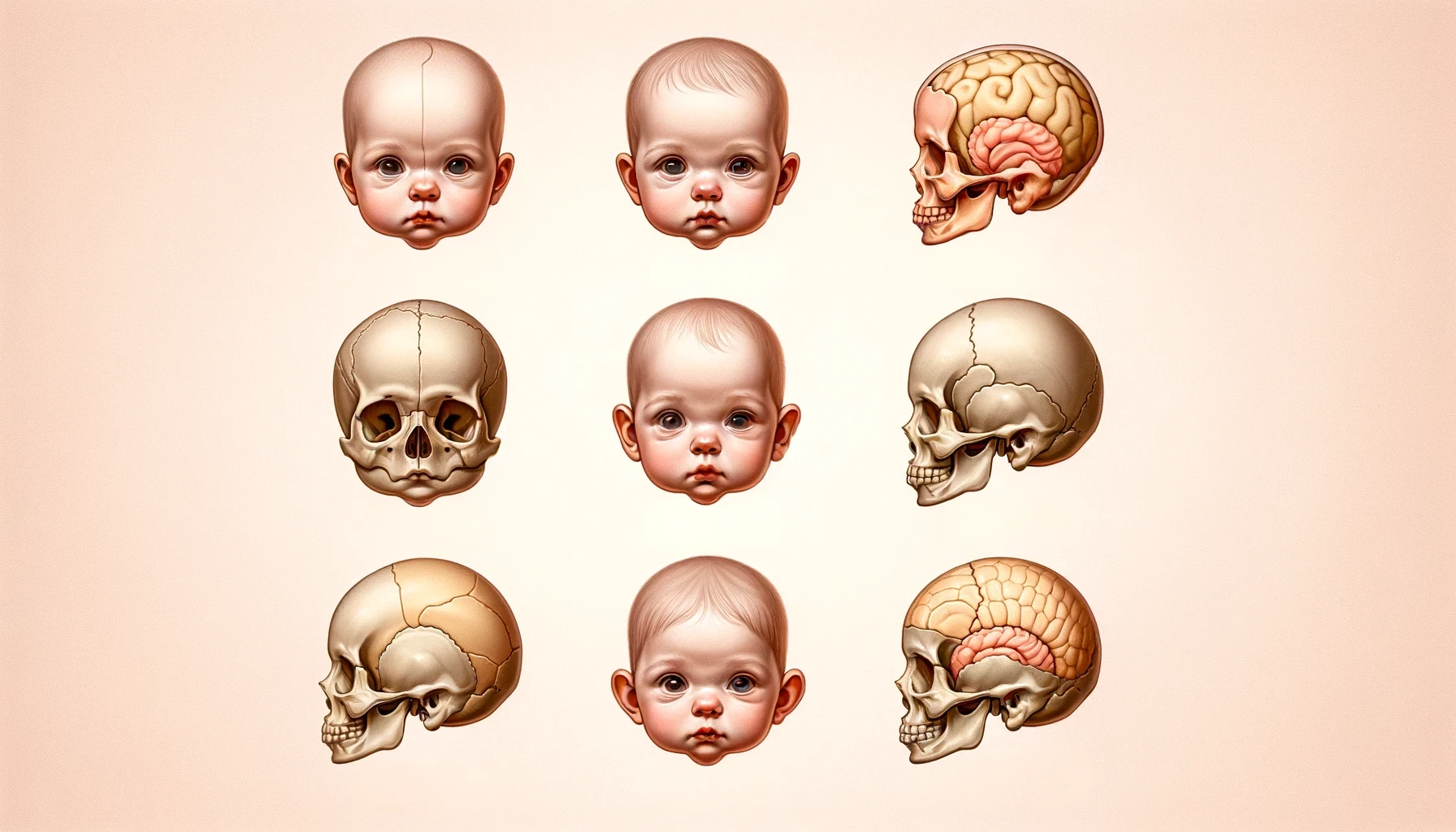
Craniosynostosis, however, is a condition that affects the skull's ability to grow normally and symmetrically, due to the premature closing of the sutures, the fibrous joints that connect the bones of a baby's skull. Thus, the fused suture restricts skull growth perpendicular to the suture and promotes compensatory growth parallel to the affected suture, leading to a variety of abnormal skull shapes.
Causes and Classification
The condition, therefore, can result from genetic factors or can occur in isolation. However, according to Virchow's classification, the affected sutures can lead to different forms of craniosynostosis:
- Scaphocephaly: Fusion of the sagittal suture, resulting in a narrow and elongated skull.
- Trigonocephaly: Fusion of the metopic suture, with the skull taking a triangular shape in the frontal region.
- Plagiocephaly and Brachycephaly: Unilateral or bilateral fusion of the coronal suture, affecting the balance and symmetry of the skull.
- Turricephaly and Oxycephaly: Involve multiple sutures, creating a tower-shaped skull or one with frontal retroversion.
Main Symptoms
Symptoms of increased intracranial pressure include headache, irritability, and vomiting. However, visual changes, such as globe protrusion due to orbital cavity hypoplasia, can lead to additional complications like conjunctivitis and amaurosis.
Diagnosis and Monitoring
Diagnosis, therefore, is generally confirmed through imaging exams, such as X-rays and computed tomography (CT), which detail bone and brain anomalies. Then, monitoring intracranial pressure is crucial in severe cases and during surgical procedures.
Treatment Options
Treatment varies according to the severity and type of craniosynostosis:
- Cranial Remodeling: Suitable for cases without significant midface deformity.
- Facial Advancement: Used to correct facial retrusion, especially with LeFort III osteotomy.
- Fronto-facial Advancement: Recommended for severe cases with respiratory and feeding problems.
Frequently Asked Questions
- What is craniosynostosis?
- It is the premature fusion of one or more cranial sutures, however, which can lead to aesthetic and functional deformities of the skull and face.
- What are the warning signs for craniosynostosis?
- Symptoms such as headache, irritability, and vomiting may indicate increased intracranial pressure, a warning sign for craniosynostosis.
- How is it diagnosed?
- Through X-rays and computed tomography, which help identify the affected sutures and resulting deformities.
- What treatments are available?
- Depending on the severity, treatments range from cerebral decompression to more complex interventions such as craniofacial remodeling.
- Is follow-up necessary after treatment?
- Yes, regular follow-up examinations are crucial to monitor the success of treatment and subsequent craniofacial development.
See also the website neurocirurgia.com
Related articles


Agendar consulta
Precisa de orientação personalizada?
Marque uma avaliação com o Dr. Fernando Amato e tire as suas dúvidas sobre cirurgia plástica.
Falar no WhatsApp