
- Surgeries, Men, Breasts
Masculinizing Mastectomy
- November 30, 2022
- By Fernando Amato
What is masculinizing mastectomy?
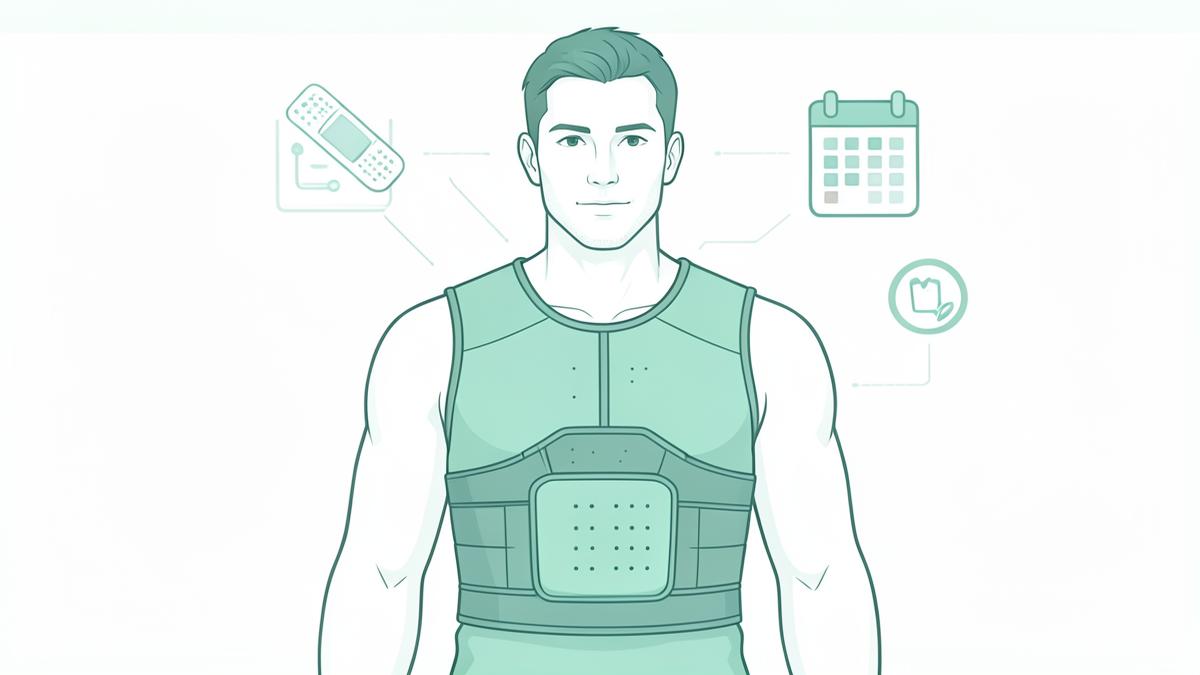
Masculinizing mastectomy is a surgery performed on transgender or non-binary individuals who wish to remove their breasts and construct masculine nipples. This surgery is an option for individuals who wish to align with their gender and feel more comfortable with their body.
The surgery is performed by a specialized plastic surgeon and is usually done in a hospital setting. The surgery involves removing breast tissue and reconstructing masculine nipples. In some cases, liposuction may be necessary to adjust the chest contour.
Post-operative recovery can be a challenging process, with pain and swelling in the first few days and weeks. Recovery time varies from person to person and depends on the size and complexity of the surgery. It is important to follow the surgeon's instructions and avoid intense physical activities during the recovery period.
It is important to emphasize that surgery is not the only option for transgender or non-binary individuals, and it is crucial to discuss all options and choose the one that is most suitable for each individual. Additionally, psychological support is important before and after surgery, as this is a very personal decision and can have significant emotional impacts.
In summary, masculinizing mastectomy is a surgery performed on transgender or non-binary individuals who wish to remove their breasts and construct masculine nipples. The surgery is performed by a specialized plastic surgeon, but psychological support is important before and after the surgery, as this is a very personal decision and can have significant emotional impacts.
Is masculinizing mastectomy covered by health insurance?
Yes, according to the National Health Agency (ANS), coverage is mandatory if it complies with the rules established by the Federal Council of Medicine (CFM), which basically states: for patients over 18 years of age, it is required that the candidate has previously undergone at least one year of follow-up by a multidisciplinary and interdisciplinary team.
How is masculinizing mastectomy performed?
It is a surgery in which the entire breast is removed from both sides, with repositioning of the areolar complex (nipple), which can be done by flap or skin graft.
Is masculinizing mastectomy the same as mastectomy for breast cancer?
Although the mammary gland is removed in both cases, and similar techniques can be used, these are surgeries with different objectives. In the case of breast cancer surgery, the procedure is more aggressive and may involve lymph node removal. In masculinizing mastectomy, the resection is limited to better define the body contour, and can be associated with liposuction.
Is masculinizing mastectomy performed by SUS (Brazil's public healthcare system)?
Yes, it is a procedure performed by the Sistema Único de Saúde (SUS) in specialized centers.
What does the CFM say about masculinizing mastectomy and the treatment of gender incongruence?
CFM Resolution No. 2.265/2019 provides for broader access to care for this population in the public health system and establishes criteria for greater safety in performing procedures with hormone therapy and sex reassignment surgeries
With the concern to collaborate with the improvement of healthcare for people with gender incongruence, the Federal Council of Medicine (CFM) updated parameters for the care of this population in the country. These points are included in Resolution No. 2.265/2019, published in the Official Gazette of the Union (DOU) this Thursday (9). The text approved by the CFM Plenary resulted from a long discussion and analysis process, concluded after more than two years. In addition to ethical and legal aspects, different clinical studies on the subject were analyzed in an attempt to formulate a modern document anchored in solid technical criteria.
According to Resolution No. 2.265, comprehensive health care for transgender individuals must address all their needs, ensuring their access, without any discrimination, to services at the basic, specialized, and emergency care levels. The text also establishes that medical assistance for transgender individuals must promote comprehensive and specialized care in the stages of reception, outpatient follow-up, hormone therapy, and clinical, surgical, and post-surgical procedures.
Despite taking into account aspects already provided for by the National Policy for Comprehensive Health of Lesbians, Gays, Bisexuals, Transvestites, and Transsexuals (GM/MS Ordinance No. 2.836/11) and by the criteria for carrying out the Transsexualization Process in SUS (GM/MS Ordinance No. 2.803/13), both prepared within the scope of the Ministry of Health, it is expected that the CFM Resolution will contribute to the qualification of care for people with gender incongruence, expanding the scope of services to which this group will have access in the public network.
Gender – Gender incongruence occurs when an individual does not recognize themselves with the sex identified at birth. Transsexual/transgender men are those born female, but who identify as male. Transsexual/transgender women are those born male, but who identify as female. Transvestite is a person who identifies and presents as the opposite gender, but accepts their genitalia.
Gender affirmation is the multidisciplinary therapeutic procedure which, through hormone therapy and/or surgeries, allows the person to adapt their body to their gender identity. According to the text published in the DOU, individuals with gender incongruence will be incorporated into an assistance flow, which will indicate the best approach and necessary procedures for each case.
The CFM standard clarifies that this team must include a psychiatrist, endocrinologist, gynecologist, urologist, and plastic surgeon, without prejudice to other medical specialties that meet the needs of each case, in addition to other health professionals necessary for the individual's demands. In situations where the patient is under 18 years old, the presence of a pediatrician on the team will be required.
The Resolution also states that medical care must include a complete anamnesis, physical and psychological examination, as well as the identification of the patient by their social name and registration name, including their gender identity and sex at birth. Depending on the age, the suggested actions should involve parents or legal guardians of children or adolescents. For this group, assistance must be articulated with schools and also with reception institutions.
Criteria – The debate that led to the formulation of the text was extensive and exhaustive. In addition to the CFM plenary, representatives from the Ministry of Health, the Federal Council of Psychology (CFP), the Federal Council of Social Service (CFESS) and different medical specialty societies that interface with the topic, such as psychiatry, endocrinology, plastic surgery, urology and pediatrics, contributed to the process. Leaders of organized social movements dedicated to the topic, as well as parents of children and adolescents diagnosed with gender incongruence and managers of hospitals that already provide these services, were also heard.
Among the defined precautions, Resolution No. 2.265/2019 prohibits the performance of hormonal or surgical procedures in people diagnosed with severe mental disorders. It also requires patients' knowledge of the benefits and risks involved in the process, such as the possibility of sterility. In this sense, any procedure must only be initiated after signing an informed consent form. In the case of minors under 18 years old, a consent form must also be presented.
An important difference between the new resolution (No. 2.265) and the previous one (No. 1.955) is that the updated text addresses issues such as pubertal blockade, which is still considered experimental (subject to the rules of research protocols approved by the CEP/Conep system), and cross-sex hormone therapy, which were not previously covered. With the revoked norm, the one published this week also regulates the surgical processes related to the care of these cases.
Pubertal blockade is the interruption of sex hormone production, preventing the development of secondary sexual characteristics of the biological sex through the use of gonadotropin-releasing hormone (GnRH) analogs. Cross-sex hormone therapy is a form of hormone replacement in which sex hormones and other hormonal medications are administered to transgender individuals for feminization or masculinization, according to their gender identity.
Hormone Therapy – CFM Resolution No. 2.265/2019, among the defined points, emphasizes that cross-sex hormone treatment can only be initiated from the age of 16. Each person will be evaluated by the multidisciplinary team involved in the care, as development manifests differently in each child or adolescent. This change also reinforces safety mechanisms for these situations.
In turn, from the age of 18, the CFM Resolution reiterates that cross-sex hormone therapy must be prescribed by an endocrinologist, gynecologist, or urologist, all with specific scientific knowledge, with the purpose of inducing sexual characteristics compatible with gender identity.
The doses of sex hormones to be adopted must follow the principles of hormone replacement therapy for hypogonadal individuals (with functional deficiency of the gonads that can lead to delayed growth and sexual development), according to the pubertal stage.
The hormones used are testosterone (to induce the development of male secondary sexual characteristics in transsexual men), estrogen (to induce the development of female secondary sexual characteristics in transsexual women and transvestites) and antiandrogen, which can be used to attenuate body hair growth and spontaneous erections. The use of estrogens or testosterone must be maintained throughout the individual's life, monitoring risk factors.
Surgeries – Regarding surgical procedures for gender affirmation to assist people with gender incongruence, Resolution No. 2.265/2019 established that they can be performed only after 18 years of age, requiring that the candidate has previously undergone at least one year of follow-up by a multidisciplinary and interdisciplinary team.
The text also states that in the pre-operative phase, cross-sex hormone therapy will be supervised by an endocrinologist, gynecologist or urologist, who will assess whether the bodily transformations have reached the appropriate stage for the indication of surgeries. The surgical procedures for gender affirmation considered valid by the CFM are categorized into two groups.
Surgeries for gender affirmation from male to female are: neovulvovaginoplasty (which may be performed using different techniques described in the Resolution based on patient evaluation); and augmentation mammaplasty. In turn, affirmation procedures from female to male include bilateral mastectomy; pelvic surgeries (hysterectomy and bilateral oophorectomy); and genital surgeries (neovaginoplasty and phalloplasty through metoidioplasty – rectification and lengthening of the clitoris, after hormonal stimulation).
Neophalloplasty, which consists of constructing a male organ using skin and muscles from the forearm or other regions, is classified as experimental, and should only be performed according to the rules of the CEP/Conep System. To complement phalloplasties (metoidioplasty and neophalloplasty), urethroplasty (in one or two stages) with vaginal/buccal mucosal grafts or genital grafts/flaps; scrotoplasty; and placement of a testicular prosthesis in the first or second stage, may be performed.
What does the ANS say about masculinizing mastectomy and other procedures in gender incongruence?
Published on 04/01/2021
TECHNICAL OPINION Nº 26/GEAS/GGRAS/DIPRO/2021
COVERAGE: TRANSEXUALIZATION PROCESS OR GENDER AFFIRMATION
The List of Procedures and Health Events, currently regulated by RN No. 465/2021, effective from 04/01/2021, establishes mandatory healthcare coverage to be guaranteed in private health insurance plans contracted from January 1, 1999, and in those adapted, as provided for in article 35 of Law No. 9.656, of June 3, 1998, respecting, in all cases, the contracted assistance segments.
The TRANSEXUALIZATION PROCESS, also called SEX REDESIGNATION or TRANSGENITALIZATION or SEX CHANGE or GENDER AFFIRMATION, understood as a set of clinical and surgical procedures performed within the scope of care for transgender people or those with gender incongruence, is currently disciplined by GM/MS Ordinance 2803/2013 and CFM Resolution No. 2265/2019.
Although the transsexualization process or gender affirmation is not listed in RN No. 465/2021, transgender beneficiaries or those with gender incongruence, with a diagnosis of sexual identity disorders (ICD10 F.64), will be guaranteed coverage for some of the procedures listed in the current list and which do not have a utilization guideline, when indicated by their attending physician.
In this sense, procedures such as MASTECTOMY; HYSTERECTOMY; OOPHORECTOMY OR OVARIAN RESECTION; THYROPLASTY, among others, which are listed in the roll without a Utilization Directive and do not have any explicit coverage restriction in the procedure name, in accordance with Art. 6, §1, item I, of RN No. 465/2021, will be mandatory coverage when requested by the attending physician, even within the scope of the transsexualization process.

In this video, Dr. Fernando Amato, Plastic Surgeon at Instituto Amato, talks about: What is Masculinizing Mastectomy? A controversial topic worth discussing
Related articles


Agendar consulta
Precisa de orientação personalizada?
Marque uma avaliação com o Dr. Fernando Amato e tire as suas dúvidas sobre cirurgia plástica.
Falar no WhatsApp