Breast Reduction Surgery: Complete Guide to the Procedure, Preparation, and Recovery
Breast reduction surgery is a plastic surgery procedure aimed at reducing the size of the breasts, seeking to provide relief from physical and psychological symptoms associated with excess breast volume, such as back, neck, and shoulder pain, in addition to improving patients' self-esteem and comfort. This article thoroughly covers important aspects of the procedure, including types of scars, anesthesia, hospitalization, preparation, post-operative care, recovery, risks, complications, and advantages.
- 🏥 Brief hospitalization of 24 to 48 hours
- 🩺 Various anesthesia options and surgical techniques
- 🔄 Recovery and return to activities in 4 to 6 weeks
- ⚖️ Relief from physical symptoms and improved self-esteem
- 🚫 Risks and complications minimized with professional care
Scars
Breast reduction surgery can result in different types of scars, the most common being:
- Periareolar: involves a circular incision around the areola.
- Vertical: extends from the base of the areola to the inframammary fold.
- Inverted T or anchor: combines the vertical incision with a horizontal incision in the inframammary fold.
- L-scar: an older technique, but one that has seen increasing demand, especially with the multi-plane approach.
The choice of incision type is determined by the breast volume to be reduced, skin elasticity, and patient expectations, and is discussed and planned together with the surgeon.
Anesthesia
Breast reduction surgery can be performed under:
- General anesthesia, where the patient sleeps throughout the procedure.
- Local anesthesia with sedation, for less complex cases or when the reduction is more limited.
- Peripheral block: an alternative performed by experienced anesthesiologists, using ultrasound.
- Epidural: a very common alternative.
The choice depends on the scale of the surgery, the patient's general health, and the preferences of the anesthesiologist and surgeon.
Hospitalization
Hospitalization is usually brief, ranging from 6 to 24 hours. The length of stay in the hospital depends on the surgery performed, the surgical technique used, the type of anesthesia used, post-operative evolution, and the patient's initial recovery. It is often performed in a day hospital.
Preparation for Surgery
Before breast reduction surgery, pre-operative exams and a detailed evaluation by the surgeon and anesthesiologist are necessary. It is recommended to:
- Discontinue medications that increase the risk of bleeding.
- Perform pre-operative mammography or ultrasound.
- Avoid smoking and alcohol consumption.
- Fast for 8 hours before the procedure.
Post-Operative Care and Recovery
After surgery, edema (swelling) and ecchymosis (bruising) are common and tend to subside in the first few weeks. Recommendations include:
- Wearing a surgical bra for approximately one month.
- Avoiding physical exertion for a period of 4 to 6 weeks.
- Following medical instructions regarding scar care and hygiene.
Full recovery can take a few months, after which the definitive result of the surgery can be observed.
Risks of Surgery
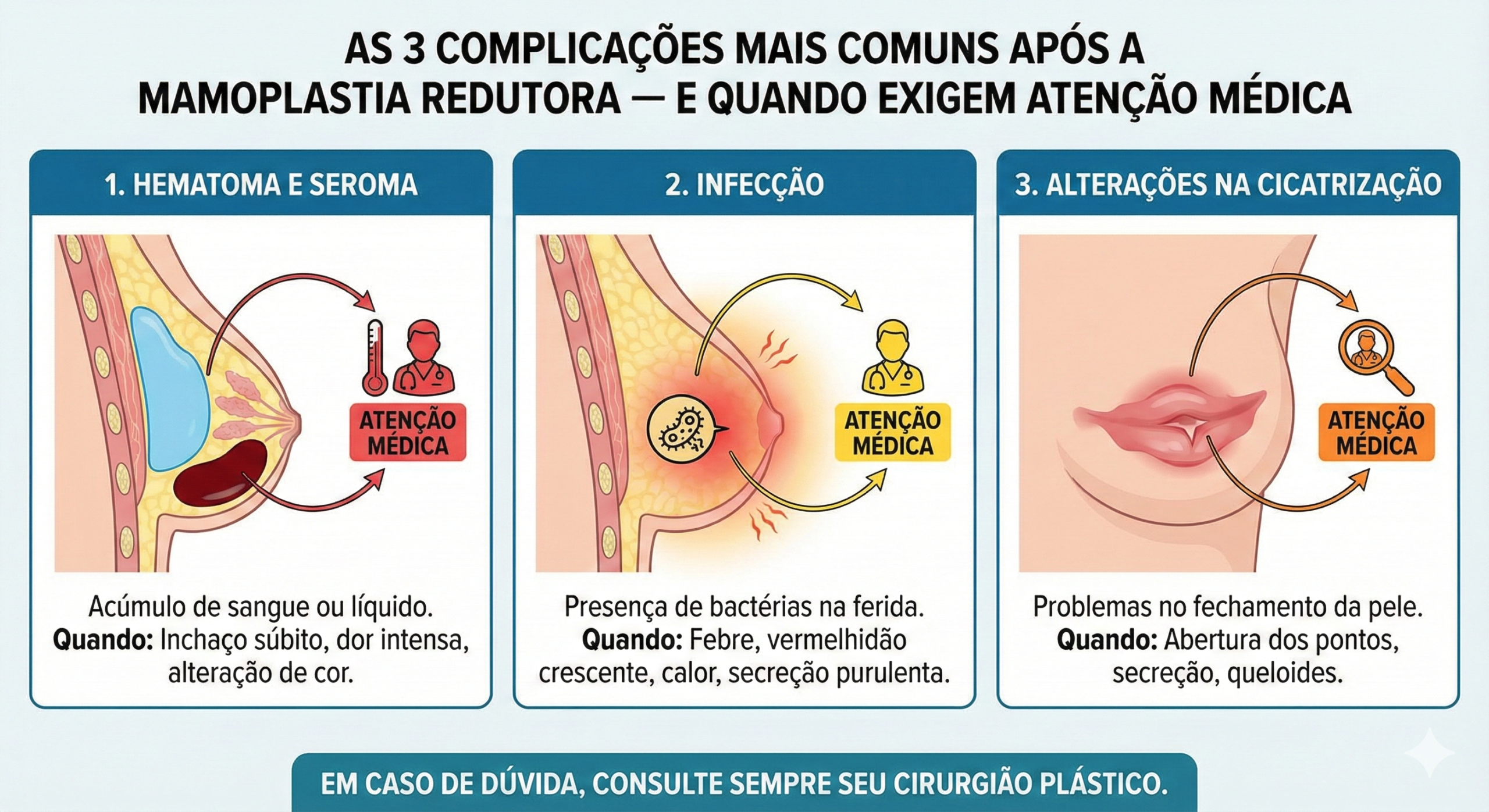
Like any surgical procedure, breast reduction surgery carries risks, such as infection, bleeding, changes in breast or areola sensitivity, healing difficulties, and asymmetries. Choosing a qualified surgeon and rigorously following post-operative instructions minimize these risks.
Complications
Complications, such as seromas (fluid accumulation) and dehiscences (wound separation), can occur and are appropriately managed by the plastic surgeon.
Advantages of the Procedure
Breast reduction surgery offers multiple advantages:
- Relief from back, neck, and shoulder pain.
- Improved posture.
- Facilitation of physical activities.
- Increased self-esteem and well-being.
Questions and Answers:
-
How long does breast reduction recovery take? Full recovery can take a few months, but daily activities can be gradually resumed within the first 4 to 6 weeks.
-
Does breast reduction surgery interfere with the ability to breastfeed? Although the surgery may affect breastfeeding in some cases, many women are able to breastfeed after the procedure. It is important to discuss your expectations with the surgeon.
-
Are the scars permanent? Scars are permanent but tend to become less visible over time. Proper post-operative care is crucial for the best possible healing.
-
Can I choose the final size of my breasts? The final size is planned jointly with the surgeon, considering body proportion and the patient's expectations.
-
What is the hospitalization period? Generally, hospitalization ranges from 24 to 48 hours, depending on initial recovery.
#BreastReduction #Scars #Anesthesia #SurgicalPreparation #PostOperativeCare #Recovery #SurgicalRisks #Complications #Advantages
Especialidade
Saiba mais sobre os procedimentos relacionados.
Agendar consulta
Precisa de orientação personalizada?
Marque uma avaliação com o Dr. Fernando Amato e tire as suas dúvidas sobre cirurgia plástica.
Falar no WhatsApp