Receiving a breast cancer diagnosis often brings many doubts and insecurities. In addition to concerns about treating the disease, many women also wonder what breast reconstruction will be like, when it can be performed, and what stages are part of this process.
The journey of breast reconstruction goes far beyond surgery. It is a path that involves different specialists, shared decisions, and individualized planning to offer oncological safety and the best possible functional and aesthetic outcome. Although each patient has a unique trajectory, understanding the main stages helps reduce anxiety and allows for a better understanding of the treatment.
Diagnosis is the first step
The journey begins with the confirmation of a breast cancer diagnosis. This process usually involves imaging exams, such as mammography and ultrasound, in addition to a biopsy, which confirms the type of tumor.
After this confirmation, the patient is accompanied by a specialized team to define the best therapeutic strategy. The initial focus is always on disease control, but reconstruction planning can begin at this moment.
Oncological evaluation and treatment definition
The team, composed of a mastologist, clinical oncologist, radiation therapist, and other professionals, evaluates the tumor characteristics, its stage, and treatment options.
Depending on the case, conservative surgery or a mastectomy may be indicated. Understanding this difference is important for comprehending the possibilities for reconstruction. Learn more at Conservative Surgery vs. Mastectomy.
During this phase, the need for complementary treatments, such as chemotherapy, radiation therapy, or hormone therapy, which can influence reconstruction planning, is also discussed.
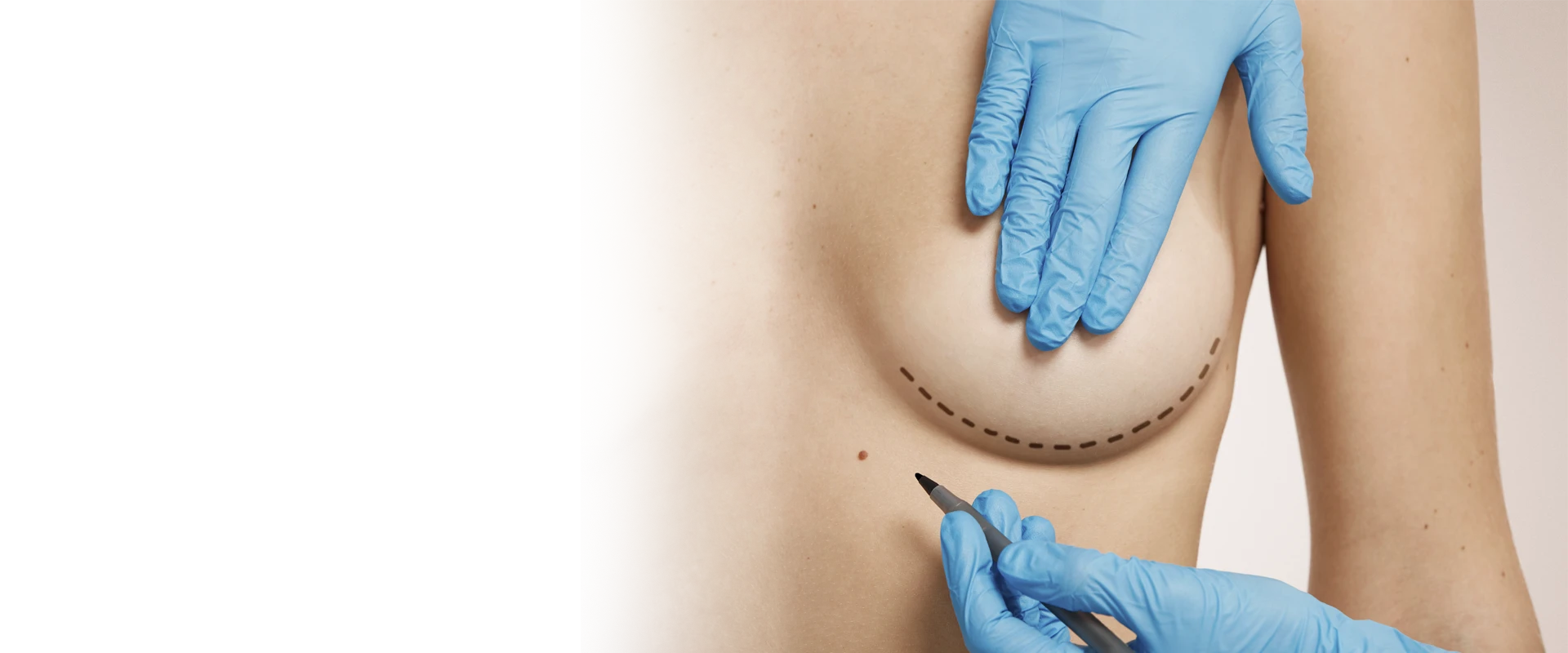
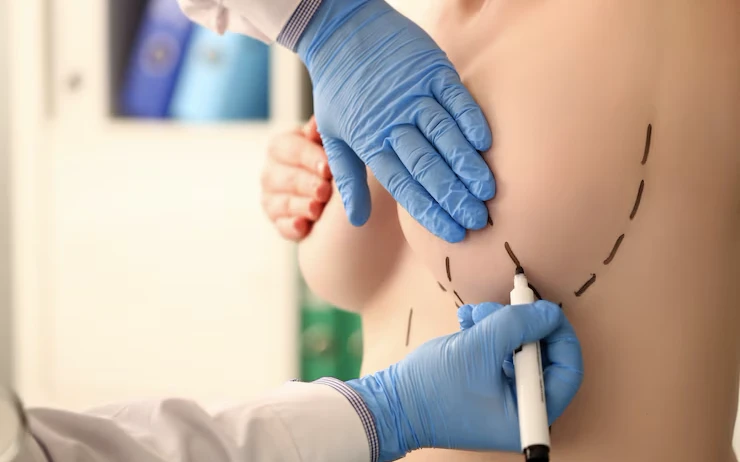
The consultation with the plastic surgeon
The plastic surgeon integrates into the treatment even before oncological surgery whenever possible.
During the consultation, factors such as:
- breast shape and size;
- skin quality;
- presence of previous scars;
- associated diseases;
- smoking;
- need for radiation therapy;
- patient expectations.
This conversation is fundamental to clarify the limitations, benefits, and risks of each option, allowing for a shared decision between doctor and patient.
Immediate or delayed reconstruction
One of the first decisions is to define when the reconstruction will be performed.
In immediate reconstruction, it happens during the same mastectomy surgery, when this is considered safe by the oncology team. In many cases, this strategy reduces the emotional impact of breast loss and can provide better aesthetic results.
Delayed reconstruction, on the other hand, is performed after the completion of cancer treatment. This option may be indicated when there is a need for radiation therapy, specific clinical conditions, or when the patient prefers to wait for another time.
Learn more details in Immediate Breast Reconstruction.
How the reconstruction technique is chosen
There is no single technique that can meet all patients' needs. The choice depends on several clinical and anatomical factors.
The main possibilities include:
- silicone implants;
- tissue expanders;
- reconstruction with the patient's own tissues (flaps);
- fat grafting (lipofilling);
- combination of different techniques.
When there is not enough skin to accommodate a definitive implant, it may be necessary to use an expander, which promotes a gradual increase in tissues before definitive reconstruction. Learn when this strategy is indicated in Staged Breast Reconstruction.
In some situations, fat grafting helps improve contour, correct small irregularities, and complement the result. Understand more in Lipofilling in Breast Reconstruction.
Preparation for surgery
Before surgery, laboratory tests, clinical and anesthetic evaluations are performed, in addition to guidelines for the pre-operative period.
This stage allows for the identification of factors that may increase surgical risks and helps plan a safer recovery.
Aspects such as hospital stay, need for drains, use of medications, and care in the first few weeks are also discussed.
How hospitalization works
Breast reconstruction can require different hospitalization times, depending on the technique used.
Surgeries with implants usually have faster recovery, while reconstructions with the patient's own tissues generally demand more complex procedures and a slightly longer hospital stay.
During this period, the team monitors pain control, wound healing, circulation of reconstructed tissues, and the functioning of drains, if used.
Recovery after breast reconstruction
Recovery occurs gradually.
In the first few days, it is common to experience discomfort, a feeling of tension in the operated area, and temporary limitation of arm movements. These symptoms usually improve progressively as healing occurs.
Return to activities varies according to the technique used, oncological treatment, and the individual characteristics of each patient.
To better understand this phase, also read Breast Recovery: 3 Essential Tips for a Safe Post-operative Period.
When symmetrization is needed
The two breasts are not always naturally similar after reconstruction.
Therefore, some patients undergo procedures on the contralateral breast to improve symmetry. Depending on the case, reduction mammoplasty, mastopexy, or implant placement may be indicated.
These procedures are part of the overall reconstruction planning and aim to provide greater balance between the breasts.
Areola and nipple reconstruction
Reconstruction of the nipple-areola complex usually represents one of the last stages of the journey.
It is generally performed only when the shape and volume of the reconstructed breast are already stable.
Possibilities include small local flaps for nipple reconstruction, skin grafts, and medical tattooing to reproduce areola pigmentation.
Although it is a relatively simple procedure, this stage can contribute significantly to the perception of completeness of the reconstruction.
The role of physical therapy
Physical therapy plays an important role in many patients undergoing breast cancer treatment.
In addition to assisting in the recovery of shoulder movements, it can help prevent joint stiffness, improve posture, reduce functional limitations, and provide guidance for returning to daily activities.
When there is axillary lymph node dissection, follow-up can also contribute to the prevention and management of lymphedema, a condition characterized by fluid accumulation and increased arm volume.
Long-term follow-up
Breast reconstruction does not end when the surgery is over.
Periodic follow-up allows for evaluating wound healing, early identification of possible complications, monitoring implants when present, and guiding the patient on care over the years.
Even after the completion of cancer treatment, follow-up with the medical team remains an important part of the journey.
According to the American Society of Plastic Surgeons, breast reconstruction is part of comprehensive care for women after mastectomy and should be planned individually, considering both oncological safety and quality of life.
Recommended video
The Importance of Follow-up in Breast Reconstruction Surgeries — watch on YouTube.
Conclusion
Breast reconstruction is a process composed of several stages involving planning, cancer treatment, surgery, recovery, and continuous follow-up. Understanding this journey allows the patient to participate in decisions with greater confidence and have more realistic expectations about each phase of treatment.
More than reconstructing a breast, the goal is to offer integrated care, respecting the clinical, emotional, and functional needs of each woman.
Frequently asked questions
How long does the entire breast reconstruction journey take?
There is no single timeframe. Some patients complete reconstruction in a few months, while others require additional stages over a longer period, especially when there is radiation therapy or complex reconstructions.
Can every patient undergo immediate reconstruction?
No. The possibility depends on the characteristics of the cancer, the planned treatment, and the patient's clinical conditions. The decision is made jointly by the oncology team and the plastic surgeon.
Does reconstruction interfere with cancer treatment?
When well-planned, reconstruction should not compromise oncological treatment. The main objective remains adequate disease control.
Does reconstruction always use silicone implants?
No. Some patients are reconstructed with their own body tissues, while others use implants or a combination of different techniques.
Does radiation therapy prevent reconstruction?
Not necessarily. In some cases, it modifies the surgical plan or makes certain techniques preferable, but many women can be reconstructed even after radiation therapy.
Is it possible to reconstruct the breast many years after mastectomy?
Yes. Even patients who underwent mastectomy several years ago can be evaluated for reconstruction, provided they are in suitable clinical condition.
Especialidade
Saiba mais sobre os procedimentos relacionados.
Agendar consulta
Precisa de orientação personalizada?
Marque uma avaliação com o Dr. Fernando Amato e tire as suas dúvidas sobre cirurgia plástica.
Falar no WhatsApp