
- Plastic Surgery
Mammoplasty and Brachioplasty: Indications, Risks, and Essential Care
- October 28, 2025
- By Fernando Amato
Combining mammoplasty and brachioplasty can safely transform your body contour — provided you follow a well-indicated surgical plan and a disciplined post-operative period.
What are Mammoplasty and Brachioplasty?
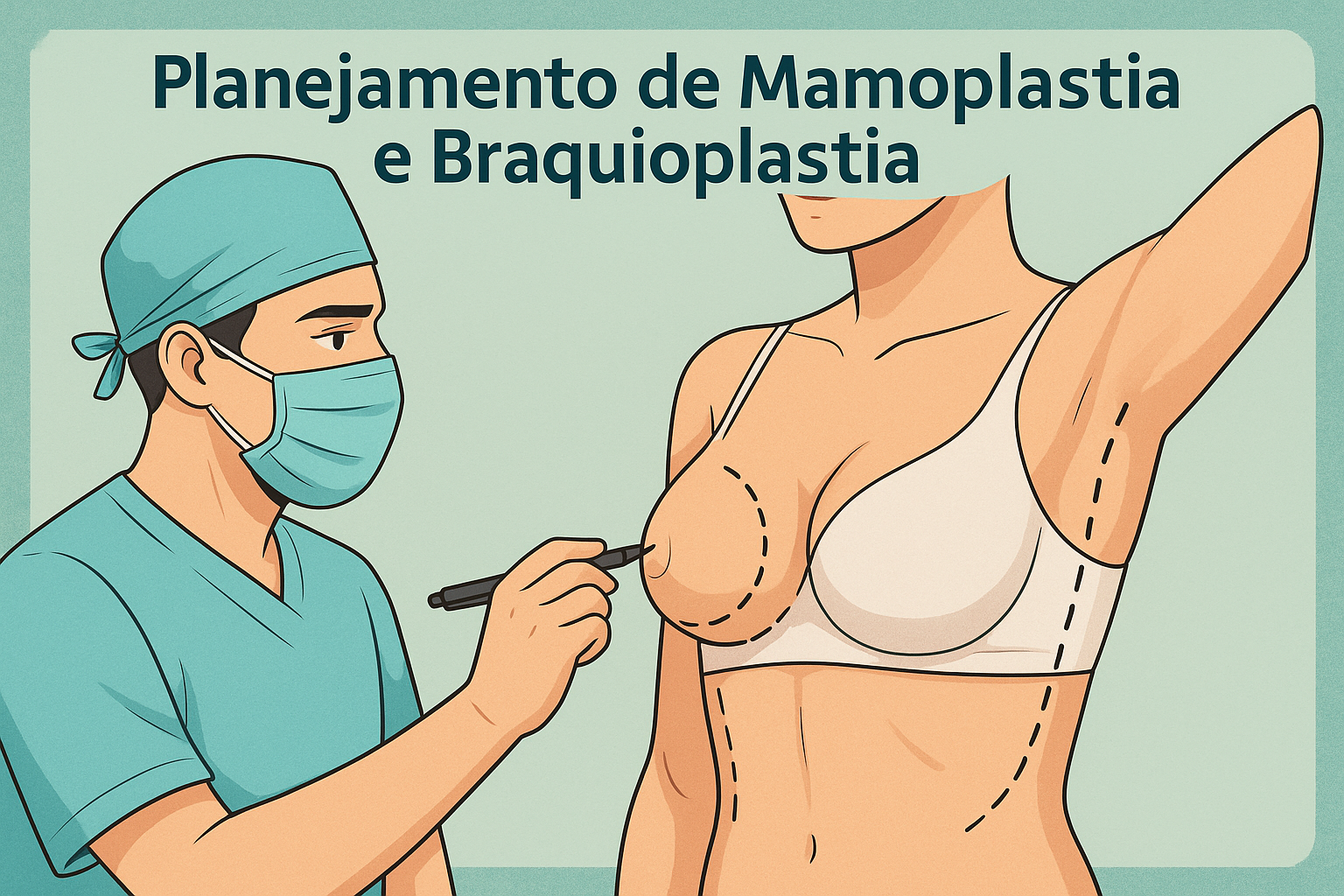
Mammoplasty is therefore a plastic surgery designed to modify the size, shape, or position of the breasts. Thus, it can involve reduction, augmentation with implants (implants) or breast lift (mastopexy).
Brachioplasty, also known as an arm lift, removes excess skin and fat between the armpit and the elbow, leaving the contour firmer and more proportionate.
These procedures can therefore be performed in combination, depending on the medical evaluation and the patient's clinical conditions.
Highlights
- ✅ Body harmonization in a single procedure
- ✅ Shared recovery and anesthesia
- ✅ Reduction of sagging skin and repositioning of breasts
- ✅ Improvement of self-esteem and physical well-being
- ✅ Stable results with healthy habits
Who are mammoplasty and brachioplasty indicated for?
These surgeries are therefore indicated for patients with:
- Significant arm laxity, usually after weight loss or aging;
- Sagging, voluminous, or asymmetrical breasts;
- Physical discomfort, skin irritations, or limited movement;
- Desire for body balance and self-confidence.
These surgeries can also be associated with liposuction, abdominoplasty, or thigh lift, according to the overall surgical plan.
Is it possible to perform both surgeries on the same day?
Yes. It is safe and common to combine mammoplasty and brachioplasty in the same surgical procedure, provided that:
- the patient presents adequate clinical conditions;
- the total surgery time is compatible;
- the procedure is performed in an appropriate hospital setting (day hospital);
- there is a joint evaluation by the surgeon and anesthesiologist.
Advantages of the combination:
- A single hospitalization and recovery;
- Harmonious results in the torso and upper limbs.
Potential disadvantages:
- Longer surgical time and therefore the need for extra care in the post-operative period.
How are the surgeries performed?
Mammoplasty
The surgeon then makes incisions around the areola, vertical and, in some cases, horizontal (in an inverted “T”).
Depending on the need, there may be removal of skin and fat, reshaping of breast tissue, and repositioning of the areola.
In cases of augmentation, silicone implants are used.
Brachioplasty
The incision is thus made on the inner side of the arms, between the armpit and the elbow. The excess skin is then removed and, if necessary, complementary liposuction is performed.
The sutures are then made in layers, internal and external, aiming to minimize scars.
Scars are permanent, but tend to fade over time. Their positioning is planned to be as discreet as possible.
Anesthesia and recovery time
Generally, general anesthesia or block with sedation is used.
The average recovery time is therefore 2 to 4 weeks for light activities, and the definitive result can be observed after 3 to 6 months.
The use of compression garments is therefore mandatory during the period recommended by the surgeon.
Main benefits
- Defined and proportional body contour
- Aesthetic and functional improvement
- Reduction of pain and skin irritations
- Increased self-esteem and body confidence
Success depends on the technique, tissue quality, and patient adherence to medical recommendations.
Possible risks and complications
All surgery involves risks, even under safe conditions.
Among the main ones are:
1. General risks
- Hematoma (blood accumulation);
- Infection;
- Anesthetic reactions;
- Hypertrophic scars or keloids;
- Excessive bleeding;
- Allergic reactions to medications.
2. Specific risks of mammoplasty
- Changes in nipple sensitivity;
- Residual asymmetry;
- Partial necrosis of the areola (rare);
- Difficulty breastfeeding (in certain cases).
3. Specific risks of brachioplasty
- Visible scars on the inner part of the arms;
- Seroma (fluid accumulation);
- Dehiscence (wound opening);
- Contour irregularities.
Prevention:
- Smoking cessation 30 days before and after surgery (risks of smoking);
- Rigorous control of chronic diseases;
- Compliance with medical instructions and proper use of compression garments.
How to prepare for surgery
Consultations and exams
Perform a complete clinical evaluation, including medical history and routine exams (pre-operative).
Medications
Report all medications in use. Therefore, avoid the use of anti-inflammatories, anticoagulants, and AAS without medical authorization.
Tobacco and alcohol
Avoid tobacco for 30 days before and after and alcohol for 7 days before surgery.
Day of surgery
- Absolute fasting for 8 hours;
- Wear comfortable clothes and no makeup;
- Arrive with a companion;
- Bring documents and exams.
Also see our pre-operative tips and recommendations for a balanced diet to optimize recovery.
Essential post-operative care
Dressings and scars
Keep dressings dry and clean.
Use silicone gel or tape as directed and avoid direct sun for 6 months.
Movement
In the first 3 weeks, avoid lifting your arms above your shoulders. Light walks help blood circulation.
Compression garments
The surgical bra and arm garment should be worn 24 hours a day for 30–45 days.
Baths and clothes
Quick, lukewarm showers after 48 hours (with clearance).
Wear loose, front-opening clothes.
Warning signs
Contact the surgeon if you experience:
- Fever > 37.8 °C (100.04 °F)
- Intense redness or discharge
- Persistent pain
- Sudden asymmetric swelling
Physical and emotional recovery
Return to activities is gradual:
- 1st week: rest and care with movement;
- 2nd week: start of light walks;
- 4th week: partial return to activities;
- 6–8 weeks: clearance for light exercises.
Psychological support can therefore help in adapting to the new body image and maintaining realistic expectations.
Long-term results
Results are usually long-lasting, but not permanent.
Aging, weight variations, pregnancy, and sun exposure can alter the contour over time.
Maintenance of results:
- Stable weight;
- Regular physical activity;
- Continuous use of sunscreen on scars;
- Avoid excessive tobacco and alcohol;
- Periodic consultations with the surgeon.
FAQ — Frequently Asked Questions
- Can I have both surgeries on the same day? Yes, provided there is clinical and anesthetic safety.
- Is the surgery painful? Pain is moderate and controlled with analgesics.
- How long will I be hospitalized? Between 12 and 24 hours, varying according to progress.
- Are the scars very visible? They are permanent, but generally well-positioned and discreet.
- When will I see the final result? After 6 to 12 months, when swelling subsides and scars mature.
- Can I breastfeed after mammoplasty? It depends on the technique used. In small reductions, it is generally possible.
- When can I return to work? Between 15 and 20 days (light activities).
- When can I return to exercise? Light walks after 3 weeks; weight training after 6 to 8 weeks, with medical clearance.
- Are compression garments mandatory? Yes, for 30 to 45 days, as per medical recommendation.
- Is the result permanent? Long-lasting, but subject to natural body changes.
Conclusion
Mammoplasty combined with brachioplasty is an excellent option for those seeking harmonious body contour and functional improvement.
With an experienced team, adequate preparation, and adherence to post-operative care, the results are safe, natural, and long-lasting.
💬 Schedule your evaluation and find out if this combination is indicated for your case.
Related articles


Agendar consulta
Precisa de orientação personalizada?
Marque uma avaliação com o Dr. Fernando Amato e tire as suas dúvidas sobre cirurgia plástica.
Falar no WhatsApp