- Body
Knee Liposuction
- November 3, 2022
- By Fernando Amato
Knee Liposuction
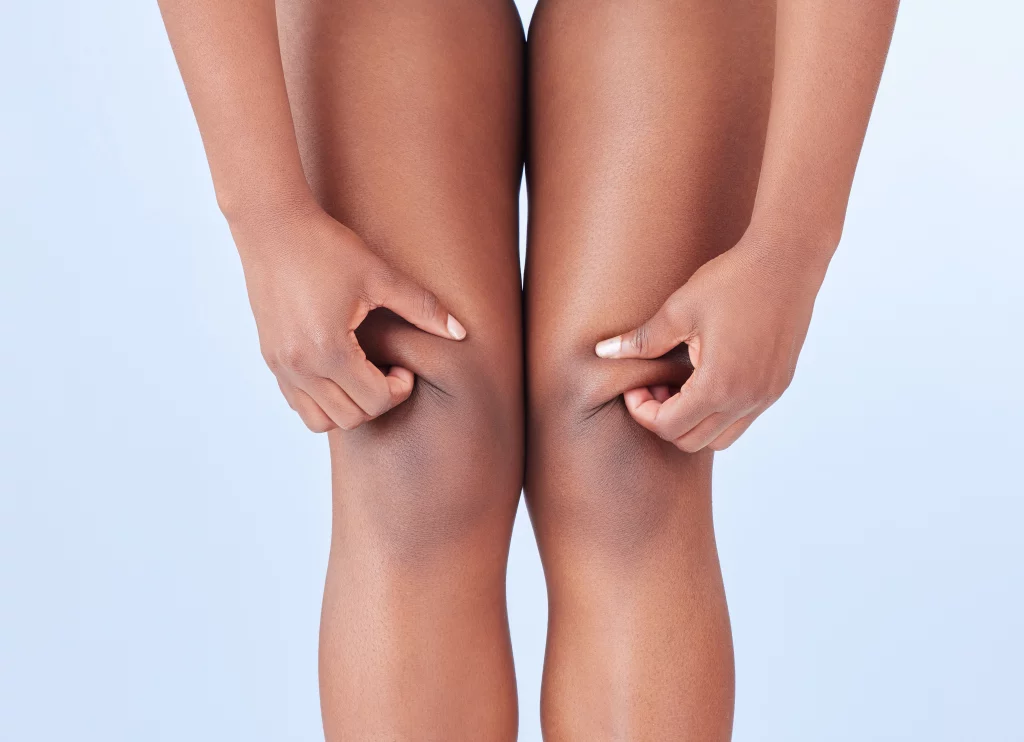
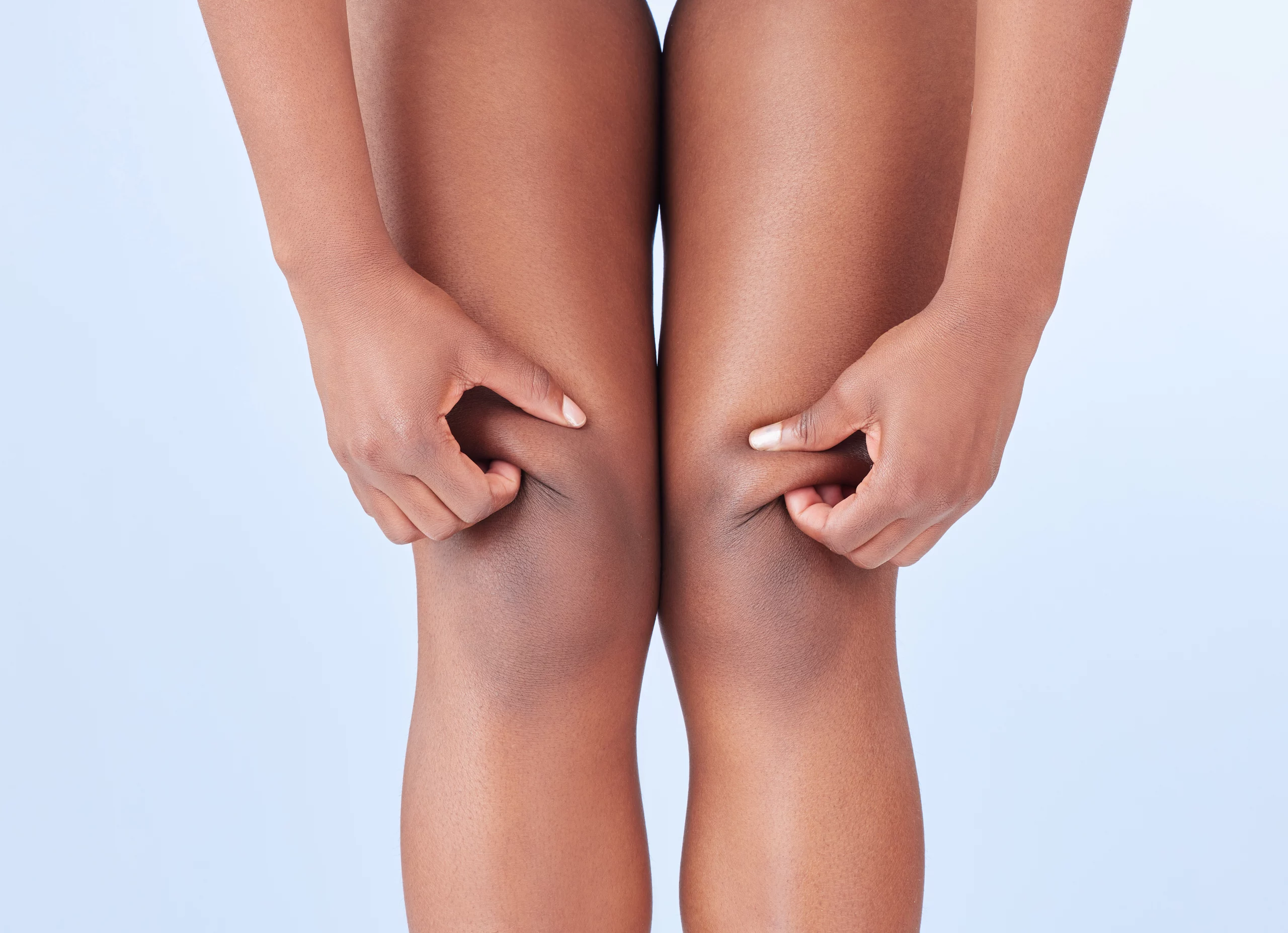
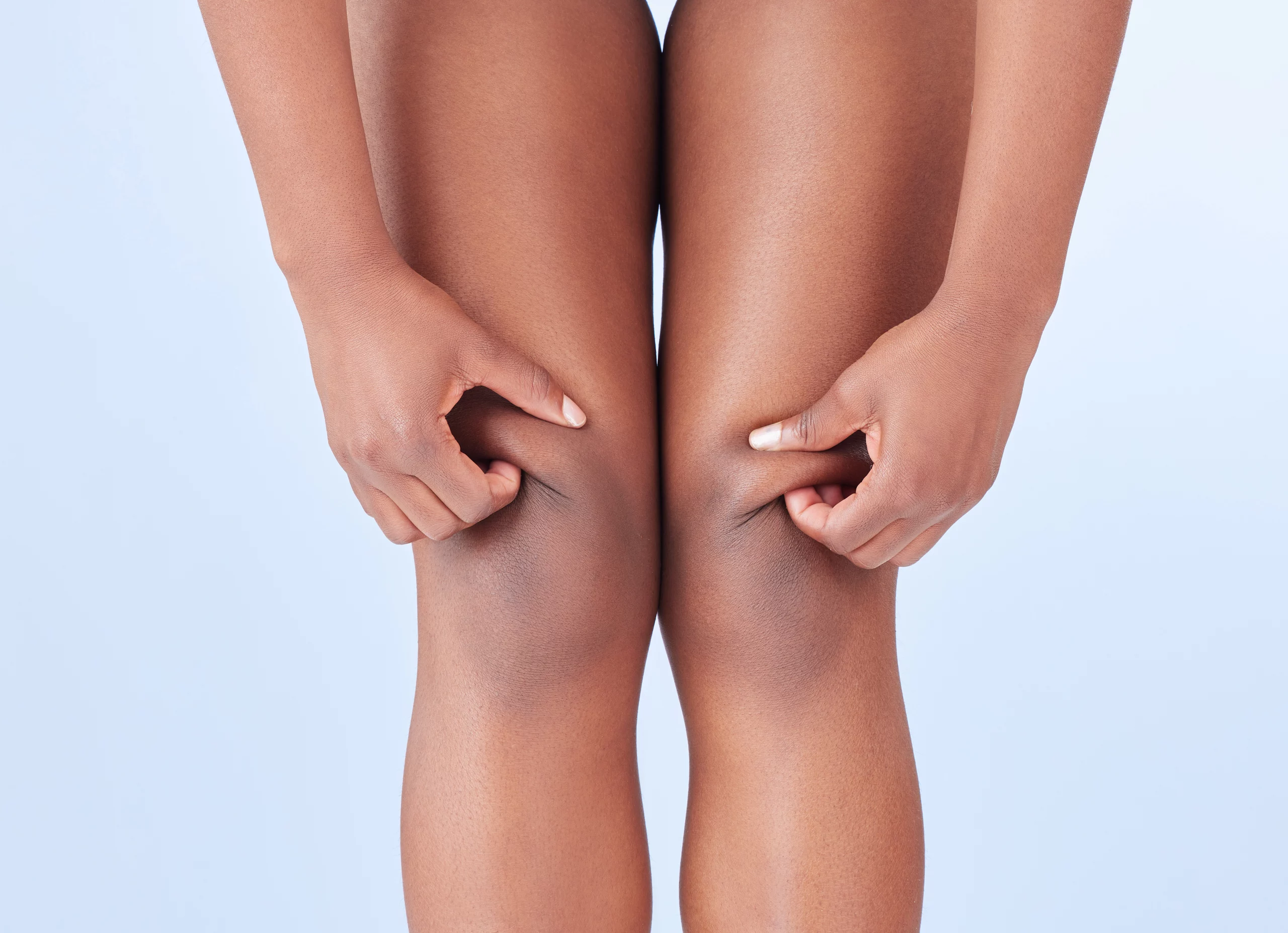
Another fat that is very difficult to eliminate with diet and physical exercise is the one that accumulates above the knees, especially in LIPEDEMA.
Those bothered by it can opt for knee liposuction – that's right!
The procedure is a good option for those who wish to remove excess fat from this region and is often associated with fat removal from the inner face of the knee.
Generally, liposuction is performed; the anesthesia will depend on the patient's acceptance, and the hospital stay is quick, with discharge on the same day if no other surgeries are combined.
During the postoperative period, swelling is usually greater in the first fifteen days. In addition, the patient may experience red or purplish spots around the operated areas. Therefore, they must follow all medical recommendations and prioritize rest in the first few weeks. Do you have any questions about knee lipo? Leave a question here in the comments!
Frequently Asked Questions
Is it possible to have liposuction near the knees?
Yes, it is possible and very common in those with lipedema.
What are the complications of liposuction near the knees?
Prolonged swelling (edema), bleeding, and altered sensation, with loss or pain.
How is anesthesia for knee liposuction?
It can be done with various anesthesia options such as local anesthesia, general anesthesia, sedation and local, spinal, epidural, and even local block.
What determines the type of anesthesia for knee liposuction?
Mainly the surgical time and the extent of the liposuction.What technologies can be associated with knee liposuction?
Laser, 980nm laser, 1470nm laser, 1210nm laser, OneStep, Radiofrequency with Bodytite, Facetite and Accutite, and Morpheus facial and body can be used.
Who can perform knee liposuction?
The types of surgery for lipedema! Renuvion? Laser? Bodytite? cruroplasty Take the lipedema self-assessment questionnaire: https://bio.amato.io/auto Discover Dr. Fernando Amato's channel: https://www.youtube.com/channel/UCJ_9… Check out the channel's exclusive playlist just for Plastic Surgery: https://youtube.com/playlist?list=PLg… Follow Dr. Fernando on Instagram: @meu.plastico.pro Visit Dr. Fernando's Website: www.plastico.pro Watch the featured video on the CHANNEL now: https://bio.amato.io/indicado Watch this video on how to care for a drain in the postoperative period: https://www.youtube.com/watch?v=mnGmQ… Also watch this video about Hematoma: https://www.youtube.com/watch?v=xY6sN… https://www.youtube.com/watch?v=56AaG… #institutoamato #Cirurgiaplastica #lipoaspiração #Protesedemama #abdominoplastia
What are the types of surgery
to treat Lipedema?
Almost everyone already knows from the internet and
social media that the surgical treatment
for Lipedema is
liposuction, but is it really
only liposuction? Liposuction is an
old, minimally invasive technique for the
mechanical removal of body fat,
removal of superficial body fat. In
Lipedema, it is performed with a tumescent technique,
that is, a lot of liquid is injected, saline
solution with adrenaline and anesthetic.
This liquid helps to
loosen the fat better,
it causes vasoconstriction in the vessels, both
to reduce bleeding and ends up protecting them.
And some auxiliary device is almost always used,
such as vibration assistance, like
vibrolipo, there's vibrofit.
The advantage of these devices is that they help to
loosen these fibroses, and eliminate the need for extensive arm movement in
liposuction, unlike classic liposuction,
which facilitates certain surgeon positions,
especially when approaching the leg, where it's
harder to find a position.
There are some cannulas that can
provide better performance than traditional ones,
but it can depend on the
experience of the team, and that is really
important. There can be several access points
on the skin, on the leg, which can be useful;
these are the small incisions we use to
introduce the cannula and perform liposuction, and
this will depend on the location of the fat.
But surgical treatment
is not always this!
If they haven't told you, it's not just liposuction.
Patients with very advanced
Lipedema
have a lot of excess skin and may
need a dermolipectomy which is
that resection of skin, skin and fat,
dermolipectomy, we resect the skin in a block
with Lipedema. In the thighs,
we call it cruroplasty and in the arm
brachioplasty, and it may still be necessary
in other body regions, such as
the leg. In this surgery, it is even possible to
resect Lipedema nodules
which are fat balls.
Often these balls are hardened
in their center with necrosis, a
calcification. In some cases with little
excess skin, sometimes we even use
laser, some type of laser to associate with the
procedure, with 980 being the most commonly used
frequency.
But due to its 980 characteristic, it destroys more
fat, causing lipolysis, we aspirate and
we can still achieve a certain
skin retraction.
We end up using it on the
medial thigh and arm.
There is also the 1210 laser
which can also be used;
it doesn't destroy fat, it just loosens
the fat, it's less destructive, but it also allows
this aspiration of fat
after the laser has been applied. Both lasers
are options to cause this local stimulation
of collagen, improving skin laxity,
improving local skin quality,
reducing that skin flaccidity.
There are others like devices such as Renuvion,
which is a plasma jet, and Bodytite, which are also
alternatives for skin retraction and
cause local collagen biostimulation.
However, as it is an inflammatory disease,
all these options must be evaluated and used
with great caution, as the mechanism of collagen
stimulation involves a local inflammatory process.
Which could even be a risk in a theoretically
inflamed patient to trigger Lipedema.
When we use these devices, we end up
observing how we removed the diseased fat, it doesn't stimulate, but we have to
always evaluate the location and
sometimes, for example, using an extremely aggressive device,
for example, in the leg, in the more distal
part of the leg, this could even damage the lymphatic vessels
and impair lymphatic return,
causing more edema in the leg. A leg that
did not have Lymphedema, had Lipedema,
can evolve with Lymphedema,
if it has these lesions of the lymphatic
vessels. So, if you liked this video,
like, share, comment, and don't forget
to subscribe to our channels.
Thank you!
Playlist

What types of Surgery for Lipedema?
5:33
What are Lipedema Nodules?
5:44
What are Lipedema Nodules?
5:44
What are Lipedema Nodules?
5:44
Technologies Used in Lipedema
6:21
Skin Laxity in Lipedema? What to do?
7:39Related articles



Agendar consulta
Precisa de orientação personalizada?
Marque uma avaliação com o Dr. Fernando Amato e tire as suas dúvidas sobre cirurgia plástica.
Falar no WhatsApp