- Articles
Hypodermis and Subcutaneous Adipose Tissue: Understand the Differences
- May 23, 2024
- By Fernando Amato
Understanding the distinction between the hypodermis and subcutaneous adipose tissue is crucial for more effective medical and aesthetic treatments. The hypodermis and subcutaneous cellular tissue are therefore terms that refer to important layers of the human body. The development of technologies based on the use of autologous adipose tissue has attracted attention to fat deposits, which represent an almost unlimited reservoir of stem cells accessible through minimally invasive procedures.
- 🔍 Structural Difference: Hypodermis and SAT are distinct in location and composition.
- 🩺 Clinical Importance: Crucial differentiation for dermatological and surgical treatments.
- 💡 Specific Functions: Hypodermis for protection and aesthetics, SAT for lipid metabolism.
- 🧬 Metabolic Responses: Distinct behaviors influence the therapeutic approach.
- 🔬 Research Necessity: More studies are needed to fully understand these layers.
Hypodermis and Subcutaneous Cellular Tissue
The hypodermis and subcutaneous adipose tissue (SAT) are often confused in medical literature. However, they are distinct structures with different functions and metabolic behaviors. Therefore, this article aims to clarify these differences and highlight the importance of each of these layers for clinical practice.
Structure and Location
Hypodermis
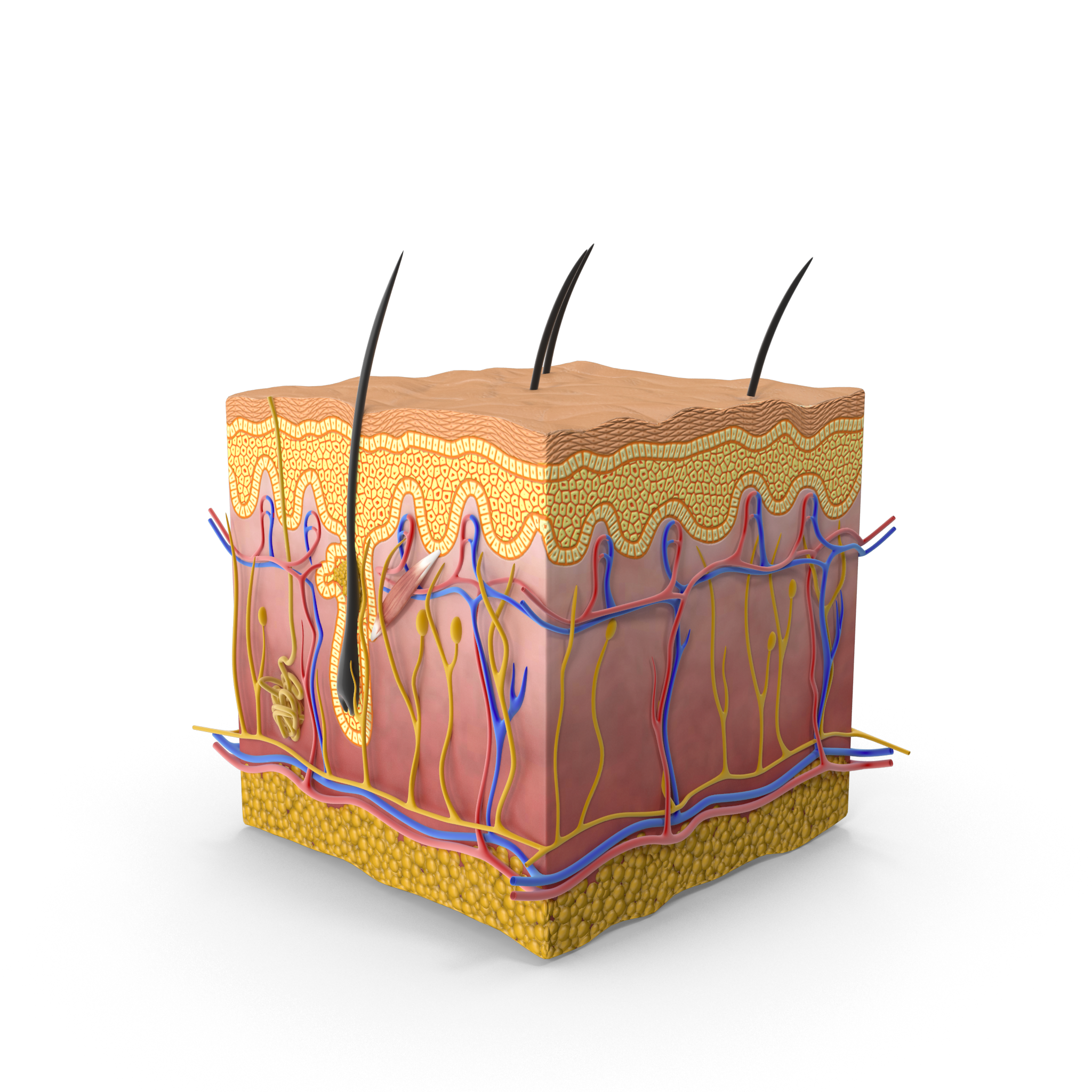

The hypodermis, also known as superficial subcutaneous adipose tissue (SSAT), is located just beneath the dermis. It is characterized by well-organized adipose lobules, connected by fibrous septa that attach to the dermis. The adipocytes of the hypodermis, however, are smaller and surrounded by dense and well-vascularized connective tissue. This layer, therefore, has high structural stability and elastic properties, allowing it to return to its initial position after distension.
Subcutaneous Adipose Tissue (SAT)
The deep subcutaneous adipose tissue (SAT), or lamellar tissue, is located beneath the hypodermis, close to the deep fascia and muscles. It therefore presents larger, flattened, and less defined fat lobules, with less evident and obliquely oriented fibrous septa. The adipocytes of the SAT, however, are larger and surrounded by loose connective tissue with less vascularization. This layer, however, has low structural and elastic stability, being more prone to sliding over the deep fascia.
Functions and Metabolic Responses
Hypodermis
The hypodermis performs several essential functions, such as:
- Energy storage: Serves as a lipid reservoir.
- Protection against mechanical shocks: Acts as a natural shock absorber.
- Thermal insulation: Helps maintain body temperature.
- Mobility: Allows the skin to slide over deeper structures.
- Aesthetics: Contributes to body contour.
Subcutaneous Adipose Tissue (SAT)
The SAT, then, is more related to lipid metabolism and has some specific functions:
- Lipid mobilization and synthesis: Directly influences body fat distribution.
- Influence on obesity: Increases in thickness with weight gain and is associated with insulin resistance and metabolic complications.
Clinical Implications
Surgical Procedures
The distinction between the hypodermis and SAT, therefore, is fundamental in procedures such as liposuction. Traditional liposuction, however, treats the deep adipose layer (SAT), avoiding the removal of the hypodermis to prevent contour irregularities.
Restorative Therapies
Due to its rich vascularization and presence of stem cells, the hypodermis, then, is ideal for cell donations in restorative therapies.
Conclusion
In summary, the hypodermis and deep subcutaneous adipose tissue are distinct layers with different functions, compositions, and metabolic responses. Therefore, understanding these differences is essential for choosing more effective medical and aesthetic treatments. However, new studies are needed to deepen the understanding of adipocyte pathophysiology and its clinical implications.
Frequently Asked Questions
1. What is the hypodermis? The hypodermis, or superficial subcutaneous adipose tissue (SSAT), is the layer of fat located just below the dermis, characterized by well-organized adipose lobules connected by fibrous septa.
2. What is the main function of the hypodermis? The hypodermis acts in energy storage, protection against mechanical shocks, thermal insulation, mobility, and body contour.
3. Where is the deep subcutaneous adipose tissue (SAT) located? The SAT is located beneath the hypodermis, close to the deep fascia and muscles.
4. How does SAT differ from the hypodermis in terms of structure? SAT presents larger and less defined fat lobules, with obliquely oriented fibrous septa, while the hypodermis has smaller and well-organized lobules.
5. What are the functions of SAT? SAT influences lipid metabolism, body fat distribution, and is associated with insulin resistance and metabolic complications.
6. Why is it important to differentiate between the hypodermis and SAT in surgical procedures? The distinction is crucial to avoid contour irregularities in procedures such as liposuction, which primarily treats the SAT.
7. Which layer is more structurally stable? The hypodermis, however, is more structurally stable and has superior elastic properties compared to SAT.
8. Is the hypodermis suitable for stem cell donations? Yes, due to its rich vascularization and presence of stem cells, the hypodermis is ideal for donations in restorative therapies.
9. What happens to the hypodermis and SAT during weight gain? The thickness of both layers increases, but SAT increases proportionally more in thickness, especially in specific body areas.
10. How is insulin resistance related to SAT? Abdominal SAT shows a strong connection with key aspects of insulin resistance, influencing the metabolic complications of obesity.
#hipoderme #tecidoadiposo #lipoaspiração #célulastronco #metabolismo
Reference: Cunha MG, Cunha ALG, Machado CA. Hypodermis and subcutaneous adipose tissue: two different structures. Surg Cosmet Dermatol. 2014;6(4):355-9.
Related articles


Agendar consulta
Precisa de orientação personalizada?
Marque uma avaliação com o Dr. Fernando Amato e tire as suas dúvidas sobre cirurgia plástica.
Falar no WhatsApp