
Summary
Concept
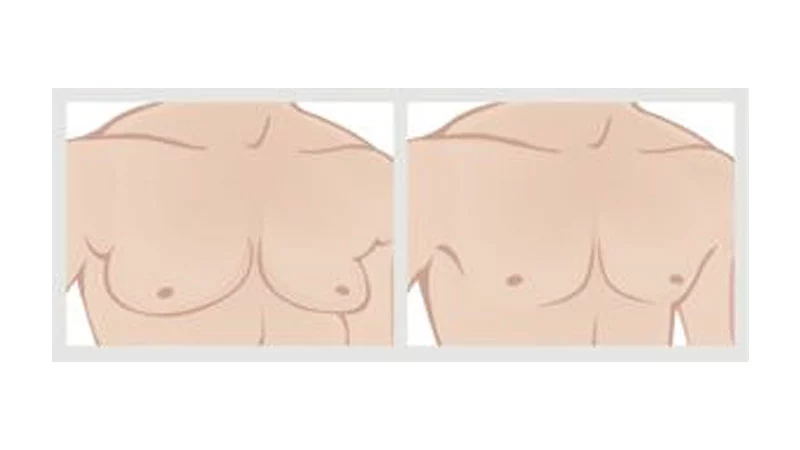
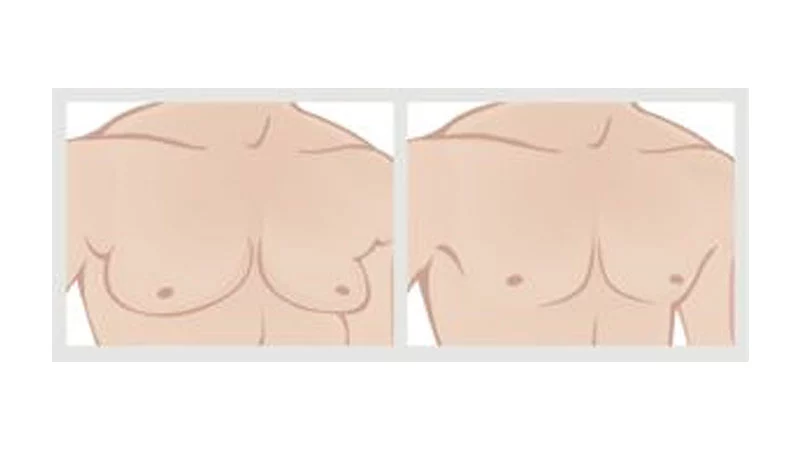
Gynecomastia: consists of the enlargement of breast tissue in men
Pseudogynecomastia: Enlargement of breast volume due only to increased fat, without changes in breast volume. It can also be called lipomastia.
Persistent puerperal macromastia: This is the name for gynecomastia that began in puberty and did not resolve spontaneously for reasons not yet completely clarified.
History
The first reported cases of this condition date back to the 18th Egyptian dynasty, where images of Pharaoh Tutankhamun and his family appear with gynecomastia.
The first surgical description was made by Paulus Aegineta, who lived between 625 and 690 BC, with submammary wedge resection, reported as Aboul Cassis's surgery.
Curiosity: Paulus Aegineta was a Greek physician known for writing the medical encyclopedia: Compendium Medicum in Seven Books. For many years in the Byzantine Empire, this work contained the sum of all Western medical knowledge and was unparalleled in its accuracy and perfection.
Epidemiology
It has 3 incidence peaks:
- Neonatal, due to maternal hormone influence
- Adolescence, due to pituitary, adrenal, and testicular imbalance
- Andropause, due to decreased testosterone production, increased conversion to estrogen due to increased body fat accumulation (adipose tissue aromatase)
- 65% of gynecomastia patients are between 14/15 years old
- 7.5% persist after 17 years of age
- accounts for 10% of all plastic surgeries performed on men (USA)
- accounts for 18% of surgeries performed on patients between 13 and 19 years old
Classification
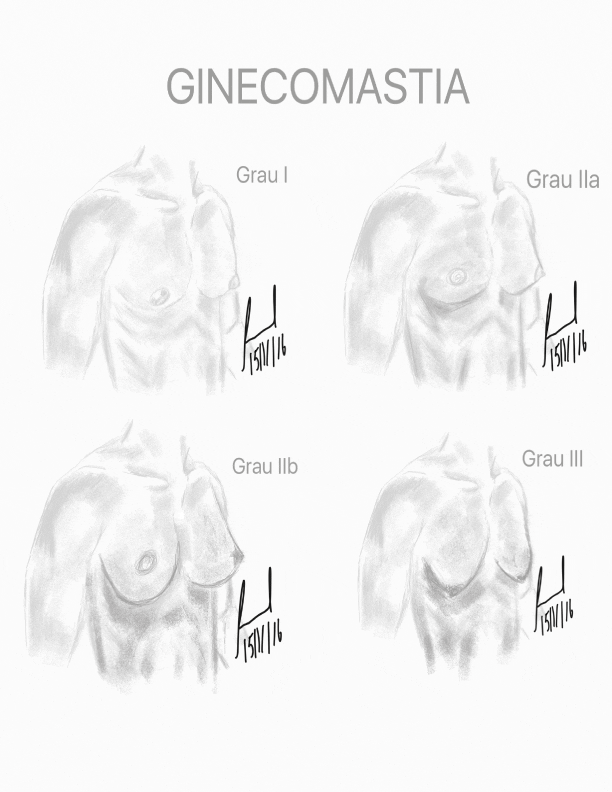
Gynecomastia has several classifications. The most common ones being:
1) Nydick 1961
- Gland limited to the retroareolar region, does not reach the areola margin
- Gland extends to the areola margin
- The increase in gland volume extends beyond the areola border
2) Tanner 1971 -
Stage 1: prominent nipple -
Stage 2: breast bud phase; elevation of breast and areola -
Stage 3: Greater increase in breast and areola, without separation of contours -
Stage 4: projection of the areola and papillae to form a secondary mound above the breast -
Stage 5: protrusion only of the papillae
3) Simon 1973
Grade I: small visible breast enlargement; no skin redundancy;
Grade IIA: moderate breast enlargement without skin redundancy;
Grade IIB: moderate breast enlargement with skin redundancy;
Grade III: moderate breast enlargement with definite skin redundancy (pendulous female breast)
4) Deutinger and Freilinger 1986
- Grade 1: chest wall poor in tissue; breast tissue located behind and around the nipple; no excess skin;
- Grade 2: adipose chest wall; generalized changes; female-like breasts acquired during puberty;
- Grade 3: generalized changes; excess adipose tissue, skin redundancy, inframammary fold, and ptosis.
5) Cohen 1987
- Group 1: glandular gynecomastia;
- Group 2: glandular gynecomastia with ptosis;
- Group 3: gynecomastia with adipose tissue; - Group 4: gynecomastia with adipose tissue with a glandular component.
6) Rohrich 2003
- Grade I: minimal hypertrophy (<250 g of breast tissue), without ptosis; IA: primarily glandular; IB: primarily fibrous;
- Grade II: moderate hypertrophy (200-500 g of breast tissue), without ptosis; IIA: primarily glandular; IIB: primarily fibrous;
- Grade III: hypertrophy (> 500 g of breast tissue), with Grade I glandular or fibrous ptosis;
- Grade IV: severe hypertrophy with Grade II or III glandular or fibrous ptosis
Causes
Gynecomastia is caused by: genetic diseases, endocrinological diseases, cancer, use of medications and drugs, but in most cases the cause is unknown. If no clinically treatable cause is identified, and the condition persists for more than 2 years, surgical treatment is indicated.
See some causes:
- Malnutrition
- Liver Diseases
- Hyperthyroidism
- Kidney Failure
Drugs:
- Marijuana
- Heroin
- Alcohol (Alcoholism)
Neoplasms (Cancer):
- Testicular Cancer
- Other Cancers
Defects in Testosterone Synthesis
Androgen Insensitivity Syndromes
Differential Diagnosis (Breast Cancer)
Previous NextTreatment
Clinical treatment
Clinical treatment can be done with antiandrogens (Danazol) and antiestrogens (Tamoxifen), but this treatment should be performed by a specialist doctor, as these medications have side effects and can cause complications for the patient.
Clinical treatment works in initial cases of gynecomastia. Patients with large glands and excess skin will not benefit from this treatment, and direct surgical treatment is indicated.
Danazol: is a substance with affinity for androgen receptors, presenting androgenic and antiandrogenic effects
Tamoxifen: is an antiestrogenic substance
- Other similar medications: Clomiphene, Raloxifene
Aromatase inhibitors (such as Letrozole, Anastrazole, Fadrozole, Exemestane) are medications that may show positive effects in the treatment of gynecomastia, but there are not enough studies proving their benefit.
Surgical treatment
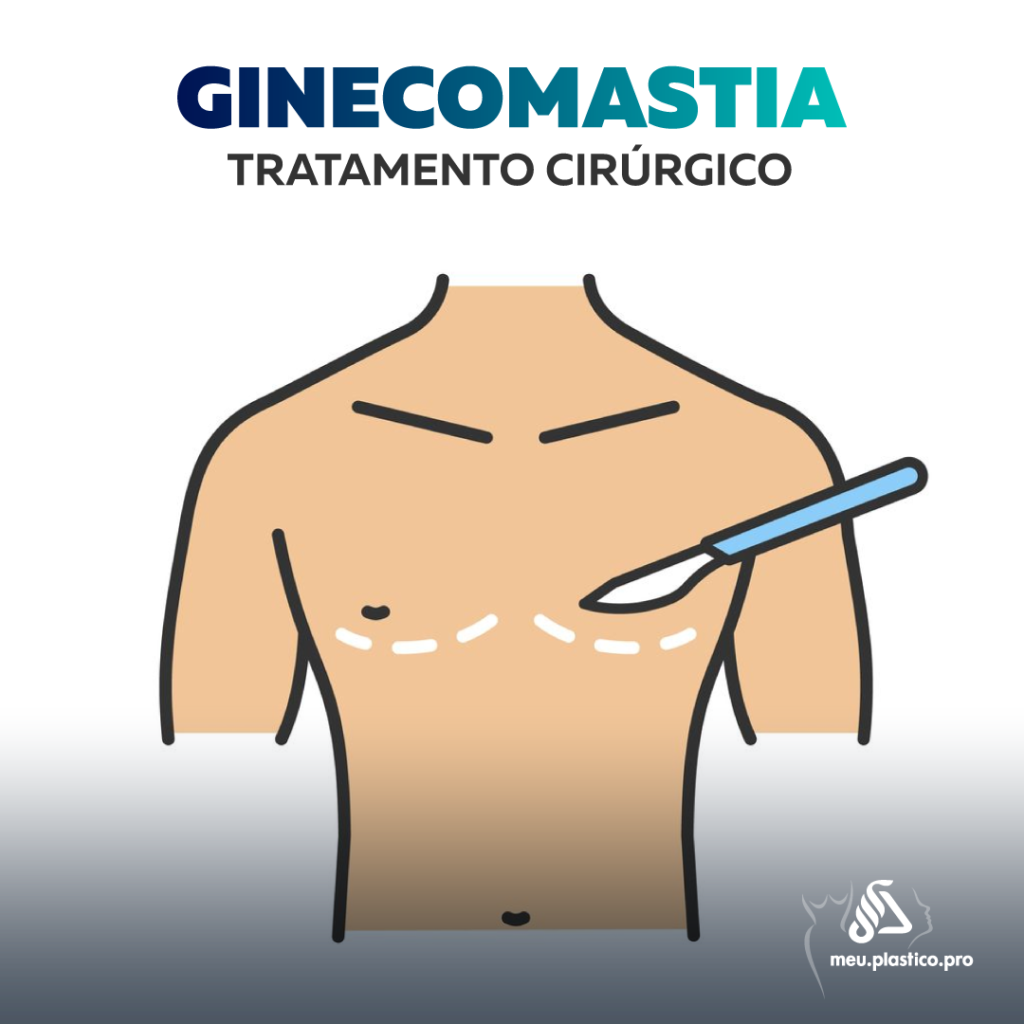
The traditional surgical treatment for gynecomastia mainly consists of ADENECTOMY (resection of the mammary gland). It may or may not be associated with LIPOSUCTION, and may or may not be associated with SKIN RESECTION. There are other surgical options such as the use of laser or ultrasound, but these require more studies to be reliable. The cost of this surgery with these devices and materials is not justified, as traditional treatment can provide satisfactory results. Due to tissue detachment and being a highly vascularized area, drains may be used postoperatively to prevent the formation of collections such as hematoma and seroma. In addition to the use of drains, there are already studies showing similar results without the use of drains, by performing adhesion points to reduce dead space, i.e., areas where fluids can accumulate postoperatively. The main complications of this surgery are: Hematoma, Seroma, Asymmetries, Surface irregularities, Unesthetic scars
The surgical access, the “cut”, in adenectomy is usually around the areola, to minimize the scar. The surgery can be performed with local or general anesthesia, depending on each case. Hospitalization is short, usually not exceeding 24 hours.
The risks of this procedure are minimal and are associated with poor adherence to postoperative care, which requires approximately 4 weeks without physical activity and correct use of elastic compression garments.
Scars: Around the areola, which can be extended laterally if there is too much excess skin. There may be small scars at the drain exits, if used, or if liposuction is performed.
Anesthesia: Local anesthesia and sedation, or general anesthesia.
Hospitalization: Can be performed on a day-hospital basis, meaning discharge on the same day.
Post-operative / Recovery: Approximately 1 to 2 months, the use of post-operative garments may be recommended, and there is a gradual return to physical activities.
Intercurrences: Formation of hematoma, ecchymosis, seroma, scars, asymmetries.
https://youtu.be/APqgIBISk7w DescriptionPlastic Surgeon Dr. Fernando Amato (CRM 133826) talks about the enlargement of mammary glands in men, called Gynecomastia. Learn how to be treated by watching the video!
TranscriptHello, I'm Dr. Fernando Amato.
Today I'm going to talk about gynecomastia.
Gynecomastia is the enlargement of the male
mammary gland, meaning a man can have an enlarged
mammary gland.
The most affected age group is adolescents,
but it is clear that when this enlargement
of the mammary gland is identified,
an adequate investigation must be carried out,
because there are diseases that can occur
at the same time, it can even be a symptom of
a much more serious disease.
Treatment can even be done with medication
in an initial phase, but when the breast has grown
significantly and there has been skin distension,
the treatment is surgical and is indicated when
symptoms persist for more than one or two years.
How is the surgical treatment?
An incision is made around the areola to
remove the gland, and part of the gland is removed.
Often the patient already has a lot of excess skin, so
skin adjustment can be done with a slightly larger incision,
and when there is excess fat along with gynecomastia,
liposuction can also be performed.
In this video, Dr. Fernando Amato, Plastic Surgeon at Instituto Amato, will talk about: Learn EVERYTHING about Gynecomastia. A controversial topic worth discussing. These patients suffer from their contours, often feeling ashamed to take off their shirt in front of others or even wear certain shirts that highlight the area. The indication for surgery, in most cases, is aesthetic, but in some patients. This enlargement of the breasts, besides causing loss of self-esteem and quality of life, in exacerbated cases, such as very large breasts, can present local changes such as dermatitis and skin infections in the fold regions due to friction.
TranscriptHello! I am Dr.
Fernando Amato and today I will
talk about gynecomastia.
Do you know what gynecomastia is?
Gynecomastia,
it is the enlargement of male breasts,
basically due to the enlargement of the mammary gland,
but the enlargement of male breasts
can also happen due to fat.
What we call pseudogynecomastia.
Generally, in gynecomastia, where there is
enlargement of the gland, there is also
fat accumulation.
This fat deposit.
Well, the causes of
gynecomastia are various.
So we don't call it a disease in itself,
but a sign, a symptom, which is breast enlargement.
There are three main peaks of
breast enlargement in men.
One is the breastfeeding phase when the baby
is still breastfeeding, and due to the influence
of the mother's female hormone in the breast that comes
through the milk, this hormone comes through the milk,
there is a stimulation of the mammary gland,
generally in babies the gland
enlarges a little and then
it decreases and returns to normal.
The second moment of breast enlargement in men
is the pubertal period, when there is a hormonal imbalance,
and yes, breast enlargement can occur,
and it usually regresses. The third moment of mammary
gland enlargement, which is also physiological,
is during andropause, that is, when male hormones
drop, and yes, there is an influence on the mammary gland,
enlarging the mammary gland
during this andropause in which the man
loses male hormones.
So there are these three physiological causes,
but there are also other causes.
Among them are testicular cancer,
lung cancer, a differential diagnosis
since we are talking about cancer, is breast cancer,
not gynecomastia. Breast cancer can present with
glandular enlargement, with a nodule,
so it is a differential diagnosis that needs to be investigated.
There are also uses of medications, use
of hormones, people who use
anabolic steroids, hormones to increase muscle
volume can also have this stimulation
of the mammary gland and
gland enlargement.
Also, obesity. Obesity is important
to know because there is an enzyme called
aromatase. This enzyme converts male
hormones into female hormones, and
estrogen. That's why there is an increase in
gynecomastia in obese patients. Also,
the use of some drugs, such as marijuana,
can also cause this balance and
influence breast volume. Among these
causes, there are several, and many cases
end up being idiopathic, that is,
they remain undiagnosed, and it is the most common
and most frustrating for patients not knowing the
cause, what led to this glandular enlargement.
Most likely it could have been one of these
peaks, especially during puberty, where the
adolescent has glandular enlargement and it doesn't regress.
It regresses in almost all cases in
puberty, but in about 5% to 10%
of cases, it doesn't regress. When there is a
persistence of these idiopathic cases
without identifying a cause, medication.
What caused this, if it can't be identified
after two years,
the treatment ends up being surgical,
mainly for aesthetic reasons,
psychological, self-confidence, but there are also
extreme cases that can even have breast ptosis,
there can be chafing, as
if it were a large breast.
All the discomforts that a large breast already
causes in a woman can cause in a man, and
with a negative psychological impact.
And how is it, what do we do, what
tests do we end up ordering to
investigate?
We order thyroid tests, we
end up ordering hormonal tests, testosterone,
estrogen, we order hormones related
to the pituitary gland, we order breast ultrasound,
mammography to rule out
nodules or other causes,
the differential diagnosis. And the surgery,
how is the surgery? The surgery consists
of resecting the excess gland.
Note that it is the excess gland.
We don't perform a
mastectomy, which is the removal of the gland.
We need to
resect up to the nipple.
So, since we preserve the nipple, we often
end up leaving a bit of gland, and this can even
favor a recurrence of gynecomastia.
That's why investigation is important,
investigating gynecomastia even helps us avoid
a recurrence after
surgical treatment.
So, in gynecomastia, we perform this resection
of the gland, and it can be associated with
liposuction to remove this excess fat, and sometimes
these patients who have a lot of skin,
we need to perform skin resection
and repositioning.
Well, this is what I can help
you understand about gynecomastia.
If you have any questions, comment,
ask, don't hesitate to ask.
Like and share this video
with anyone who might need it.
Thank you!
Playlist
12 Videos
Don't Get Constipated During Post-Operative Recovery
7:57
How to take a shower after surgery?
5:14
What are the benefits of drinking water post-surgery?
5:14
Can I wash my HAIR after surgery?
3:56
How to Sleep After Breast Surgery?
4:15
Use of Bra in Post-Operative Period
5:09
When can I DRIVE after surgery?
3:57
0:00

Frequent Questions in Pre and Post-Operative Surgery
3:53
Instructions for using a Vacuum Drain
0:43
Hematoma: Dr. Fernando Amato
2:26
Warm Compress and Cold Compress
5:29Questions and answers about Gynecomastia
What is gynecomastia surgery?
Gynecomastia surgery is a surgical procedure that aims to reduce the size of male breasts.
How is gynecomastia surgery performed?
Gland resection can be performed, with or without skin resection, and with or without liposuction.
What is the purpose of gynecomastia surgery?
Gynecomastia surgery is performed to improve a man's physical appearance and boost self-esteem. It can also be performed to treat pain associated with gland growth, or even the discomfort caused by breast gland enlargement.
What are the risks of gynecomastia surgery?
Like any surgical procedure, gynecomastia surgery involves risks, including infection, bleeding, pain, scarring, and reactions to medications. The surgeon will discuss specific risks with the patient before surgery.
What types of gynecomastia surgery are available?
There are two main types of gynecomastia surgery: open gynecomastia surgery and closed gynecomastia surgery. Open gynecomastia surgery involves a larger incision and is generally more suitable for more severe cases of gynecomastia. Closed gynecomastia surgery involves smaller incisions and is generally more suitable for mild to moderate cases of gynecomastia. It can be associated with liposuction, equipment can be used to destroy the gland and fat, such as laser or ultrasound. Radiofrequency can also be used to treat skin laxity, such as BodyTite.
How long does gynecomastia surgery last?
Gynecomastia surgery usually takes one to three hours to complete, depending on the size and severity of the gynecomastia.
What are the post-operative care instructions for gynecomastia surgery?
After gynecomastia surgery, it is common for the patient to experience pain and swelling. The surgeon will prescribe medication to relieve pain and may recommend a compression garment to help reduce swelling. The patient should also avoid strenuous activities for a few weeks after surgery and follow the surgeon's instructions regarding incision care.
When can I resume my normal activities after gynecomastia surgery?
The recovery time after gynecomastia surgery can vary from patient to patient. In general, it is common for the patient to experience pain and swelling for a few weeks after surgery. The surgeon will recommend avoiding strenuous activities for a few weeks after surgery. The patient should also follow the surgeon's instructions regarding incision care. In general, patients can resume their normal activities in about two to three weeks after surgery, but it may take longer to recover completely.
What are the possible complications of gynecomastia surgery?
Complications of gynecomastia surgery are rare, but can include infection, bleeding, pain, scarring, and reactions to medications. The surgeon will discuss specific risks with the patient before surgery.
How long do the results of gynecomastia surgery last?
The results of gynecomastia surgery are generally permanent. However, it is important to remember that skin can age and change over time, which may affect the appearance of the surgery results.
How much does gynecomastia surgery cost?
The cost of gynecomastia surgery can vary widely depending on several factors, such as where the surgery is performed, the type of surgery needed, and the patient's medical insurance. It is important to discuss costs with the surgeon and obtain a quote before surgery. As it is a procedure included in the ANS Rol, it can be performed via insurance companies and medical plans.
Especialidade
Saiba mais sobre os procedimentos relacionados.
Agendar consulta
Precisa de orientação personalizada?
Marque uma avaliação com o Dr. Fernando Amato e tire as suas dúvidas sobre cirurgia plástica.
Falar no WhatsApp