

- Plastic surgery
Breast Explant with Reduced L-Scar: Indications and Results
- November 24, 2025
- By Fernando Amato
A technique that promises a smaller scar — but requires careful evaluation and surgical experience to ensure safety and a lasting aesthetic shape.
Explant with L-Scar: When it is Possible and What to Expect
Therefore, the explant with L-scar has become a desired option for many women who wish to remove breast implants with the smallest possible scar. Although it is a viable technique in some situations, its indication depends on anatomical criteria, skin quality, and, mainly, the plastic surgeon's experience in advanced mastopexy and reconstruction techniques.
Furthermore, factors such as age, surgical history, implant weight, and degree of sagging directly interfere with surgical planning. Therefore, the decision about the type of scar must be based on an individualized and technical evaluation.
- 🔍 Possible technique, but indicated only in selected cases
- 🧬 Skin quality and degree of sagging are determining factors
- 🎯 Surgeon with experience in reconstruction maximizes good results
- 🏥 Explant requires mastery of multiple mastopexy techniques
- 👩⚕️ Specialized institutions enhance safety and predictability
What is Explant with L-Scar?
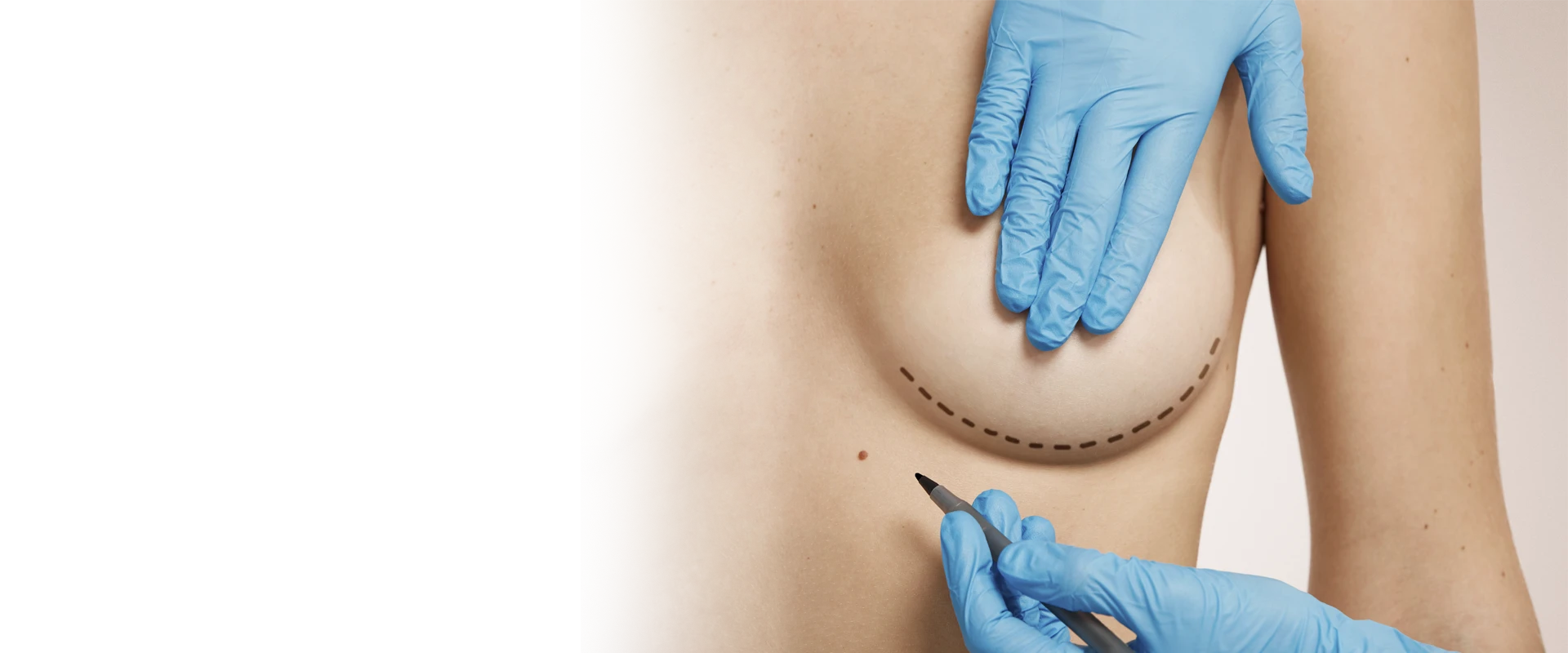
The explant with L-scar is, however, a variation of reduced-scar mastopexy, used to reshape the breast after implant removal. This technique combines:
- Periareolar incision
- Vertical incision
- Small lateral extension (forming the “L”)
The objective, therefore, is to remove excess skin, reposition breast tissue, and restore support with the shortest possible scar length.
Unlike the inverted T-scar — the traditional technique for breasts with greater sagging — the L-shape is more discreet. However, it is only indicated when the anatomy allows good accommodation of the tissue without tension.
When is an L-Scar Possible?
In theory, it is possible in almost all cases. but the viability of the explant with L-scar may depend on several anatomical and functional elements.
1. Degree of breast sagging
It is the main determinant.
- Mild to moderate ptosis: good indication
- Severe ptosis: generally requires an inverted T-scar
- Thick and firm skin: facilitates a short scar
- Thin or very stretched skin: makes a stable result difficult
2. Size of the implant to be removed
The larger the implant, therefore, the more excess skin after explantation.
- Small to moderate implant: L-scar tends to work better
- Large implant (>300–350ml): higher risk of excess skin, requiring inverted T-scar
Learn more about implants:
👉 http://www.plastico.pro/protese
3. Skin quality and elasticity
Skin with good elasticity returns better to its natural shape.
Skin with atrophy, stretch marks, or that has undergone significant stretching may, therefore, require greater resection.
4. How high the nipple needs to be elevated
Moderate elevations allow for a short scar.
Larger elevations require an extensive scar to avoid deformities.
5. Patient's desired shape
More natural and less projected breasts tend, therefore, to adapt better to the “short-scar” technique.
When is an L-Scar Not Recommended?
- Severe ptosis
- Large skin excess
- Very large implant
- Post-pregnancy breasts with significant sagging
- Significant weight loss
- Desire for a very projected shape
In these scenarios, attempting a short scar can lead to:
- Early sagging
- Nipple too high
- “Bottoming out”
- Lateral skin excess
However, in complex cases, other surgeries can be associated, such as mastopexy (http://www.plastico.pro/mastopexia), mammoplasty (http://www.plastico.pro/mamoplastia) or lipofilling.
The Importance of Choosing the Surgeon: Experience Makes a Difference
The type of scar in explant surgery depends, however, less on the isolated technique and more on the surgeon's ability to master multiple approaches.
The explant with L-scar requires:
- Deep understanding of breast anatomy
- Expertise in reduction mastopexy
- Mastery of breast reconstruction
- Ability to plan different vectors of skin tension
- Realistic evaluation of skin quality
Therefore, the choice of professional is crucial to obtain safety, a lasting shape, and a discreet scar.
Dr. Fernando Amato's Experience
Dr. Fernando Amato has been practicing as a plastic surgeon for over 10 years, with strong dedication to breast reconstruction and aesthetic and reconstructive breast surgeries. Thus, this combination of technical experience and humanization allows for precise analysis of when the L-scar is viable and when another approach is safer.
Suggested CV (included as per your request):
- Plastic Surgeon (CRM-SP 133826 / RQE nº 51573 – RQE nº 51436)
- Residency in Plastic Surgery at Escola Paulista de Medicina UNIFESP
- More than 10 years of experience in breast surgeries
- In-depth experience in:
- Immediate and delayed breast reconstruction
- Mastopexy with different scar patterns
- Explant with reshaping
- Fat grafting
- Member of the Sociedade Brasileira de Cirurgia Plástica (SBCP)
- Author and co-author of scientific studies and presentations
- Clinical and surgical practice in reference institutions
Instituto Mama and Projeto Mama Minha
In addition to surgical practice, Dr. Amato is:
- Co-founder of Instituto Mama, a center dedicated to comprehensive care for breast diseases.
- Coordinator of Projeto Mama Minha, an initiative that, therefore, offers informational and humanized support to women undergoing mastectomy or reconstruction.
This experience, therefore, broadens the surgeon's vision regarding breast management at different stages of life, strengthening technical precision when indicating procedures such as explant with L-scar.
How is the Explant with L-Scar Procedure Performed?
- Evaluation of breast, skin, and areola position
- Surgical design planning
- Implant removal
- Capsule revision when necessary
- Breast tissue remodeling
- Areola repositioning
- Closure with L-scar
Also know about:
Anesthesia: http://plastico.pro/anestesia-em-plastica
Pre-operative: http://plastico.pro/exames-preop
Day hospital: http://plastico.pro/hospital-dia
Tips: http://plastico.pro/dicas-para-se-preparar
Recovery After Explant with L-Scar
- Discharge on the same day in most cases
- Use of a surgical bra
- Avoid extensive arm movements in the first few weeks
- Return to light activities in a few days
- Exercises after medical clearance
The scar thus progressively improves over 12 months.
Expected Results
- Smaller scar than the inverted T
- Natural and proportionate shape
- Reduction of sagging
- Better areola positioning
Remember: durability, however, depends on skin quality and the breast's prior characteristics.
Watch the Recommended Video
Liposuction and Abdominoplasty: Differences and Risks — Dr. Fernando Amato

Related articles


Agendar consulta
Precisa de orientação personalizada?
Marque uma avaliação com o Dr. Fernando Amato e tire as suas dúvidas sobre cirurgia plástica.
Falar no WhatsApp