Acne scars can be significantly improved with combined modern treatments. The multimodal approach delivers superior results. See below for the main questions on the topic.
What are the types of acne scars?
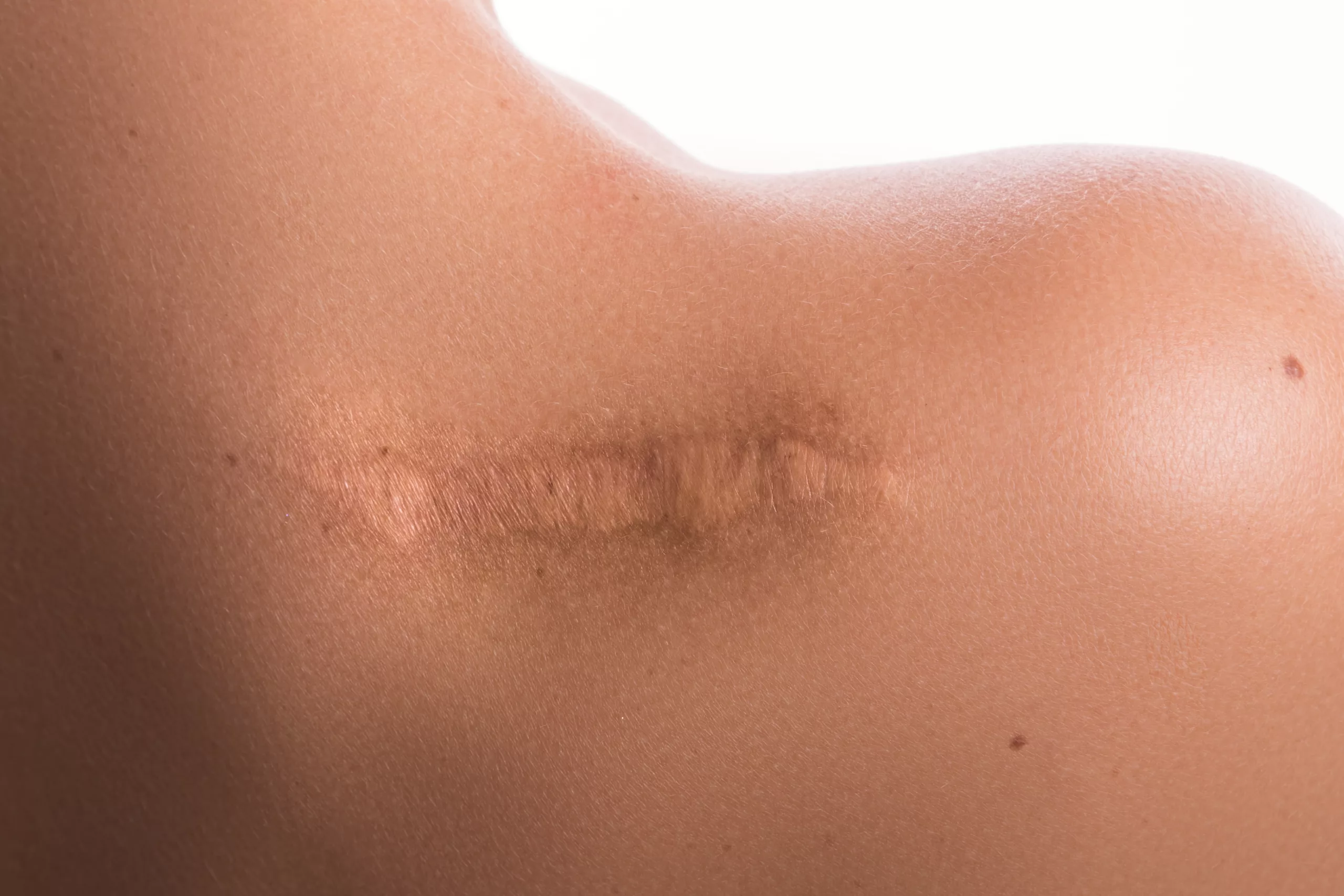
There are three main types of atrophic scars: icepick (small and deep), boxcar (angular borders and flat bottom), and rolling (wide undulations). Each type requires a different approach.
Icepick are the most challenging — narrow and deep. Boxcar have a depressed "box-like" appearance. Rolling create undulation due to fibrous bands. Many patients present a combination of all three types, requiring multimodal treatment.
Can acne scars be treated?
Yes. Fractional CO2 laser, microneedling, subcision, and chemical peels can improve appearance by 50% to 80%, depending on the type and depth.
The goal is "significant improvement" and not "total elimination". Most achieve very satisfactory results with 3-6 sessions of combined treatment. The multimodal approach is more effective than any single treatment.
Does microneedling work for acne scars?
Yes, it is one of the most effective and accessible treatments. It stimulates collagen and improves texture by 40% to 70% after a series of sessions. Indicated for rolling scars and superficial boxcar scars.
The electric pen uses needles from 1.5mm to 2.5mm. When combined with drug delivery (hyaluronic acid, vitamin C, growth factors), the results are enhanced. 4-6 sessions with intervals of 30 days. Downtime of 2-3 days.
What is subcision for acne scars?
A procedure in which a needle is inserted under the scar to break the fibrous bands that pull the skin downwards. It is the treatment of choice for rolling scars.
It uses a Nokor-type needle (18G) or a fine cannula passed under the scar, releasing dermal adhesions. Frequently combined with hyaluronic acid filler. Quick recovery with ecchymosis for 5-7 days.
Do chemical peels improve acne scars?
Useful as a complement, especially for superficial scars and post-acne marks. High concentration TCA CROSS can be applied punctually to icepick scars.
TCA CROSS uses 70-100% TCA punctually within icepick scars. 3-6 sessions with intervals of 4-6 weeks. Medium and superficial peels help texture and marks, but do not replace deep treatments like laser or subcision.
What is the best treatment for deep acne scars?
Combined approach: subcision to release adhesions, fractional CO2 laser to stimulate collagen, microneedling with drug delivery to refine texture. In some cases, filler complements the result.
Protocol: 1) Subcision; 2) Fractional CO2 laser 4-6 weeks later; 3) Microneedling with drug delivery 4-6 weeks after. Can be repeated 2-3 times. For isolated icepick, TCA CROSS or punch excision.
Can active acne be treated along with scars?
No. It is essential that acne is controlled before starting scar treatment. Treating with active acne can worsen inflammation and create new scars.
Medications like isotretinoin require a 6-12 month washout period before laser procedures. Ideal sequence: acne control → stabilization (3-6 months without new lesions) → initiation of scar treatment.
Agendar consulta
Precisa de orientação personalizada?
Marque uma avaliação com o Dr. Fernando Amato e tire as suas dúvidas sobre cirurgia plástica.
Falar no WhatsApp