- Plastic surgery
Lipedema Surgery: 7 Errors that Compromise Results
- February 5, 2026
- By Fernando Amato
Seeking surgery as an isolated solution is one of the fastest ways to frustration in lipedema treatment
Lipedema is a chronic, progressive, and still underdiagnosed disease. Frequently, many patients, upon noticing the disproportionate enlargement of their legs or arms, associated with pain and sensitivity, quickly seek a surgical solution. However, this hasty decision is among the biggest errors in lipedema treatment.
Indeed, surgery can be an important tool, but it should never be seen as an isolated treatment. When this occurs, the risk of unsatisfactory results increases significantly. Furthermore, the consequences can compromise both the patient's health and quality of life.
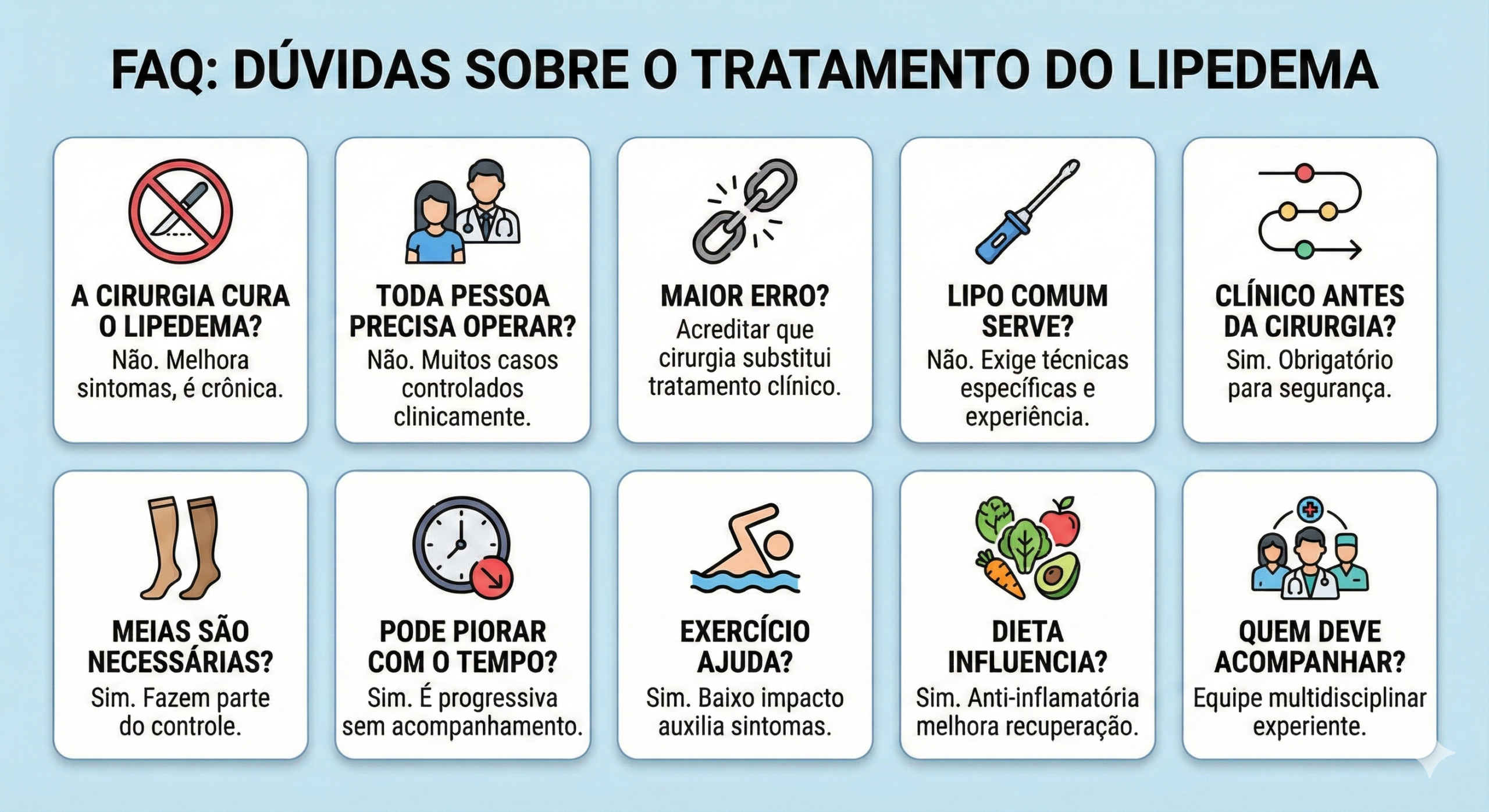
❗ Surgery does not replace clinical treatment
🧬 Lipedema does not represent common fat
⚠️ Active inflammation worsens surgical outcomes
🧦 Compression and rehabilitation are indispensable
📉 Your lifestyle defines long-term success
What is lipedema and why does it require specialized care?
First, it is important to understand that lipedema is a condition characterized by the pathological accumulation of subcutaneous fat, usually symmetrical, associated with pain, edema, and capillary fragility. Unlike obesity, it does not respond adequately only to diet or physical exercise.
👉 Learn more: Lipedema
Precisely because it is a chronic inflammatory disease, treatment needs to be continuous, planned, and multidisciplinary. Therefore, an isolated approach rarely yields satisfactory results.
Why do so many errors happen before surgery?
Initially, the main reason is the expectation of a quick solution. Often, plastic surgery, especially liposuction, is seen as a definitive answer. However, when doctors ignore clinical treatment, surgery loses effectiveness and safety.
Therefore, understanding the errors in lipedema treatment is the first step to avoiding them. Moreover, this knowledge allows you to make more conscious decisions about your health.
The 7 main errors in lipedema treatment
1️⃣ Believing that surgery resolves lipedema
First and foremost, this is the most common error. Indeed, surgery reduces volume and improves contour, but it does not cure lipedema. In fact, inflammation and the tendency for progression remain.
Consequently, without physiotherapy, compression, and metabolic control, symptoms return. Therefore, it is fundamental to understand that surgery is only one part of the treatment.
2️⃣ Seeking surgery without adequate diagnosis
Frequently, many patients arrive at the clinic without a correct diagnosis. In some cases, they have lymphedema, obesity, or associated venous insufficiency.
Thus, operating without a precise diagnosis compromises results and increases risks. Furthermore, it can lead to avoidable complications and frustration with the outcomes.
3️⃣ Treating lipedema as an aesthetic problem only
Unfortunately, this misconception leads to the inappropriate choice of surgical techniques. In fact, lipedema tissue is more fibrous and inflamed, requiring specific approaches, different from traditional aesthetic liposuction.
For this reason, it is essential that the surgeon has specific experience with lipedema.
👉 Related reading: Liposuction
4️⃣ Ignoring pre-operative clinical treatment
Certainly, among the biggest errors in lipedema treatment is operating on patients with active inflammation. In this sense, proper preparation makes all the difference in the results.
Clinical preparation includes:
- Firstly, specialized lymphatic drainage
- Secondly, use of compression stockings
- Additionally, nutritional adjustments
- Finally, smoking cessation control
👉 Important: Risks of smoking
5️⃣ Underestimating the pre-operative period
Similarly, patients with lipedema require careful evaluation before surgery. In this context, adequate preparation reduces risks and improves results.
This involves:
- Initially, specific laboratory tests
- Subsequently, anesthetic evaluation
- Simultaneously, nutritional preparation
- Finally, detailed surgical planning
👉 Learn more:
6️⃣ Not planning the post-operative period
Equally important, the post-operative period for lipedema is different from aesthetic procedures. Without a doubt, without adequate rehabilitation, complications such as fibrosis, persistent pain, and prolonged edema can arise.
Treatment includes:
- Firstly, continuous lymphatic drainage
- Secondly, rigorous use of compression
- Additionally, functional physiotherapy
On the other hand, the surgical environment also matters:
7️⃣ Not changing lifestyle after surgery
Even after a well-executed surgery, lipedema continues to require care. Therefore, inadequate nutrition, sedentary lifestyle, and abandonment of medical follow-up favor the progression of the disease.
Consequently, surgical results can be compromised over time. For this reason, permanent lifestyle changes are essential.
👉 Important guidelines:
When is surgery truly indicated for lipedema?
In summary, surgeons may consider surgery when you present:
- Firstly, persistent pain
- Additionally, significant functional limitation
- Also, documented failure of clinical treatment
- Finally, significant impact on quality of life
Remember: the decision should be shared between patient and doctor. This way, you ensure a conscious and safe choice.
Conclusion
In conclusion, avoiding errors in lipedema treatment is fundamental to obtaining real and lasting results. In fact, surgery is just one step within a larger plan. Without adequate clinical treatment, realistic expectations, and continuous follow-up, the risks outweigh the benefits.
Therefore, if you suspect lipedema or have already received the diagnosis, seek a specialized evaluation before deciding on surgery. This way, you significantly increase your chances of success and satisfaction with the results.
Related articles


Agendar consulta
Precisa de orientação personalizada?
Marque uma avaliação com o Dr. Fernando Amato e tire as suas dúvidas sobre cirurgia plástica.
Falar no WhatsApp