- Diseases
Capsular Contracture
- November 6, 2022
- By Fernando Amato
Summary
What is the classification of Capsular Contracture?
What is capsular contracture?
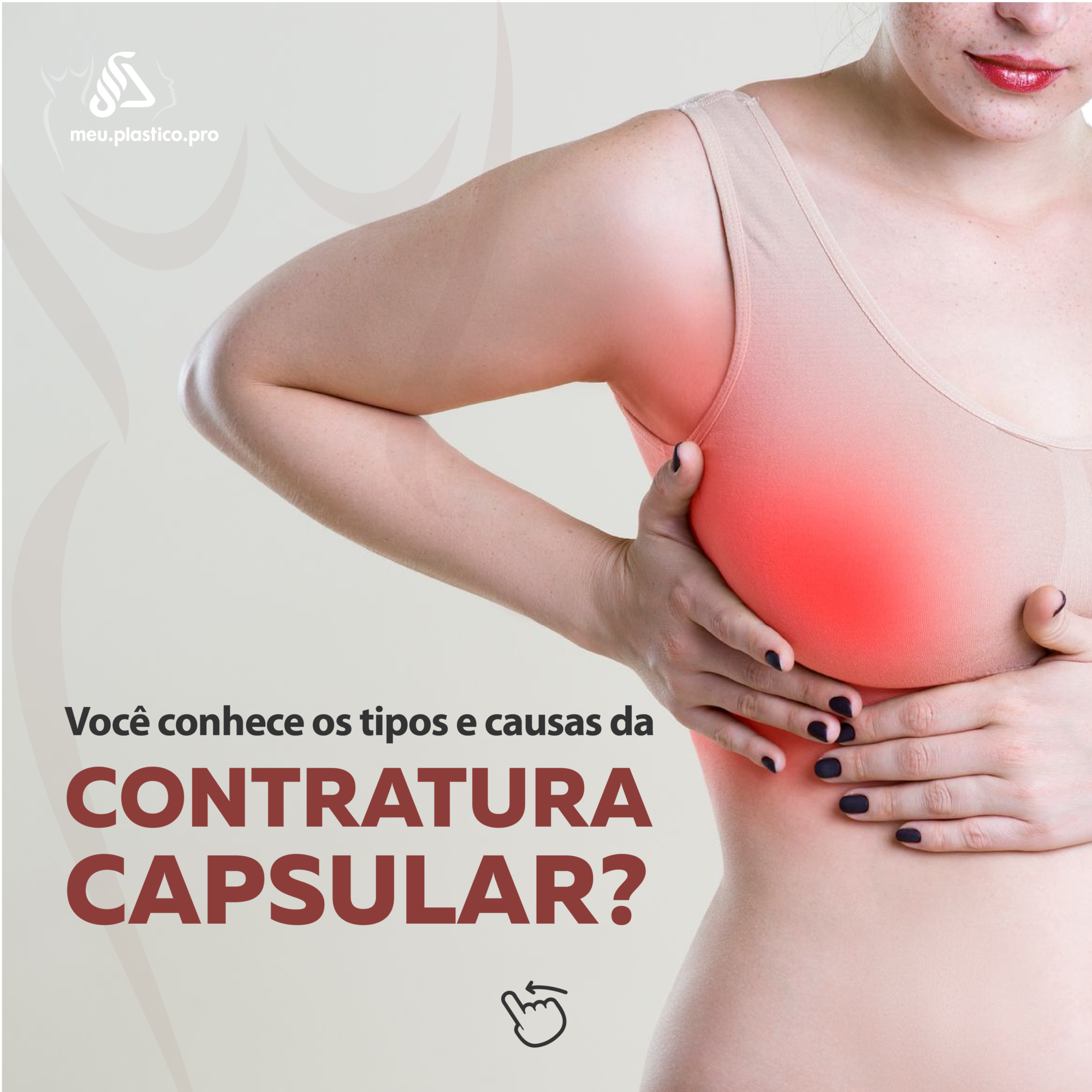
Capsular contracture is defined as spherical scarring, with contraction of the capsule surrounding the breast implant. As a consequence, the breast becomes firmer, changes its shape, deforming the breast, and can even cause pain in more severe cases.
In the 80s, an American surgeon named Baker classified it as:
Baker I: Normal Breast.
Baker II: Minimally firm breast.
Baker III: Moderately firm breast with visual deformity.
Baker IV: Hard and painful breast.
What can cause Capsular Contracture?
What is the cause of capsular contracture?
Some factors such as the implant's wear time and material quality may be related. Other more serious aspects include the presence of infection, postoperative complications such as hematomas, seromas, intense surgical trauma (mastectomies), implant rupture, and even radiotherapy in cases of breast reconstruction after breast cancer.
Frequently asked questions:
What are the symptoms of capsular contracture?
Breast hardening, breast deformity, and pain
What can cause capsular contracture?
Hematoma, seroma, infection, implant rupture, silicone leakage, radiotherapy, among others.
What to do in cases of capsular contracture?
There are some medications that can be used at the beginning of capsular contracture, such as antileukotrienes, which can relieve symptoms. Analgesics and physical therapy can also be used to improve symptoms.
What is the best test for the diagnosis of capsular contracture?
More questions about capsular contracture
What is capsular contracture?
Capsular contracture is a medical term that refers to a condition in which the scar tissue around a breast implant becomes thick and rigid, causing pain and breast deformity.
What are the causes of capsular contracture?
The exact causes of capsular contracture are unknown, but it can be caused by factors such as infection, the body's immune system response to the breast implant, or reaction to scar tissue.
What are the symptoms of capsular contracture?
Symptoms of capsular contracture may include breast pain, changes in breast shape, a feeling of breast stiffness, and changes in breast sensitivity.
What are the treatments for capsular contracture?
Treatment for capsular contracture may include pain-relief medication, physical therapy to help stretch the scar tissue, or surgery to remove the scar tissue and, if necessary, replace the breast implant.
What is the prognosis for people with capsular contracture?
The prognosis for people with capsular contracture can vary depending on the severity of the condition and the effectiveness of treatment. In general, capsular contracture is a treatable condition, but additional surgery may be necessary in the future if the condition recurs.
Can capsular contracture affect only one breast?
Yes, capsular contracture can affect only one breast. However, it is more common for it to affect both breasts.
Can capsular contracture be prevented?
There is no way to guarantee that capsular contracture will not occur after breast augmentation surgery. However, following the surgeon's instructions for post-operative care and taking medication to prevent infections can minimize the risk of developing the condition.
Can capsular contracture be surgically corrected?
Yes, capsular contracture can be surgically corrected. The surgeon can remove the scar tissue and, if necessary, replace the breast implant during the procedure. However, it is important to remember that surgery may not completely correct the breast deformity and there may be risks associated with the surgery.
Breast explant is the popular name for surgery to remove silicone implants. It can be performed for aesthetic reasons only, but it has been widely performed by patients who experience complications related to silicone implants. What are these complications? Much has been said about silicone disease and ASIA syndrome
is already dissatisfied with her breast
silicone and wants to remove it, learn more about the
mammary explant by watching this video
until the end. Before starting, don't forget
to like this video, subscribe to our channel,
ring the bell, and follow us on different
profiles on different platforms. The mammary explant is the popular name
used for silicone implant removal surgery. It can
be performed for aesthetic reasons only, but it has been widely performed
by patients who present complications related to
silicone implants. What are these complications?
Much has been said about silicone disease and ASIA syndrome. Silicone disease
is a more generic term that can encompass all complications
related to silicone implants,
although some relate it only to the toxicity of silicone that leaks
from the implant without it being ruptured. This situation is called Berlin.
I think it's important to remember that it's common for a capsule to form
around any implanted material. In the case of breast implants,
this capsule can become hardened with visible deformity and even
cause pain. Although rare, there is even a lymphoma
related to breast implants, and in this case, the surgery to treat the
disease is the removal of the implant en bloc, meaning the intact implant inside its
capsule. Ruptured implants can have silicone migrating to the
axilla, causing pain and discomfort, and even impairing lymphatic drainage of the
breast and arms. There is a syndrome called ASIA, in which the silicone implant
serves as a trigger to develop signs and symptoms
similar to rheumatological diseases, such as joint pain, body aches, fatigue,
sleep disorders, hair loss, dry eyes, dry mouth, and others. To place
a breast implant, the surgeon needs to be honest and explain all these
risks, and the patient must be mature enough to make this choice.
Look for a doctor you trust if you want to have breast surgery.
[Music]
And there
[Music]
Playlist
Breast Explant and Reconstruction
3:09
Breast explant
2:57
Lipolaser and fat grafting
2:58
3:36
9:24
7:28

Related articles



Agendar consulta
Precisa de orientação personalizada?
Marque uma avaliação com o Dr. Fernando Amato e tire as suas dúvidas sobre cirurgia plástica.
Falar no WhatsApp