- Articles
Does Botox cause facial swelling?
- May 18, 2022
- By Fernando Amato
Information on Botulinum Toxin and Other Facial Aesthetic Treatments
The search for techniques that aid in maintaining and enhancing facial aesthetics has led many people to consider diverse cosmetic procedures. Plastic surgery is known for its significant transformations, but minimally invasive procedures, such as botulinum toxin application and fillers, have gained prominence. Given the growing demand, it is crucial to understand the benefits and potential side effects associated. Let's address the characteristics of botulinum toxin, as well as other treatments and their respective care.
Botulinum Toxin: Better known as ®Botox When mentioning botulinum toxin, many immediately think of the brand name, ®Botox. This widely used substance has proven effective in reducing wrinkles and expression lines. Let's understand its mechanism of action and possible side effects.
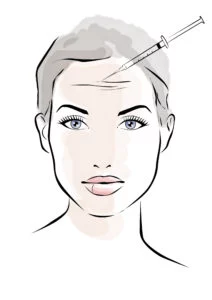
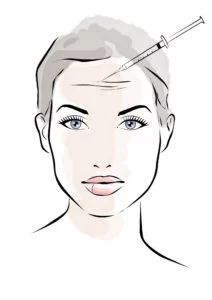
Mechanism of action: Botulinum toxin is not a filler and, therefore, does not cause swelling. Its role is to inhibit the contraction of facial muscles, beginning to act in the days following application. This effect can last up to six months, varying from individual to individual.
And the question arises: is it appropriate for younger people? In general, yes, it can be considered a preventive measure against the development of deeper lines.
Hyaluronic Acid: Effective and with clear indications Hyaluronic acid has its relevance in aesthetic procedures. Although it is safe, some side effects can occur.
Possible side effects:
- Swelling
- Persistent edema
- Infections
It is important to note that improper application can result in blood vessel obstruction and, consequently, skin necrosis. Thus, the selection of qualified professionals is of paramount importance.
Products with Aesthetic Use Restrictions: Important Guidelines There are products that, although they may have specific approvals, are not indicated for aesthetic purposes. PMMA, for example, is authorized by Anvisa for the treatment of lipodystrophy in HIV patients.
It is also crucial to be aware of inappropriate products, such as industrial liquid silicone, which is not approved for medical use due to potential risks. Such substances, unlike botulinum toxin and hyaluronic acid, are not metabolized by the body, which can cause serious complications.
Conclusion Aesthetic treatments, when well indicated and executed, can enhance self-esteem and well-being. However, it is essential to be well-informed, choose qualified professionals, and prioritize safety and health when considering any procedure.
Note: This article is for informational purposes only and should not be used as medical advice. Always consult a licensed physician to discuss any concerns or questions related to aesthetic treatments.
Botulinum Toxins: An Overview of Options on the Market
Botulinum Toxin Type A is primarily known for its use in aesthetic treatments to smooth wrinkles and expression lines. While the term “Botox” (a registered trademark of Allergan) has become synonymous with such treatment, there are other botulinum toxins on the market that are equally effective and have their own characteristics. Let's discuss some of them:
Botox® (Allergan)
- The most famous and, for many, the gold standard. It is widely used for both aesthetic and therapeutic purposes, such as in the treatment of dystonias and hyperhidrosis.
Dysport® (Galderma)
- Also known as Reloxin, this toxin has a slightly wider diffusion than Botox, meaning it can affect a larger area. This can be beneficial for treating larger areas, but also requires precision to avoid unwanted effects.
Xeomin® (Merz)
- Unlike other toxins, Xeomin is formulated without additional proteins, being considered “pure”. This can reduce the chance of patients developing resistance to the toxin. It is used for both aesthetic treatments and medical conditions, such as blepharospasm.
Jeuveau® (Evolus)
- A more recent addition to the market, Jeuveau is used exclusively for aesthetic purposes. It is also known as “Newtox”. Its structure is similar to Botox, but there are claims that it offers faster results.
Points to Consider:
Dosage and Diffusion: Each toxin has a different dosage and diffusion profile. For example, a unit of Botox is not equivalent to a unit of Dysport. Physicians adjust dosages as needed, depending on the chosen brand.
Resistance: In rare cases, patients may develop antibodies against the toxin, making the treatment less effective over time. Choosing between different toxins can be a strategy to address this problem.
Duration and Onset: Some toxins may start to show results a little faster or last longer than others, although the differences are usually minimal.
Medical Applications: While all are used for aesthetic treatments, not all are approved or suitable for therapeutic uses.
When considering botulinum toxin treatment, it is crucial to discuss with a specialized doctor which product is most suitable for your needs and expectations. Choosing the right product, along with an experienced professional, is fundamental to obtaining the best results.
10 Questions and Answers
What is botulinum toxin?
- It is a purified protein, derived from the bacterium Clostridium botulinum. When injected in small amounts, it blocks the nerve signals that cause muscles to contract, helping to smooth wrinkles and expression lines.
Does ®Botox cause swelling?
- No, botulinum toxin does not cause swelling. It acts by inhibiting muscle contraction and has no filling effect.
How long do the effects of ®Botox last?
- The effects of ®Botox can last up to six months, but this can vary depending on the patient and the treated area.
What is hyaluronic acid and what is it used for?
- Hyaluronic acid is a substance naturally present in the human body. In aesthetic treatments, it is used as a filler to reduce wrinkles, enhance facial contours, and increase the volume of the lips.
What are the possible complications of hyaluronic acid?
- Although considered safe, it can cause swelling, prolonged edema, and infection. In rare cases and related to improper application technique, it can cause blood vessel obstruction and skin necrosis.
What is PMMA and where is it approved for use?
- PMMA (polymethyl methacrylate) is a type of non-absorbable filler. It is approved by Anvisa to treat lipodystrophy in HIV patients, but it has no aesthetic indication.
Why is industrial liquid silicone dangerous?
- Industrial liquid silicone was not developed for medical use. Its use can cause serious complications, such as allergic reactions, chronic inflammation, deformities, and severe infections.
Is it safe to perform aesthetic procedures with any doctor?
- No, it is crucial to choose a specialist and qualified doctor to perform aesthetic procedures. Experience and adequate training are essential to avoid complications.
Can younger people benefit from ®Botox?
- Yes, ®Botox can be used preventively in younger people, helping to prevent the development of deep wrinkles over time.
What is the main difference between botulinum toxin and fillers?
- Botulinum toxin, such as ®Botox, works by relaxing muscles and smoothing expression wrinkles. Fillers, such as hyaluronic acid, add volume and contour to treated areas, acting directly in the space under the skin.


Diet before and after plastic surgery
How to organize your diet before and after plastic surgery to reduce avoidable risks and promote a more stable recovery,

Healthy eating in plastic surgery post-op
Healthy eating in plastic surgery post-op is not just about “eating better”. It participates in recovery, helps to

Temporal Fat Atrophy: causes, consequences and treatments
Temporal fat atrophy is the loss of volume in the temples, creating a hollowed-out appearance on the sides of the face.

In this video, Dr. Fernando Amato @Dr Fernando Amato , Plastic Surgeon at Instituto Amato, will talk about: Facial harmonization, facial disharmonization, or facial demonization, the risks of undergoing this procedure with just anyone and harming your health! A controversial topic worth discussing
Facial harmonization is a
term widely used
lately for procedures
on the face, to harmonize the face.
But don't we,
sometimes, get scared
by facial harmonization,
because we have seen
some patients who have not had,
are not doing facial harmonization well.
Sometimes, we even joke
that it's a facial disharmonization
or even a facial demonization.
I am saying this,
bringing this topic,
because many patients seek
the facial harmonization procedure.
And end up not understanding
the concept of facial harmony.
Well, on the face,
we have eyelids, we have a nose,
we have ears, we have the shape of the face,
we have hair implantation,
we have eyebrow position,
there are many things on the face that contribute
to facial harmonization.
Even teeth, a complete smile,
with all teeth, with clean teeth,
this teeth whitening,
so, all this influences.
And what is harmonic?
What is harmonic? Harmonic
will be that which is more symmetrical.
People try to make one
side more similar to the other side,
and with a more accepted appearance
in society, that looks better
perhaps on cell phones, in filters,
they don't need to use so much
cell phone filter to take photos,
take selfies, post on Instagram,
post on Snapchat and TikTok.
So there are all these media,
sometimes, it interferes a lot in this part,
affects patients, which is
facial harmonization.
Well, whoever seeks
facial harmonization must know
that it is not just a hyaluronic acid filler.
So, we do use filler,
the most common material
is hyaluronic acid,
which provides volume
in some regions of the body,
mainly the face.
And it is absorbable,
many people complain that
it is absorbable because it doesn't last, but
the fact that it is absorbable
gives more security.
There is a greater chance that if someone
wrong, with time, it improves.
Of course, there are situations
where even this hyaluronic acid
takes a long time to absorb,
and yes, it has complications.
It is not free of complications.
Botox is a brand,
we call it botulinum toxin
and there are other brands,
Nabota, Dysport, Xeomin.
And they serve
to paralyze the musculature,
we generally use it in the frontal region,
because they are the muscles for
raising the eyebrow.
Sometimes, we can even make
the eyebrow higher
by relaxing this musculature in a
strategic way, around the eyes,
crow's feet also,
we can perform
botulinum toxin. Hyaluronic acid,
we can do it in several areas
where there was bone consumption,
depending on the patient's age,
but we can do it in the malar region,
temporal region,
can do it in the sulcus, in the folds,
to try to soften these folds.
We can use biostimulators
that cause, that provide
collagen production in the skin,
so it improves skin texture.
This also reduces
wrinkles, facial wrinkles.
And there are surgical procedures,
blepharoplasty, will contribute
to facial harmonization. The
eyebrow lift,
which can be done with threads
with local surgery,
with video surgery,
it will also provide
facial harmonization as well.
Rhinoplasty, sometimes the patient has a
beautiful face and a disproportionate nose.
Larger size or it can be crooked.
So it can really,
rhinoplasty can contribute
to facial harmonization. Or in the chin,
sometimes, the patient
has some alteration in the chin,
which can also involve
chin advancement,
placing a chin implant. It's important
to remember that the face has teeth
and the patient's bite interferes.
So, if the patient does not have a correct
bite, this needs to be corrected.
In these surgeries, orthognathic
surgeries greatly change the shape of the face.
There are those who do,
there are even plastic surgeons who do
orthognathic surgery, but who mostly
do it are maxillofacial surgeons, who are dentists.
Ears also, sometimes,
patients with prominent ears.
This can be somewhat discordant,
the position of this patient's hair,
a little hair loss at the front,
so it is possible to do a
hair transplant
and, sometimes, even makeup can
contribute to facial harmonization,
working a little bit with
the colors, the lipstick color.
So all this contributes. Hair,
hair color, bleaching,
a darker color,
lighter streaks,
highlights.
So all this can interfere,
but there is a great risk of this,
facial disharmony,
when the patient ends up
asking for more volume
or, sometimes, even the patient
seeks a professional who is not,
not so qualified
for that procedure.
When
filling ended up
being popularized
in other health specialties,
no longer something that
only doctors do.
So, this is a fight
with the medical society and with the society
of dentistry, pharmacy, nursing,
other professionals end up
invading this and doing it.
So, as there is this discussion,
it ends up that
the patient looks for the cheapest
and this cheap can turn out to be very expensive.
Will there be people who do it, dentists
who have great results, pharmacists,
biomedical professionals and nurses? Yes,
but the vast majority,
they have very short training
to be able to sell that service.
The plastic surgeon
who does six years of medicine,
two years of general surgery,
three years of plastic surgery,
plus some specializations,
ends up being the dentist who did four,
five years of college.
And then, there's the other who did four or
the other who did less and less
time in college.
The doctor who worked full-time,
the other has only an evening course,
so has less familiarity
with anatomy.
And that's where we start
to have this facial disharmony, in addition to the
increased risk of complications
such as infections or with
premature loss of results,
many times, to be cheaper,
a lower quality material is used
or a material, perhaps a more diluted
Botox with botulinum toxin,
so, they divide more to be able to use
and more patients
will have a less lasting effect.
So, this facial disharmonization
or facial demonization
ends up being related
to this popularization
of these cosmeceutical procedures
of filling performed
by other professionals,
not free from bad results from
medical colleagues, because it is also not
something that only plastic surgeons
do.
Dermatologists do it
and other specialties
have ventured into this.
There is a specialty that is not
recognized, which is aesthetic medicine,
and people want to sell it.
So, if you go to a,
to one of these professionals and say
“Doctor, what do I need?”
He will
put everything he can sell
for you to be able to perform
and for him to earn.
So you need to have a
professional who tells the truth.
“Look, this you need,
this you don't need.”
If you want to do this first,
let's see the result,
if you adapt to the result,
it is
generally like this,
you need to see if you have never done it.
So, I think it is
important to have this exchange,
this contact with the professional
you are choosing
also, be very
attentive to the conditions of the place,
be attentive to very low prices,
these promotions, promotion
I don't know what it is only now.
Be very careful
because that's where the danger lies.
The scam is there, whoever falls for it, right?!
So, I think we have
to be very careful.
Who are these professionals who
are doing it, be very careful
and choose who will do your
facial harmonization
so they don't demonize,
disharmonize your face.
Right?! If you liked this
video, like, comment, share.
If you didn't like it, say the
reason you didn't like it.
I tried to give my position
as a plastic surgeon.
My opinion, I am available
for any comment you may have
and don't forget to subscribe to
our channel. Thank you very much!
Related articles


Agendar consulta
Precisa de orientação personalizada?
Marque uma avaliação com o Dr. Fernando Amato e tire as suas dúvidas sobre cirurgia plástica.
Falar no WhatsApp