- Plastic surgery
The 7 signs that it's time to replace your breast implant
- November 30, 2025
- By Fernando Amato
Do you know how to recognize the signs that your breast implant needs to be replaced and that its lifespan is coming to an end? Understand when it's time to replace it.
The decision to replace a breast implant usually arises when the implant shows changes, when the body changes, or when the patient experiences discomfort over the years. Although many women believe that replacement is mandatory after 10 years, the truth is that there is no fixed deadline. Therefore, what determines replacement are clinical signs, medical follow-up, and imaging exams.
Before proceeding, it is important to remember that any patient with an implant should maintain regular follow-up with their surgeon and undergo periodic exams, such as ultrasound and MRI — especially after the 5th year of surgery.
- 🛑 Pain and aesthetic changes may indicate the need for replacement.
- 🔬 Regular examinations are indispensable.
- 🩺 Capsular contracture is one of the main reasons.
- 🧪 Rupture can be silent — MRI is crucial.
- ✨ Replacement can also be for aesthetic desire, not just due to a problem.
Persistent pain or discomfort
Painful changes that appear years after surgery deserve attention.
Pain may be associated with:
- capsular contracture;
- rupture;
- implant displacement;
- inflammatory processes.
Although pain does not necessarily mean urgency, it is a warning sign to investigate.
Change in breast shape or position
If the breast started to become:
- higher or harder,
- lower or sagging,
- asymmetrical,
- with visible deformities,
Thus, this can indicate displacement or wear of the implant, as well as changes in the skin and tissues.
In some cases, it may be necessary to associate mastopexy (breast lift)
Suspected rupture
Rupture can, however, be silent — called silent rupture — especially in cohesive gel implants.
Signs include:
- sudden asymmetry;
- reduction in volume;
- change in breast consistency.
Confirmation is made by magnetic resonance imaging.
Capsular contracture (grades III and IV)
It is one of the most frequent causes of replacement.
Thus, the body naturally forms a capsule around the implant; when it becomes rigid, capsular contracture occurs.
Main signs:
- hard breast;
- pain;
- deformity;
- sensation of compressed implant.
Treatment may require implant replacement and capsulectomy.
Visible wrinkles or ripples (rippling)
Rippling occurs when the undulations of the implant become visible on the skin. Although more common in very thin patients or those with little breast tissue, the cause can also be:
- implant wear,
- significant weight loss,
- inadequate positioning.
Solution leakage (in saline implants)
Less common in Brazil, but possible.
In this type of implant, the defect manifests as rapid volume loss.
As saline is absorbable, replacement is usually straightforward.
Aesthetic changes over time
Even without ruptures or contractures, many women opt to replace their breast implants to correct sagging, bodily changes, or to adjust size and shape.
These changes may be related to:
- weight loss;
- pregnancy and lactation;
- age;
- hormonal changes.
In these cases, techniques such as mammoplasty (http://www.plastico.pro/mamoplastia) or implant surgery (http://www.plastico.pro/protese) can be combined.
How is the medical evaluation performed to decide on replacement?
The consultation involves:
- detailed physical examination;
- analysis of exams (ultrasound and MRI);
- surgical history;
- patient complaints;
- aesthetic evaluation.
The surgeon also reviews the ideal surgical environment, such as an appropriate day hospital.
If surgery is necessary, pre-operative exams will be requested: http://plastico.pro/exames-preop
Furthermore, it is essential to review guidelines on diet, anesthesia, and prior preparation.
When is implant replacement actually indicated?
According to international protocols and clinical guidelines, replacement should therefore occur when there is:
- confirmed rupture;
- advanced capsular contracture;
- significant pain;
- displacement;
- evident deformities;
- extremely uncomfortable changes for the patient.
In other words: there is no replacement by deadline — replacement is done for a reason.
Is replacement surgery more complex?
It depends on the case.
However, situations such as capsular contracture and rupture may require specific techniques, such as:
- partial or total capsulectomy;
- change of anatomical plane;
- use of more modern implants;
- association with mastopexy or mammoplasty.
On the other hand, simple replacements are usually quicker and with easier recovery.
Risks of implant replacement
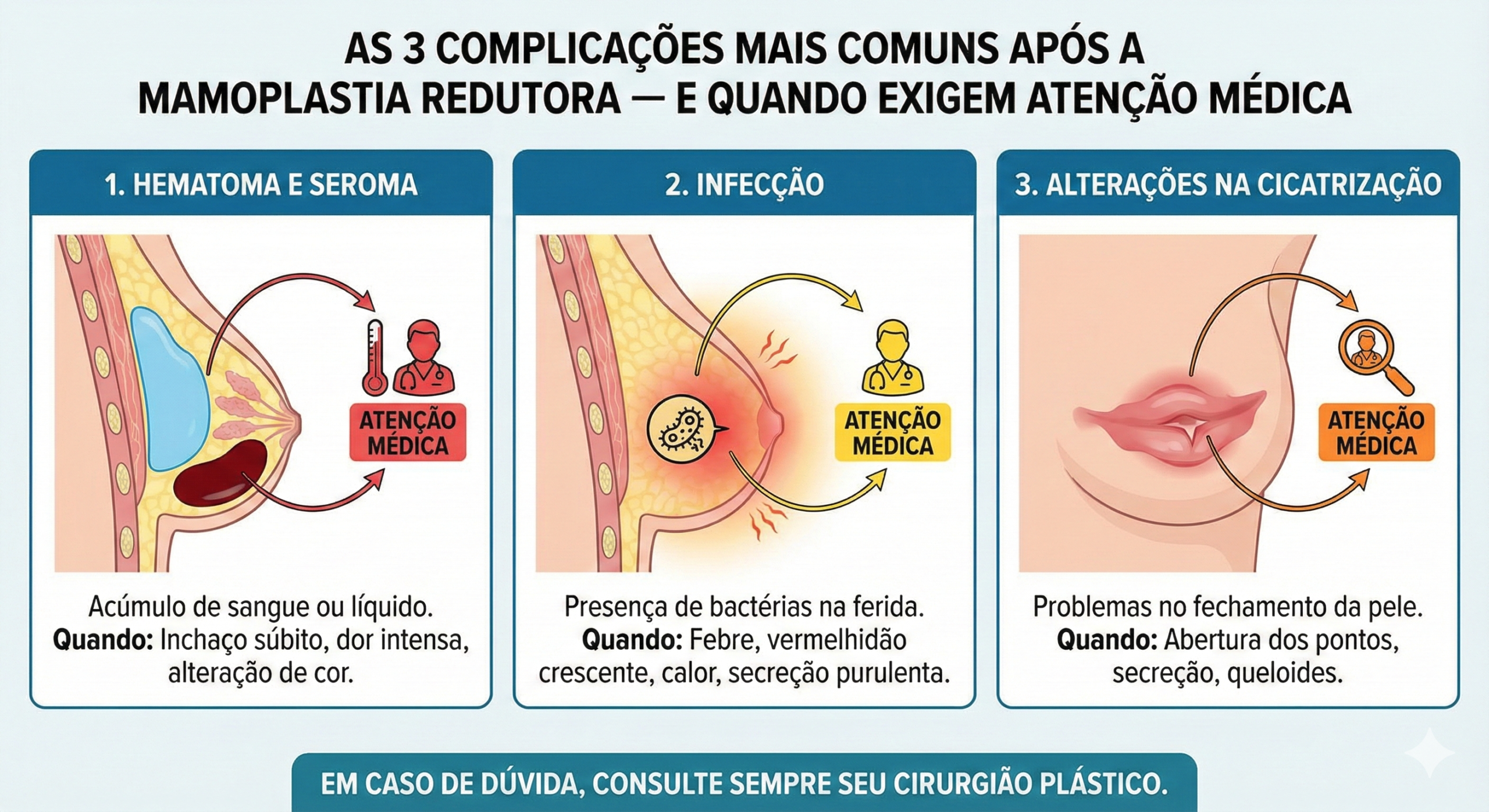
The risks are similar to those of any breast procedure:
- bleeding;
- infection;
- healing problems;
- asymmetries;
- recurrence of capsular contracture.
Hence the importance of operating in a safe environment with a specialized surgeon.
How to prevent future complications?
Prevention involves:
- regular exams;
- avoiding smoking;
- annual follow-up;
- choosing quality implants;
- maintaining a stable weight;
- following post-operative recommendations.
Conclusion
In summary, the signs that you may need to replace your breast implant should not be ignored. Therefore, aesthetic changes, discomforts, and changes in exams are sufficient reasons for a medical evaluation.
Thus, if you have noticed any of the mentioned signs, schedule a consultation with a plastic surgeon for a complete analysis. Timely review ensures safety, well-being, and natural results.
Recommended Video
Liposuction and Abdominoplasty: Differences and Risks — Dr. Fernando Amato

(Video related to surgical safety, a cross-cutting theme.)
Related articles


Agendar consulta
Precisa de orientação personalizada?
Marque uma avaliação com o Dr. Fernando Amato e tire as suas dúvidas sobre cirurgia plástica.
Falar no WhatsApp