
- Plastic Surgery
Reverse Abdominoplasty and Mammoplasty: Combination for Chest and Abdomen Rejuvenation
- January 30, 2025
- By Fernando Amato
The combination of reverse abdominoplasty and mammoplasty provides a harmonious result and rejuvenates the chest and abdomen areas. While mammoplasty focuses on reshaping the breasts, reverse abdominoplasty acts on the upper abdomen, pulling excess skin towards the chest. This combination primarily benefits patients with significant flaccidity in the upper abdomen who wish to correct the appearance of their breasts.
In this article, we will explain how each procedure works, its indications, and what to expect from this surgical combination.
📝 Highlights on reverse abdominoplasty and mammoplasty
1. 🤝 Complementary procedures: combined to treat upper abdominal flaccidity and reshape the breasts.
2. 📉 Indicated for patients with excessive flaccidity above the navel, not resolved by traditional abdominoplasty.
3. 🛠️ Reverse abdominoplasty pulls the skin of the upper abdomen towards the chest, while mammoplasty improves breast shape and volume.
4. ⏳ A single procedure reduces recovery time compared to separate surgeries.
5. 🩺 Always performed by a specialized plastic surgeon to ensure safety and adequate aesthetic results.
What is reverse abdominoplasty?
Reverse abdominoplasty benefits patients who have predominant skin laxity in the upper abdomen (above the navel), when traditional abdominoplasty does not adequately solve the problem. Thus, this “reverse” technique differs in that the abdominal skin is pulled upwards, towards the chest, and not downwards, as in conventional abdominoplasty.
The surgeon makes the incision below the breasts, usually utilizing the inframammary fold (natural line below the breasts), which camouflages the scar. This approach primarily benefits patients who have lost a lot of weight or have localized flaccidity.
What is mammoplasty?
- Mammoplasty is plastic surgery of the breasts, which can have different objectives, such as:
- Reduction mammoplasty: to reduce volume and treat physical discomforts, such as back or shoulder pain. Augmentation mammoplasty: to improve breast volume and projection, often with the use of silicone implants (learn more about implants here).
- Mastopexy (with or without implants): to reposition sagging breasts and improve contour, ideal for cases of flaccidity, especially after breastfeeding or weight loss (more details here).
The choice of technique depends on the individual needs of each patient. When combined with reverse abdominoplasty, the goal is to create a harmonious appearance between the upper abdomen and the chest.
Who can undergo combined reverse abdominoplasty and mammoplasty?
This combination is indicated for patients who:
- Have significant flaccidity in the upper abdomen;
- Wish to correct breast ptosis (sagging) or improve their shape and volume;
- Have undergone significant weight loss, such as after bariatric surgery;
- Are in good general health and are at or near their ideal weight;
- Do not have medical conditions that contraindicate surgery, such as serious heart or lung problems.
⚠️ Important: A detailed evaluation with a plastic surgeon is essential to determine if this combination of procedures is the best option for your case.
How is the combined surgery performed?
The surgeon can perform reverse abdominoplasty and mammoplasty in a single procedure, optimizing surgical and recovery time. The surgeon plans both techniques to ensure that scars are discreet and results are harmonious.
1. Incision in the inframammary region:
In reverse abdominoplasty, the surgeon makes an incision along the natural fold below the breasts. The surgeon can also use this same incision for mammoplasty, if a breast lift (mastopexy) is performed.
2. Abdominal skin traction:
Excess skin from the upper abdomen is pulled upwards and secured in the chest area. This improves firmness and reduces flaccidity in that region.
3. Breast reshaping:
In mammoplasty, the surgeon can perform reduction, augmentation with implants, or a lift (mastopexy), depending on the patient's needs.
4. Suture and finalization:
The surgeon removes excess skin, reshapes the breasts, and carefully closes the incisions to minimize scarring.
Benefits of combined surgery
- Harmonious results: simultaneously treats the chest and abdomen, creating a balanced and natural appearance.
- Optimized recovery: The combination of surgeries reduces the total recovery time, compared to performing the procedures separately.
- Single scar: The surgeon utilizes the incision in the inframammary fold for both surgeries, reducing visible scars.
- Improved self-esteem: the combined results help patients feel more confident with their own bodies.
Recovery
Recovery from combined surgery follows similar care to other plastic procedures:
1. First days:
• Absolute rest, with restriction of sudden movements.
• Use of an abdominal compression garment and surgical bra to aid recovery.
2. First weeks:
• Avoid intense physical activities.
• Attend follow-up appointments to monitor healing.
3. Return to routine:
• Light activities can be resumed after 2 to 4 weeks.
• Physical exercises are gradually released after 6 to 8 weeks, as per medical advice.
⚠️ The final result can be observed after 6 months, when swelling completely disappears and scars mature.
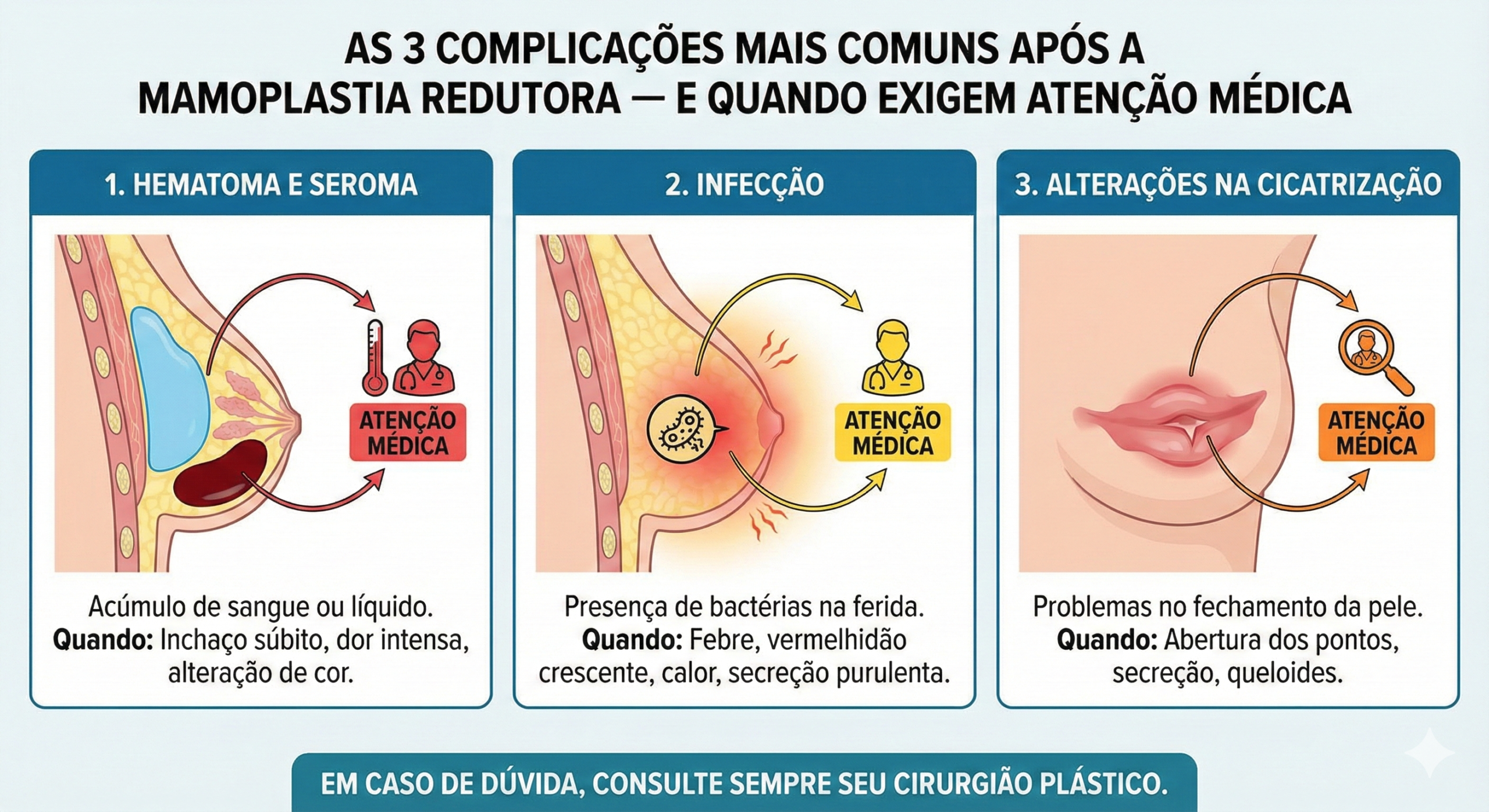
Possible complications
Although the combination of reverse abdominoplasty and mammoplasty is safe when performed by an experienced plastic surgeon, such as Dr. Fernando Amato, complications can occur, such as:
- Fluid accumulation (seroma);
- Infection;
- Changes in skin sensation;
- Hypertrophic scars or keloids.
Therefore, following medical instructions before and after surgery is essential to minimize risks.
When to seek a specialist?
Therefore, if you have upper abdominal flaccidity or wish to improve the appearance of your breasts, schedule a consultation with an experienced plastic surgeon. Only a qualified professional can assess your needs and recommend the best approach to achieve your aesthetic goals.
👉 Schedule a consultation with Dr. Fernando Amato and discover how reverse abdominoplasty and mammoplasty can transform your self-esteem!
Frequently Asked Questions
1. Does reverse abdominoplasty replace traditional abdominoplasty?
No. The reverse technique is indicated only to treat upper abdominal flaccidity.
2. Can I combine reverse abdominoplasty with silicone implants?
Yes, it is possible to place silicone implants along with mammoplasty.
3. Are the scars very visible?
No, the scars are located in the inframammary fold, a discreet and easily camouflaged area.
4. What is the recovery time?
Full recovery can take 6 to 8 weeks, with stricter restrictions in the first 4 weeks.
5. Can this surgery be performed after bariatric surgery?
Yes, it is a common indication for patients who experience flaccidity after significant weight loss.
6. Does reverse abdominoplasty correct abdominal diastasis?
No. Diastasis (separation of abdominal muscles) is treated in conventional abdominoplasty.
7. Do I need to wear a compression garment?
Yes, the use of a compression garment and surgical bra is essential to aid recovery and improve results.
8. What tests are necessary before surgery?
Blood tests, electrocardiogram, evaluation by the plastic surgeon and anesthesiologist.
9. Is there a risk of flaccidity returning?
Yes, especially if there is significant weight gain or pregnancy after surgery.
10. Is it possible to perform liposuction along with these procedures?
Yes, liposuction can be combined to further improve body contour.
Keywords:
#abdominoplasty #mammoplasty #plasticsurgery #abdomen #breasts
Related articles

Agendar consulta
Precisa de orientação personalizada?
Marque uma avaliação com o Dr. Fernando Amato e tire as suas dúvidas sobre cirurgia plástica.
Falar no WhatsApp