- Surgeries, Body, Diseases
Rare Differential Diagnosis of Lipedema: Pfeifer-Weber-Christian Syndrome
- June 10, 2024
- By Fernando Amato
Pfeifer-Weber-Christian Syndrome: Understanding Symptoms and Treatments
Article written with the help of ChatGPT-4 and reviewed by Dr. Fernando Amato
Pfeifer-Weber-Christian Syndrome is a rare and complex condition that primarily affects subcutaneous adipose tissue, causing inflammation and pain. Also known as relapsing febrile lipogranulomatosis or relapsing febrile nodular panniculitis, this syndrome presents a series of challenges for both patients and healthcare professionals.
What is Pfeifer-Weber-Christian Syndrome?
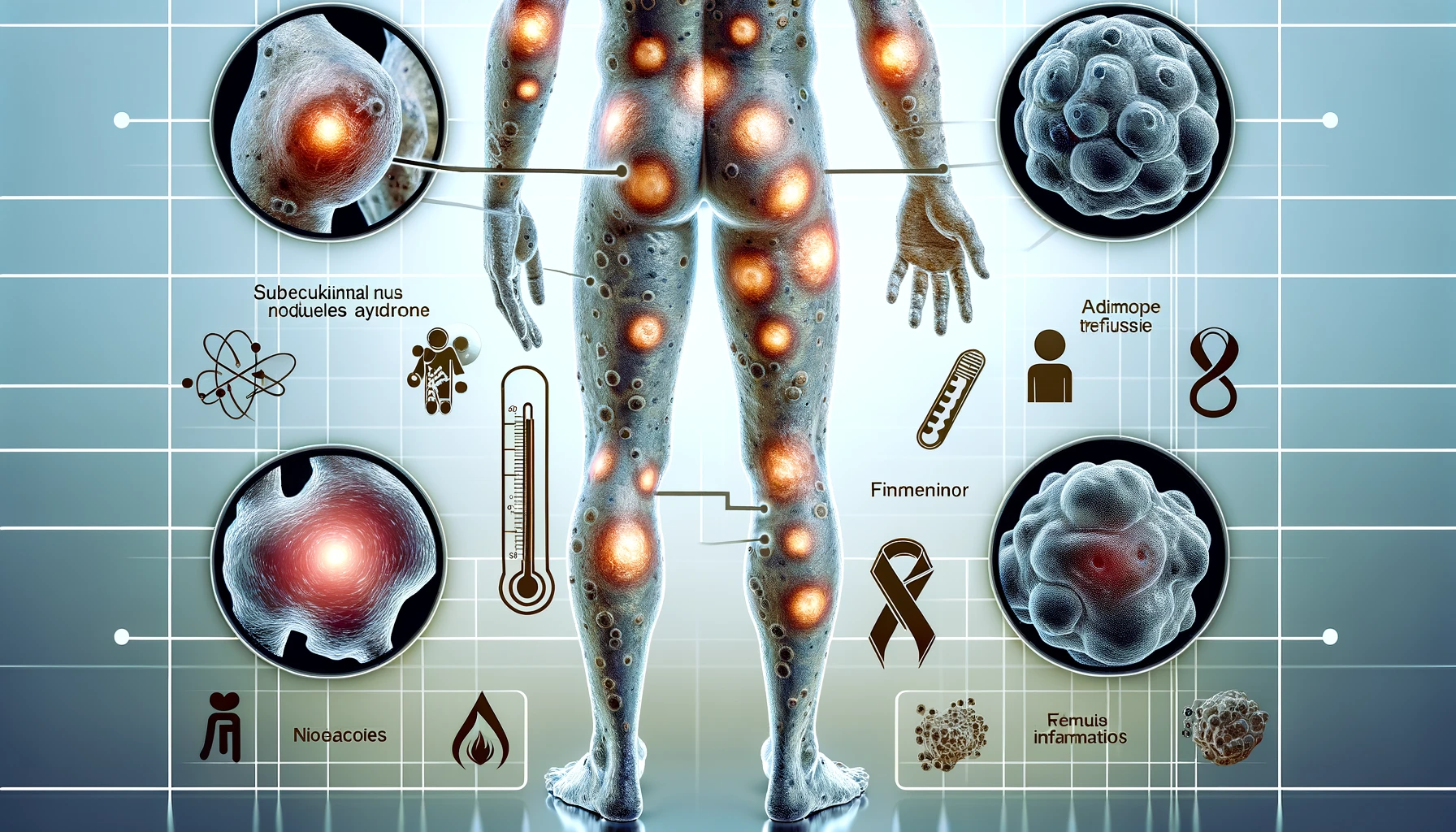
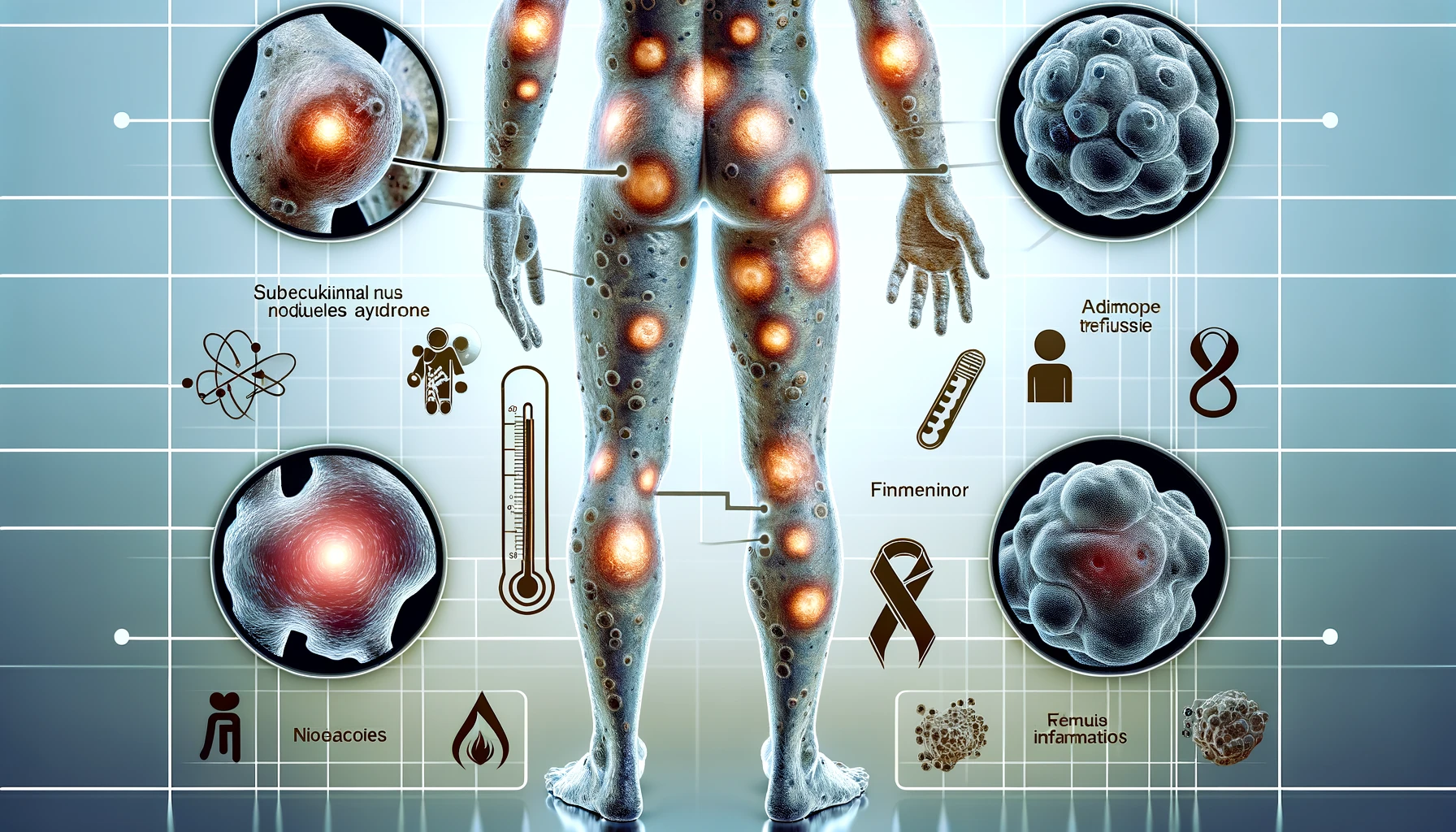
Pfeifer-Weber-Christian Syndrome is characterized by inflammation of the subcutaneous adipose tissue, resulting in the formation of painful nodules under the skin. The etiology of this condition is not yet completely understood, but it is believed to be related to an abnormal immune response.
Article Highlights:
- 🩺 Painful Nodules: Main clinical manifestations.
- 🌡️ Recurrent Fever: Common associated symptoms.
- 📋 Clinical Diagnosis: Methods for identifying the disease.
- 💊 Available Treatments: Effective therapeutic options.
- 📈 Prognosis: Expectations and quality of life for patients.
Symptoms of Pfeifer-Weber-Christian Syndrome
Key symptoms include:
- Painful Subcutaneous Nodules: Appear mainly on the extremities, abdomen, and buttocks, and may ulcerate and drain oily material.
- Recurrent Fever: Febrile episodes often coincide with the appearance of nodules.
- Systemic Symptoms: Fatigue, malaise, weight loss, joint pain (arthralgia), and muscle pain (myalgia) are common.
- Chronic Inflammation: Can lead to fibrosis of the affected adipose tissue.
Diagnosis of Pfeifer-Weber-Christian Syndrome
Diagnosis is primarily clinical and is confirmed by a biopsy of the subcutaneous nodules, which reveals inflammation of adipose tissue with infiltration of inflammatory cells. Laboratory tests such as elevated erythrocyte sedimentation rate (ESR) and C-reactive protein (CRP) can help identify inflammation.
Differential Diagnosis: Lipedema
Lipedema is a condition that also affects subcutaneous adipose tissue, but it differs from Pfeifer-Weber-Christian Syndrome in several aspects. Lipedema is characterized by abnormal accumulation of fat in the legs and sometimes in the arms, often associated with pain and tenderness to the touch. Unlike Pfeifer-Weber-Christian Syndrome, lipedema does not present recurrent fever or inflamed nodules, and the affected adipose tissue does not exhibit the same signs of chronic inflammation observed in biopsy.
Treatment of Pfeifer-Weber-Christian Syndrome
However, there is no definitive cure for Pfeifer-Weber-Christian Syndrome. Treatment focuses on symptom relief and inflammation management:
- Corticosteroids: Used to reduce inflammation.
- Immunosuppressants: Such as azathioprine or methotrexate in more severe cases.
- Nonsteroidal anti-inflammatory drugs (NSAIDs): For pain and inflammation relief.
- Biological therapies: Such as anti-TNF agents in refractory cases.
Prognosis
Prognosis varies according to severity and response to treatment. Many patients can control symptoms with medication, although relapses may occur.
References
- Capron, J. P., Capron, F., Delamarre, J., & Lautrette, C. (1985). Pfeifer-Weber-Christian disease: a review. Journal of the American Academy of Dermatology, 12(2 Pt 1), 245-249.
- Rizzo, A., Ferrara, N., Marana, G., & Miggiano, G. A. D. (2018). Recurrent nodular panniculitis (Weber-Christian disease): a case report and review of the literature. Journal of Medical Case Reports, 12(1), 373.
Frequently Asked Questions
1. What causes Pfeifer-Weber-Christian Syndrome? The exact cause is still unknown, but it is believed to be related to an abnormal immune response.
2. What are the main symptoms? Symptoms then include painful subcutaneous nodules, recurrent fever, fatigue, malaise, weight loss, arthralgia, and myalgia.
3. How is it diagnosed? Diagnosis is clinical and confirmed by biopsy of subcutaneous nodules, in addition to laboratory tests to identify inflammation.
4. What are the treatment options? Treatment includes corticosteroids, immunosuppressants, NSAIDs, and biological therapies.
5. Is Pfeifer-Weber-Christian Syndrome curable? There is no definitive cure, but symptoms can be controlled with medication.
6. Can the disease be fatal? Generally, it is not fatal, but it can significantly affect the patient's quality of life.
7. How does the disease affect patients' daily lives? The disease can cause pain, fever, and fatigue, affecting the ability to perform daily activities.
8. Are there known risk factors? There are no well-defined risk factors, as the etiology is still uncertain.
9. How is the response to treatment? The response to treatment varies; many patients can control symptoms with medication.
10. Is there ongoing research on the syndrome? Yes, research is underway to better understand the etiology and develop more effective treatments.
#PfeiferWeberChristianSyndrome #Lipoidogranulomatosis #Panniculitis #PainfulNodules #RecurrentFever
Related articles


Agendar consulta
Precisa de orientação personalizada?
Marque uma avaliação com o Dr. Fernando Amato e tire as suas dúvidas sobre cirurgia plástica.
Falar no WhatsApp