
- Articles, Plastic Surgery, Surgeries, Breasts
Breast Recovery: 3 Essential Tips for a Safe Postoperative Period
- January 17, 2026
- By Fernando Amato
Avoid complications and maximize the results of your breast surgery and recovery with simple, effective, and well-guided care.
Breast Recovery: 3 Essential Tips for a Safe Postoperative Period
Breast recovery after breast surgery—whether augmentation, reduction, reconstruction, or lift—requires attention, technique, and patience. In this sense, a good postoperative period depends not only on rest, but on a combination of medical guidance, home care, and personal preparation. Therefore, in this article, we will present three fundamental tips for your breast recovery to be safe, efficient, and with better results.
Why is breast recovery so important?
After a breast intervention, the body begins a healing process, tissue remodeling, and adaptation to the new anatomy. Thus, this period of breast recovery determines both safety (fewer complications) and the quality of the aesthetic and functional result. Furthermore, understanding what to expect helps you identify warning signs—infection, hematoma, implant displacement, or poor healing—and, consequently, contact your doctor quickly.
Tip 1: Preparation and support in the home environment
First, one of the keys to good breast recovery is preparing the environment before surgery and ensuring adequate support in the initial days.
Environment adjustment
- Wear front-opening clothes to avoid raising your arms.
- Keep water, medicines, remote control, and pillows within reach.
- Use a wedge pillow to sleep with your torso elevated.
Support network
- Ask a companion or family member for help with tasks and to monitor medication use and dressings.
Why does this matter?
In short, minimal movement and an organized environment promote circulation, reduce the risk of thrombosis or fluid accumulation, and improve comfort.
Tip 2: Adequate mobilization and activity care
Secondly, in breast recovery, the balance between rest and correct mobilization makes a big difference.
Beginning of mobilization
- Light walks can begin on the first postoperative day, if permitted by the surgeon.
- Similarly, gentle arm exercises help maintain range of motion.
Typical restrictions
- On the other hand, avoid raising your arms, lifting weights, or strenuous efforts for at least 3–6 weeks.
- Additionally, intense physical activities should only be resumed with medical clearance.
Tip 3: Nutrition, sleep, and body care
Finally, the third essential tip involves nutrition, sleep, and continuous body care.
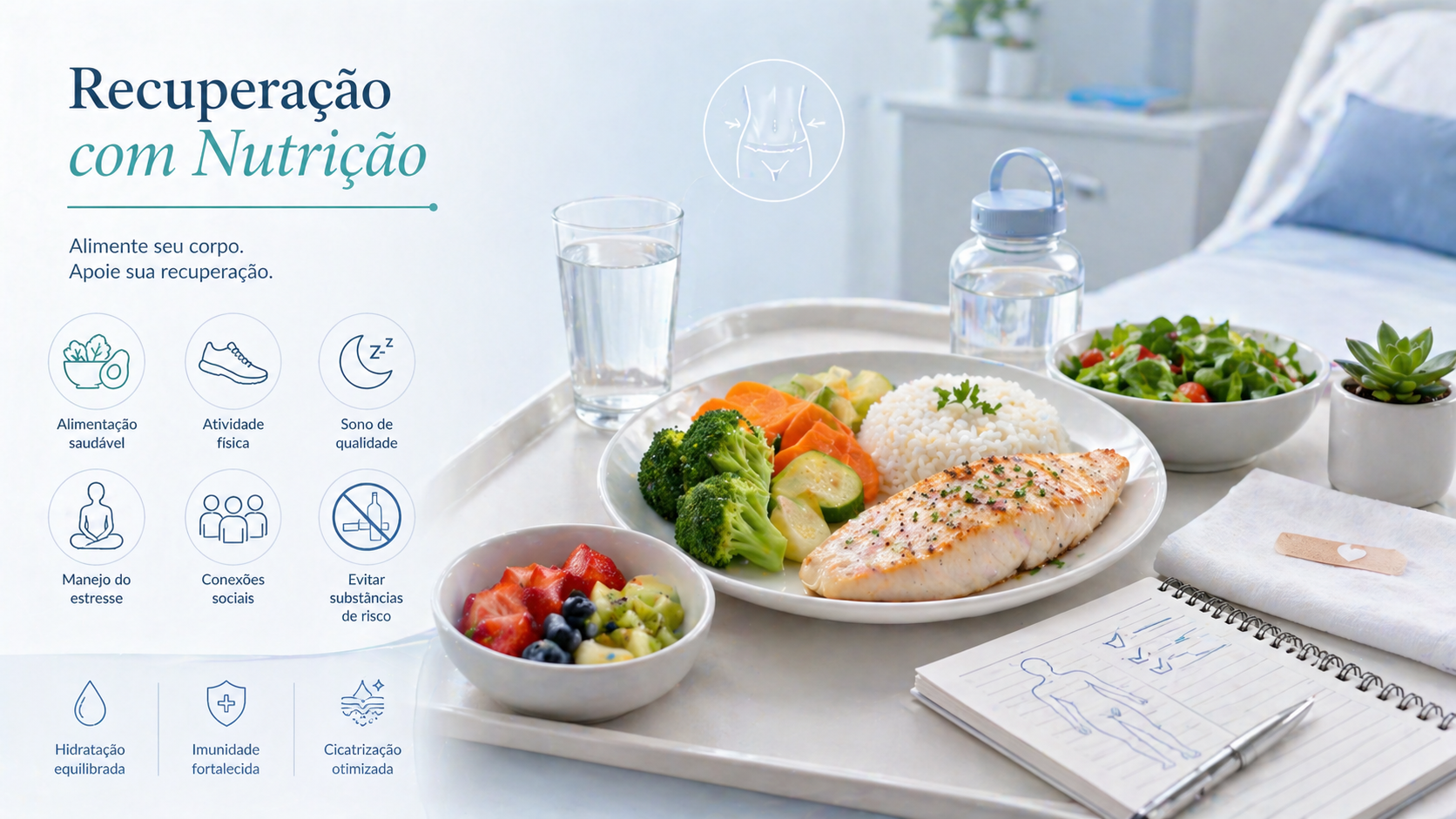
Adequate nutrition
- First, protein-rich foods aid in healing.
- Additionally, avoid excessive salt to reduce swelling.
- Equally important, drink plenty of water.
Sleep quality and posture
- Sleeping with an elevated torso reduces discomfort.
- In turn, do not sleep on your side or stomach until medically cleared.
Continuous care
- Use the support bra or band as medically directed.
- Simultaneously, keep the skin clean and protect the scar from the sun.
- Finally, avoid smoking, which compromises circulation and healing.
Conclusion
In summary, successful breast recovery depends on three pillars: 1) adequate environment and support; 2) progressive and safe mobilization; 3) nutrition, rest, and continuous care. Therefore, schedule your consultation to clarify doubts and ensure a safe and effective postoperative period.
Highlights
🏡 Preparing the home environment facilitates the first days of breast recovery.
🚶 Early light mobilization accelerates the process and reduces complications.
🍽️ Protein-rich diet, adequate sleep, and correct posture are pillars of healing.
👗 Using support (bra/band) and avoiding exertion protects the breast surgery result.
🚭 Avoiding smoking minimizes risks and optimizes the postoperative period.
FAQ
How long does breast recovery last? Varies according to the procedure. Generally, 4 to 6 weeks for return to activities, with final results between 3 and 9 months.
When can I raise my arms? Only after 3 to 6 weeks, or as cleared by the surgeon.
Do I need to wear a surgical bra? Yes, to provide support and protect the operated area.
What can I eat during recovery? Protein-rich foods with little salt, in addition to good hydration.
Can I smoke? No. Smoking hinders healing and increases the risk of complications.
What signs are concerning? Intense pain, increasing swelling, fever, discharge, or redness should be evaluated by the doctor.
When can I return to work? On average, 1 to 2 weeks for light activities; longer if physical exertion is involved.
Do I need physical therapy? It may be indicated to improve movement and prevent complications.
When will I see the final result? Between 3 to 9 months, depending on the evolution of healing.
I have questions. What should I do? Always consult your surgeon. Follow-up is essential for good breast recovery.
Video
Related articles

Agendar consulta
Precisa de orientação personalizada?
Marque uma avaliação com o Dr. Fernando Amato e tire as suas dúvidas sobre cirurgia plástica.
Falar no WhatsApp