
- Surgeries, Diseases, Videos
How is keloid treated?
- April 24, 2022
- By Fernando Amato
How is keloid treated?
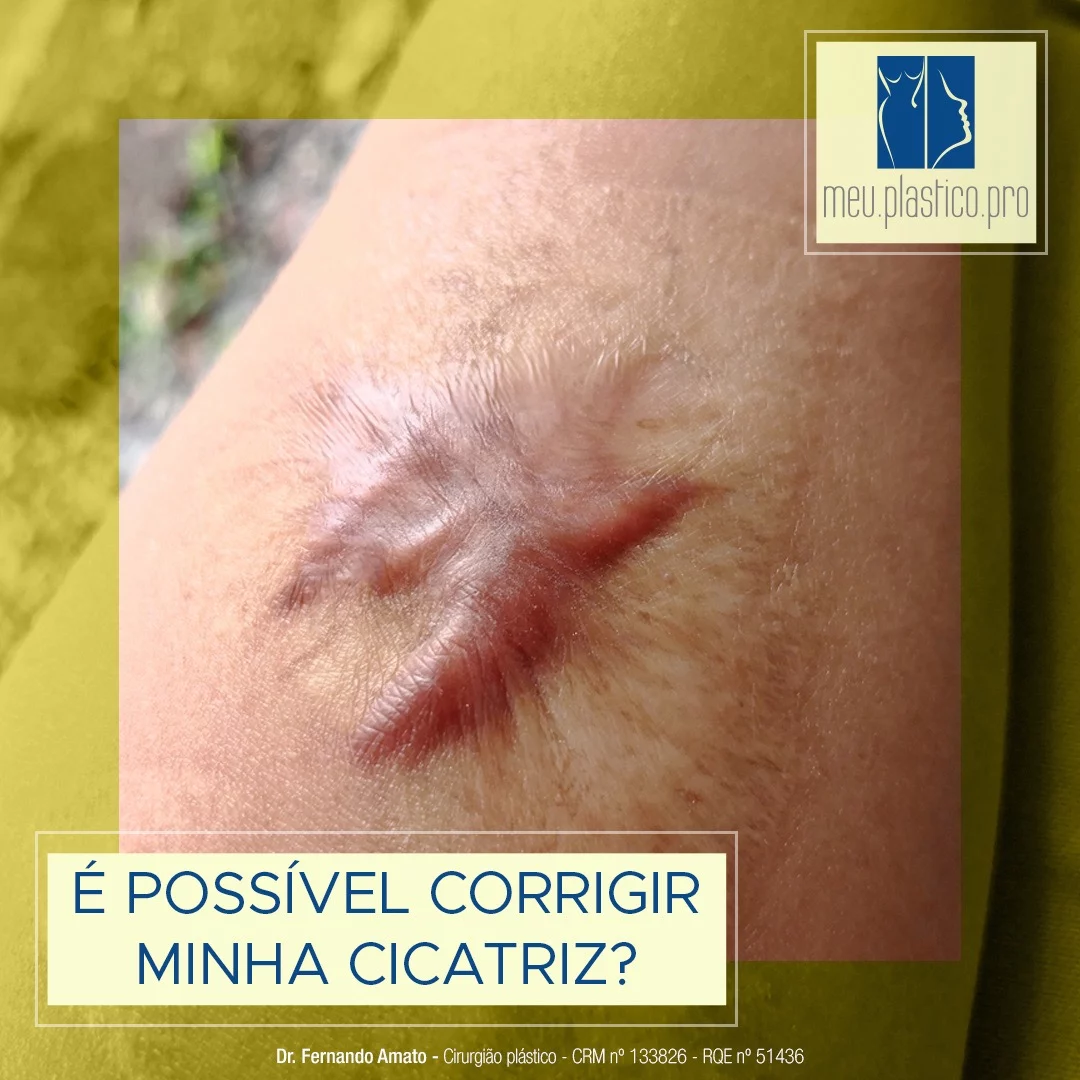
A keloid is an anomalous scarring that occurs due to hyperproliferation of collagen within the scar. This scarring differs from a hypertrophic scar, which is slightly raised but does not invade the surrounding area. A keloid invades and forms a ball, growing far beyond the original scar, and can cause symptoms such as pain and itching.
Keloid treatment is complex and may involve several techniques. In addition to surgery to resect the tissue, corticosteroid infiltrations can be performed, which can reduce the volume of the keloid. Hydration of the scar can also be done, and silicone sheets help to compress and hydrate the area. Beta-therapy is a type of radiotherapy applied to the scar that reduces local immunity to prevent exacerbated scarring after surgery.
It is important to emphasize that keloid treatment is not limited to surgery, and each patient should receive personalized treatment, depending on their individual needs and characteristics. Some patients have keloids in various areas of the body, and others have a family history of the condition.
Some patients may have inflammatory foods that could increase inflammation and cause keloids. Therefore, dietary treatment may be necessary to help manage the condition. Some foods are considered more inflammatory and should be avoided. However, it is important to note that the type of inflammatory food may differ for each patient.
In summary, keloid treatment is comprehensive and involves several techniques, such as corticosteroid infiltrations, scar hydration, silicone sheets, beta-therapy, and even dietary treatment. Each patient should be evaluated individually and receive personalized treatment to achieve the best results.
Frequently asked questions about keloids
What is a keloid?
A keloid is a raised, thick, and irregular scar that forms after skin injury.
What are the causes of keloids?
The causes of keloids are not yet fully understood, but genetic, hormonal, and immunological factors are believed to be involved.
What are the symptoms of keloids?
The main symptom of a keloid is the raised, thick, and irregular appearance of the scar. In some cases, there may be itching, pain, or tenderness.
Can keloids be treated?
Yes, there are several treatment options for keloids, including corticosteroids, cryotherapy, laser therapy, compression therapy, and surgery.
What corticosteroids are used in keloid treatment?
The corticosteroids most commonly used in keloid treatment are triamcinolone and betamethasone.
How does cryotherapy work in keloid treatment?
Cryotherapy uses very low temperatures to freeze keloid tissue, which can help reduce its size and thickness.
What is laser therapy and how is it used in keloid treatment?
Laser therapy uses high-energy light to vaporize keloid tissue, helping to reduce its raised and thick appearance.
How does compression therapy work in keloid treatment?
Compression therapy involves the use of bandages or compression garments to apply constant pressure to the keloid scar, which can help reduce its raised appearance.
Is surgery always a treatment option for keloids?
Surgery may be a treatment option for keloids in some cases, but there is a significant risk that the scar will recur after surgical removal.
What is the best treatment for keloids?
There is no single treatment that works for all keloids. The chosen treatment depends on the size and severity of the scar, its location, the patient's medical history, and individual treatment goals. It is important to discuss treatment options with a qualified doctor.

In this video, Dr. Fernando Amato talks about keloid treatment.
How is keloid treated?
This is a question that patients
come, bring, and send messages to the
office asking how much
a keloid treatment surgery costs.
Well, I am Dr. Fernando Amato and today I
will talk about keloids. A keloid is an
anomalous scarring.
It is an exaggerated scarring.
Generally, there is trauma to the site, there is
a healing process happening,
there was surgery at that site, but sometimes
keloids can appear in places where there was no
surgery.
Some patients have, sometimes
from acne scars, pimples.
So these patients who have keloids,
they need to understand that keloid treatment
is not just surgery and they shouldn't
choose the treatment.
“I want to have surgery, I will look for a
professional who performs surgery.”
Please, don't do that!
Keloid treatment is much more
complex, there are patients who have
keloids in one scar
but not in another.
Some patients have keloids in
several places on their body, and some patients
have a family history of keloids.
There are family antecedents of
keloids; the mother has it, the brother has it.
So each patient will be different
and each patient will have their own treatment.
It is important for the patient to be
aware that keloid is an
anomalous scarring, it is a hyper-
proliferation of the scar with an irregular
collagen arrangement that happens in the
scar and is very different from a hypertrophic scar.
A hypertrophic scar is a slightly raised
scar, but a keloid goes beyond the scar.
It invades, it forms a ball, sometimes
it grows far beyond the scar.
This is the difference; hypertrophic scars often
resolve themselves, sometimes they need local treatment,
but often over time they even flatten. Keloid treatment
is extensive; it can involve
infiltrations with corticosteroids. Corticosteroids
can reduce the volume of the keloid a little,
these infiltrations we use
a lot of triamcinolone.
Keloids have symptoms, often the
patient has pain or pruritus, which is that itching
in the scar.
And these patients who have symptoms are the
ones who benefit from this corticosteroid infiltration,
and surgery can be performed
to resect this tissue.
This scar can be hydrated
and often these scars become dry.
This improves the
healing process.
There are silicone sheets that help
compress and hydrate the scar, so they
also help in this
process.
When we perform resection surgery,
we take special care to try to prevent the scar from
reoccurring.
And there is also beta-therapy.
What is beta-therapy?
Beta-therapy is radiotherapy applied to the
scar that reduces local immunity
to prevent exaggerated scarring
after surgery.
So generally, a very common protocol
is to perform triamcinolone infiltrations
until a certain regression and
improvement of symptoms occurs.
Perform surgery and then, post-operatively,
undergo beta-therapy sessions.
This is a very common protocol, but other
procedures can be done, laser can be used
to decrease keloid vascularization,
compression with silicone sheets can be done,
there are moisturizing creams that can be
used, a little topical corticosteroid can be used,
and other work is
happening, other procedures
that can be injected locally, even fat grafts.
There is also oral, dietary treatment.
Some patients,
they may have certain foods that are more
inflammatory, which could increase inflammation
and cause keloids.
So these inflammatory foods, which
will be different for each patient but some patients
know them as “heavy” foods. But some foods are actually
more inflammatory, we know, for example,
that gluten is more inflammatory, but it will not
be more inflammatory for everyone, but many people
suffer when they eat gluten. But there are these
inflammatory foods that could be
influencing the scar
and contributing to the keloid.
There are even studies showing a
psychological influence where keloids appear at the most
stressful times in the patient's life.
There are also studies showing that
there is a hormonal influence on healing
that could be influencing keloid formation.
So for each patient
there is a treatment.
Treatment is not just surgery!
It is generally composed of several
associated treatments and it is important that the
treatment must be individualized.
So if you have keloids, or know
someone who has keloids and wants treatment. If you liked the video, like it, comment,
you can comment, if it's a question we try to help
within the limits of the internet and
share it with someone who needs this
information. Thank you very much!


Diet before and after plastic surgery
How to organize your diet before and after plastic surgery to reduce avoidable risks and promote a more stable recovery,

Healthy eating in the post-operative period of plastic surgery
Healthy eating in the post-operative period of plastic surgery is not just about “eating better.” It contributes to recovery, helps to

Temporal Fat Atrophy: causes, consequences, and treatments
Temporal fat atrophy is the loss of volume in the temples, creating a sunken appearance on the sides of the face.
Related articles


Agendar consulta
Precisa de orientação personalizada?
Marque uma avaliação com o Dr. Fernando Amato e tire as suas dúvidas sobre cirurgia plástica.
Falar no WhatsApp