
- Plastic surgery
Pectus Excavatum and Pectus Carinatum: How Plastic Surgery Can Improve Chest Contour
- March 16, 2025
- By Fernando Amato
Chest deformities, such as pectus excavatum (sunken chest) and pectus carinatum (protruding chest), can cause aesthetic and functional impacts, affecting everything from self-esteem to breathing. Although traditional thoracic surgery, such as the Nuss procedure, is the best-known solution, less invasive approaches have gained prominence, such as fat grafting and silicone implants.
So, if you have this condition and are looking for a way to improve the appearance of your chest without resorting to major surgery, this article is for you!
🏥 Article highlights:
- ✅ Pectus excavatum causes a sunken chest, while pectus carinatum causes an abnormal protrusion.
- ✅ Fat grafting can fill depressions and improve chest contour naturally.
- ✅ Silicone implants can be an excellent option to restore chest volume and symmetry.
- ✅ In addition to aesthetic solutions, there are functional treatments such as Nuss surgery and orthotic bracing for pectus carinatum.
- ✅ The choice of the ideal treatment depends on the severity of the deformity and the patient's goals.
What are Pectus Excavatum and Pectus Carinatum?
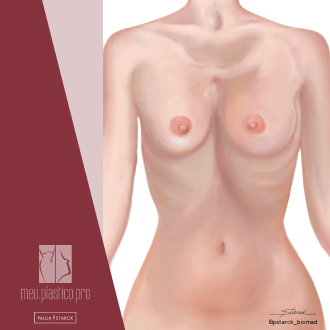
Pectus excavatum is a congenital deformity characterized by a sunken sternum and adjacent ribs, creating a “hollow chest” or “funnel chest” appearance. Pectus carinatum occurs when the sternum and costal cartilages grow excessively, forming a “pigeon chest,” with a visible protrusion in the chest area.
Both conditions can be asymptomatic, but in severe cases they can lead to respiratory difficulties, chest pain, fatigue, and even cardiac restrictions. However, the aesthetic impact is the main reason patients seek treatment.
Aesthetic Options to Correct Chest Contour
In recent years, plastic surgery has become an excellent alternative for patients who want to correct the appearance of their chest without resorting to invasive interventions such as Nuss or Ravitch surgery.
1. Fat Grafting (Thoracic Lipo-filling)
The lipo-filling technique involves removing fat from areas of the body such as the abdomen or thighs, followed by injecting this purified fat into the chest area, smoothing the chest depression in pectus excavatum or correcting asymmetries in post-surgical cases.
✔ Advantages of lipo-filling:
- Minimally invasive procedure with quick recovery.
- Use of autologous fat (from the patient's own body), reducing the risk of rejection.
- Natural and progressive results.
- Surgeons can combine this technique with others to better define the chest contour.
❌ Disadvantages:
- The body does not absorb all grafted fat, and patients may need more than one session.
- Doctors do not indicate this procedure for major structural corrections, only for aesthetic improvement.
2. Silicone Implants for Pectus Excavatum
The use of silicone implants is an effective alternative for patients with mild to moderate pectus excavatum, providing a predictable and long-lasting aesthetic result.
✔ Advantages of silicone implants:
- Immediate filling of the chest depression.
- Provides symmetry and improves chest contour.
- More predictable and stable results compared to fat grafting.
❌ Disadvantages:
- Surgery requires a longer recovery time than fat grafting.
- Risk of capsular contracture, as with any implant surgery.
🔹 The choice between fat grafting and silicone implants depends on the degree of the deformity, the patient's body type, and the desired result.
Other Treatment Options
In addition to aesthetic approaches, there are functional treatments to correct chest deformities:
3. Nuss Surgery (Minimally Invasive for Pectus Excavatum)
In Nuss surgery, the surgeon inserts a curved metal bar under the sternum to push it forward, correcting the chest depression. After 2 to 3 years, the doctor removes the bar.
✔ Indication: Moderate to severe cases.
✔ Advantages: Minimally invasive procedure with a good success rate.
❌ Disadvantages: Painful post-operative period and the need to remove the bar years later.
4. Use of Orthotic Brace for Pectus Carinatum
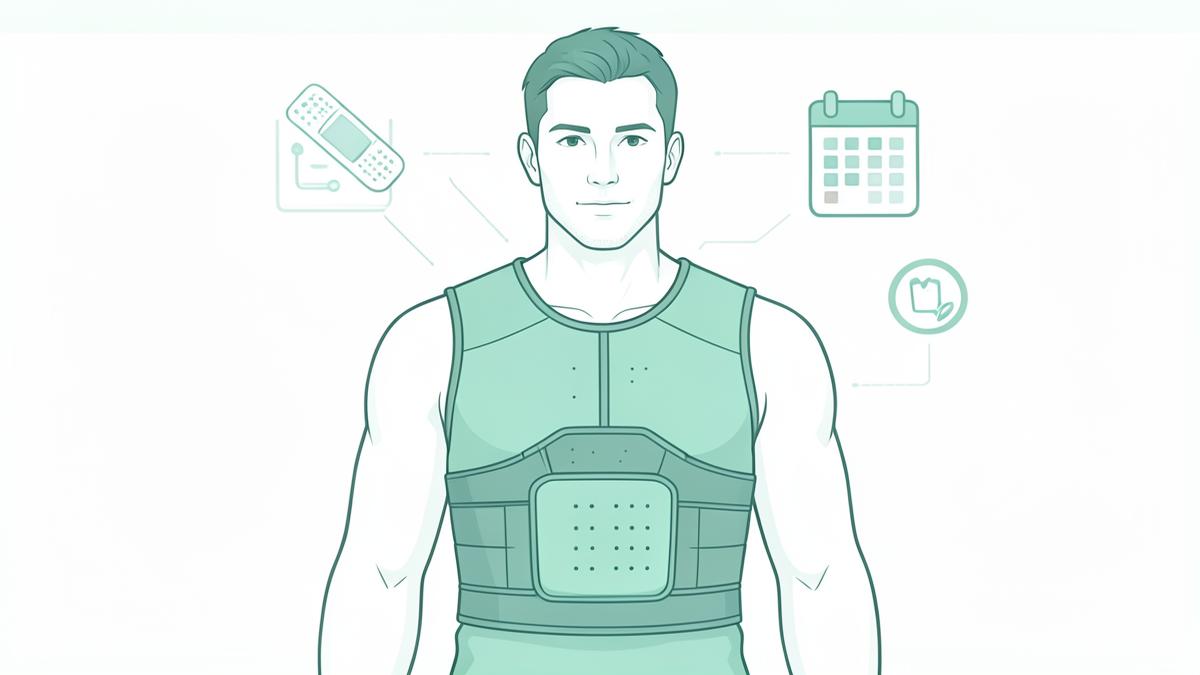
In the case of pectus carinatum, treatment can be done with a thoracic orthosis (corrective brace), which exerts continuous pressure on the sternum to reposition it.
✔ Indication: Adolescents in the growth phase.
✔ Advantages: Avoids surgery and shows good results in mild to moderate cases.
❌ Disadvantages: Requires prolonged use for efficacy (up to 12 months).
Conclusion: Which is the Best Option?
The treatment of pectus excavatum and pectus carinatum must be personalized, considering the severity of the deformity, the aesthetic and functional expectations, and the patient's desire regarding the type of procedure.
- Mild cases: Fat grafting or silicone implants may be sufficient to correct the appearance of the chest.
- Moderate cases: Fat grafting can complement traditional surgery to achieve a more harmonious result.
- Severe cases: Nuss or Ravitch surgery may be necessary, associated or not with aesthetic procedures.
If you wish to improve the appearance of your chest, schedule a consultation with Dr. Fernando Amato to evaluate the best strategy for your case!
Frequently Asked Questions
1. Can pectus excavatum be corrected with fat grafting alone?
Yes, but only in mild cases. In deep depressions, other techniques may need to be combined.
2. Can silicone implants be used for pectus carinatum?
It is not the most common option, as the problem is a bone protrusion. For these cases, other treatments are more indicated.
3. Is fat grafting permanent?
Some of the fat may be reabsorbed, but the final result is generally long-lasting.
4. What is the recovery time for lipo-filling?
About 1 to 2 weeks for return to normal activities.
Keywords
#pectusexcavatum #pectuscarinatum #fatgrafting #pectoralsurgery #plasticsurgery
Related articles


Agendar consulta
Precisa de orientação personalizada?
Marque uma avaliação com o Dr. Fernando Amato e tire as suas dúvidas sobre cirurgia plástica.
Falar no WhatsApp