
- Diseases
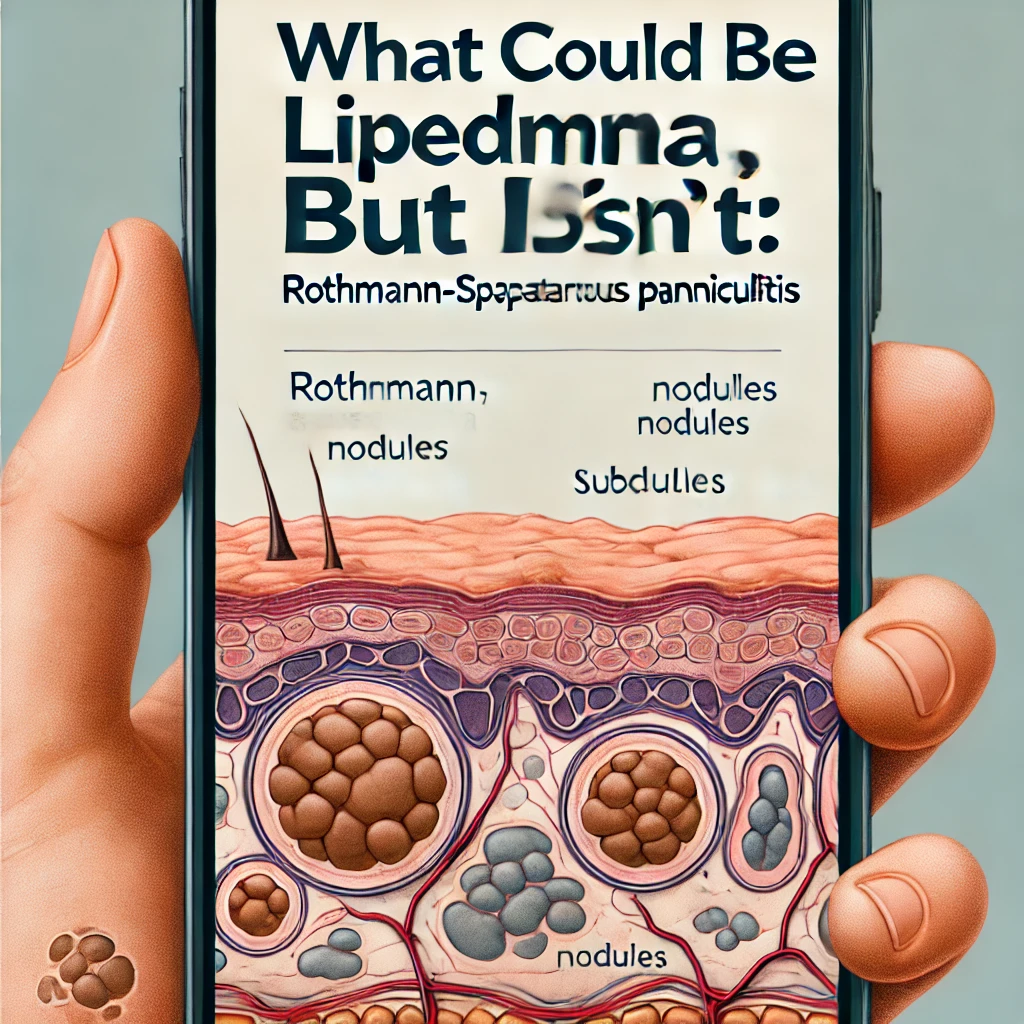
What might be lipedema, but isn't: Rothmann-Makai Spontaneous Panniculitis
- September 7, 2024
- By Fernando Amato
Rothmann-Makai Spontaneous Panniculitis: Diagnosis and Treatment
Rothmann-Makai spontaneous panniculitis is a rare and chronic condition affecting the subcutaneous adipose tissue, characterized by inflammation and necrosis of adipose tissue, resulting in painful nodules and hardened plaques. Thus, this article addresses the definition, clinical characteristics, diagnosis, treatment, and differential diagnosis with lipedema.
Highlights
- 🩺 Main characteristic: Inflammation of the subcutaneous adipose tissue.
- 📊 Prevalence: Rare and chronic condition.
- 💊 Treatment: Includes corticosteroids and immunosuppressants.
- 🔬 Diagnosis: Confirmed through biopsy.
- 🧬 Etiology: Often idiopathic, may be associated with autoimmune diseases.
Clinical Characteristics
- Skin Lesions: Firm and painful nodules or plaques, generally symmetrical, located on the lower extremities.
- Skin Changes: Thus, the skin over the lesions may appear red, purplish, or hyperpigmented. There may be skin atrophy in the affected area.
- Pain and Tenderness: Painful and tender lesions to the touch.
- Fever and General Malaise: There may be fever, fatigue, and general malaise.
Diagnosis
Therefore, the diagnosis is based on a combination of clinical and histopathological findings. Thus, a biopsy of the lesions is essential to confirm the inflammation of the subcutaneous adipose tissue and rule out other causes of panniculitis.
Etiology and Pathogenesis
The exact etiology of Rothmann-Makai panniculitis is unknown. However, it may be associated with various underlying conditions, such as autoimmune diseases, infections, trauma, use of certain medications, or be idiopathic.
Treatment
Treatment may include:
- Corticosteroids: Systemic or topical to reduce inflammation.
- Immunosuppressants: Such as methotrexate or cyclosporine for refractory cases.
- Antibiotics: If there is secondary infection.
- Symptomatic Treatment: Analgesics for pain relief and supportive measures.
Differential Diagnosis with Lipedema
Lipedema is a chronic condition that mainly affects women, characterized by abnormal accumulation of fat in the legs and, occasionally, in the arms. It is important to differentiate lipedema from Rothmann-Makai panniculitis, as the treatments and prognoses are different.
Lipedema vs. Rothmann-Makai Panniculitis
- Fat Distribution: In lipedema, fat is symmetrically distributed, mainly in the legs and thighs, sparing the feet and hands. However, in Rothmann-Makai panniculitis, the distribution is more localized and may involve painful nodules.
- Tenderness and Pain: Both conditions can be painful, but in lipedema, pain is generally more associated with pressure and movement.
- Skin Changes: In lipedema, the skin may show easy bruising, and the condition is often associated with edema. In Rothmann-Makai panniculitis, the skin over the lesions may become red or purplish, and there may be atrophy.
- Histopathology: Biopsy is essential to differentiate the conditions. Lipedema shows an increase in adipose tissue without significant inflammation, while Rothmann-Makai panniculitis shows inflammation and necrosis of adipose tissue.
Lipedema Treatment
- Compression Therapy: Use of compression stockings to reduce edema.
- Liposuction: Specific procedures to remove excess adipose tissue.
- Manual Lymphatic Drainage Therapy: To reduce edema and improve circulation.
- Exercises: Maintain a low-impact exercise routine to help manage lipedema.
Conclusion
Rothmann-Makai spontaneous panniculitis is a complex condition that requires accurate diagnosis and appropriate treatment. Differentiating this condition from others, such as lipedema, is crucial to ensure correct management and improve patients' quality of life. If you suspect you may be suffering from this condition, it is important to schedule a consultation with a specialist.
Frequently Asked Questions
- What is Rothmann-Makai spontaneous panniculitis? It is a chronic inflammation of the subcutaneous adipose tissue, resulting in painful nodules.
- What are the symptoms of Rothmann-Makai panniculitis? Painful nodules, skin changes such as redness and hyperpigmentation, and fever in some cases.
- How is Rothmann-Makai panniculitis diagnosed? Through a combination of clinical findings and biopsy of the lesions.
- What is the cause of Rothmann-Makai panniculitis? The exact cause is unknown, but it may be associated with autoimmune diseases, infections, or trauma.
- What is the treatment for Rothmann-Makai panniculitis? Includes corticosteroids, immunosuppressants, antibiotics, and analgesics.
- How to differentiate Rothmann-Makai panniculitis from lipedema? Through fat distribution, tenderness and pain, skin changes, and histopathology.
- What is lipedema? It is a chronic condition characterized by abnormal accumulation of fat in the legs and occasionally in the arms, mainly in women.
- What are the symptoms of lipedema? Symmetrical fat accumulation in the legs, tenderness, pain, and easy bruising.
- What is the treatment for lipedema? Compression therapy, liposuction, manual lymphatic drainage, and exercises.
- When should I seek a specialist? If you experience symptoms of panniculitis or lipedema, schedule a consultation with a specialist for proper diagnosis and treatment.
Related articles


Agendar consulta
Precisa de orientação personalizada?
Marque uma avaliação com o Dr. Fernando Amato e tire as suas dúvidas sobre cirurgia plástica.
Falar no WhatsApp