
- Plastic Surgery
Using Megahair in Plastic Surgery: What You Need to Know
- December 28, 2025
- By Fernando Amato
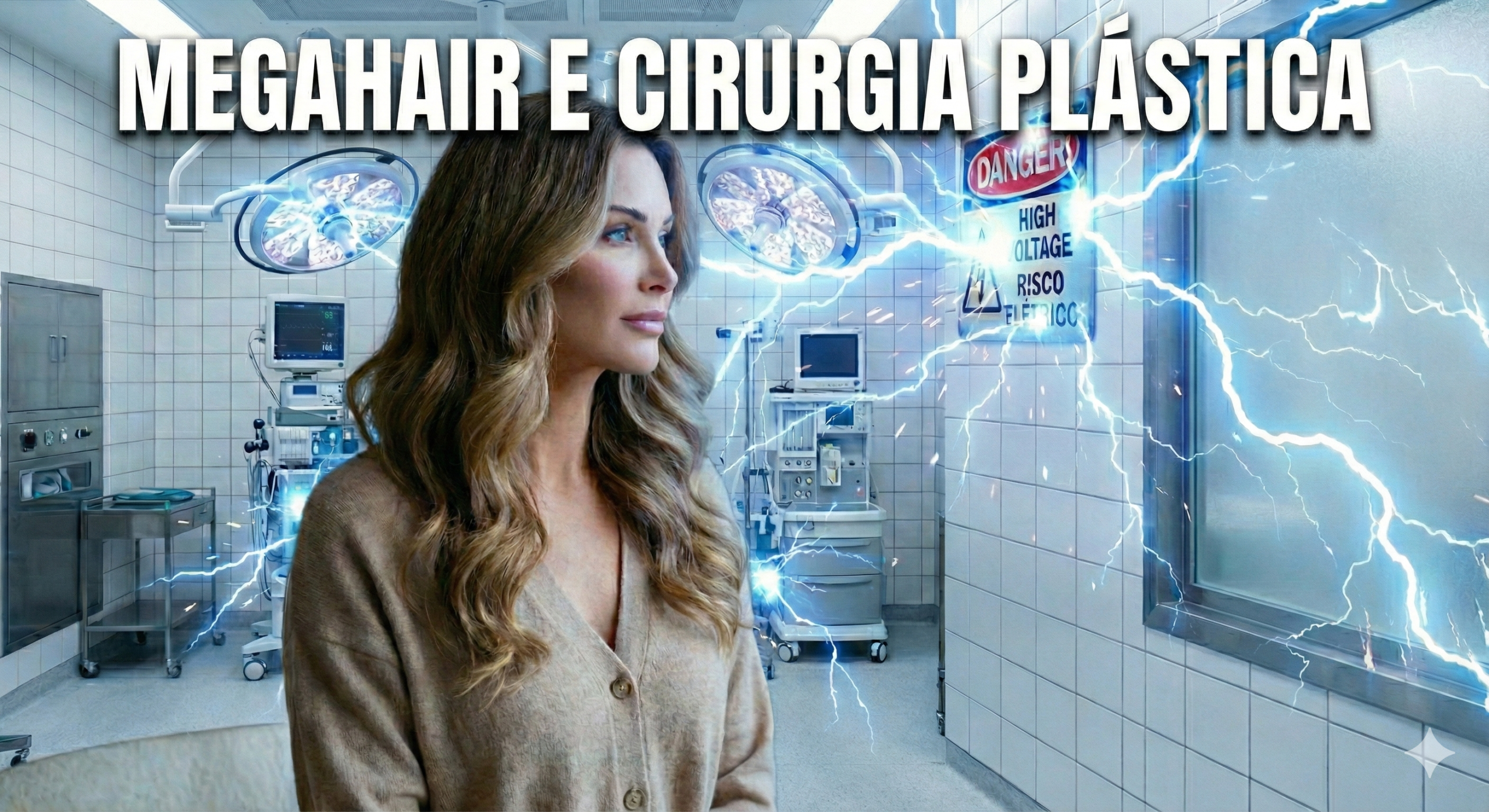
Did you know that megahair can cause burns or even ulcers on the scalp during plastic surgery? Understand the risks and how to avoid them.
What is megahair and why does it matter in plastic surgery?
The term “megahair” refers to various types of hair extensions, often used for aesthetic purposes. There are several systems:
- Metallic components: such as micro-beads (micro rings) or clips.
- Adhesive extensions: with tapes, hot glue, or cyanoacrylate.
- Synthetic fibers: such as polyester, nylon, or PBT.
Despite being common, these extensions can pose real risks during surgeries, especially if equipment like the monopolar electric scalpel is used.
Important Highlights
- ⚡ Megahair with metal can heat up with the electric scalpel
- 💤 Can cause severe burns on the scalp
- ⚕️ Increases risk of pressure ulcers in long surgeries
- 🚫 Glue and synthetic materials can be flammable
- 📄 Official recommendation is to remove before surgery
How the electric scalpel works and why the risk exists?
Monopolar vs. Bipolar: the concept
- Monopolar: the electric current exits the pen, passes through the body, and returns via a conductive plate. This is the most used in plastic surgery.
- Bipolar: the current circulates only between the two tips of the instrument. Safer when there are metals in the body.
The greatest risk is associated with monopolar use, as the current can pass through the head region.
What kind of problems can megahair cause during surgery?
1. Scalp Burns
Metals like clips or micro-beads can concentrate electric current, leading to localized heating. Result: scalp burn, with a risk of cicatricial alopecia.
2. Occipital Pressure Ulcer
The hard band formed by the extensions can press on the back of the head during a long surgery. This increases the chance of a pressure ulcer, often only noticed in the postoperative period.
3. Fire Risk
Synthetic materials as well as flammable glues (like cyanoacrylate) can catch fire on contact with the electrocautery, especially in head and neck surgeries.
4. Logistical Difficulties
Megahair can hinder:
- The fixation of cushions
- Proper head positioning
- The use of devices like EEG or BIS
What do official guidelines say?
The Brazilian Society of Anesthesiology (SBA) recommends, in a technical note:
- Avoid extensions with metallic components
- Prefer bipolar scalpel if removal is not possible
- Protect the occipital region well
- Bring the dispersion plate closer to the surgical field
These guidelines are based on documented reports of burns and complications in the literature.
When is megahair removal indispensable?
- Long surgeries in dorsal decubitus (lying on the back)
- Use of monopolar electric scalpel
- Surgical field close to the head or neck
- Presence of metallic clips, rings, or micro-beads
In these cases, removal is recommended for safety.
What if the patient does not want or cannot remove it?
In situations such as emergencies or patient refusal, some measures can help reduce the risk:
- Document the decision in the medical record
- Use a bipolar scalpel, if possible
- Place the dispersion plate as close as possible to the surgical field
- Use generous padding in the occipital region
- Avoid contact of metallic parts with conductive surfaces
Conclusion: better to prevent
Megahair can be an important aesthetic accessory, but during plastic surgery, it can put the patient at risk. The best approach is to evaluate beforehand and opt for removal whenever there are metallic elements or additional risks.
Therefore, if you are preparing for plastic surgery, inform your surgeon about the use of hair extensions or hairpieces.
🔹 Schedule your evaluation with Dr. Fernando Amato
Don't let doubts compromise your safety. Schedule a consultation and receive personalized guidance for your surgery.
📚 FAQ — Frequently Asked Questions about Megahair and Plastic Surgery
1. Can I have plastic surgery using megahair?
It depends. If the megahair has metallic components, such as clips or micro-beads, it is ideal to remove it before surgery.
2. Why can megahair cause burns during surgery?
Because the metals in the extensions can heat up with the use of a monopolar electric scalpel, causing burns to the scalp.
3. Do adhesive extensions also pose risks?
Yes. Although they do not contain metal, they can create pressure areas on the nape of the neck or contain flammable glue, increasing the risk of ulcer or ignition.
4. What is the safest type of scalpel with megahair?
The bipolar scalpel, as the electric current does not pass through the entire body, reducing the risk of burns caused by metals.
5. Do I need to remove megahair for a short surgery?
If there is no metal in the extensions and the surgery is brief and away from the head, the risk is lower, but it should still be evaluated by the surgeon.
6. What complications can megahair cause during surgery?
Burns, pressure ulcers on the nape of the neck, fire risk, and difficulty with head positioning and monitoring.
7. What does the Brazilian Society of Anesthesiology (SBA) say?
Recommends removing extensions with metal, using a bipolar scalpel whenever possible, and adequately protecting the occipital region.
8. What if the patient refuses to remove megahair?
It is necessary to document the decision and adopt mitigation measures, such as a bipolar scalpel and extra head protection.
9. Can megahair interfere with anesthesia?
Yes. It can hinder the use of cerebral monitoring devices and thus make it difficult to fix the mask or tube.
10. How do I know if my megahair has metal?
Talk to the professional who applied it. If in doubt, it is safer to remove it before surgery.
Related articles


Agendar consulta
Precisa de orientação personalizada?
Marque uma avaliação com o Dr. Fernando Amato e tire as suas dúvidas sobre cirurgia plástica.
Falar no WhatsApp