- Plastic surgery
Periareolar Mastopexy
- August 25, 2023
- By Fernando Amato
Mastopexy Periareolar: A Minimally Invasive Approach with Multiple Benefits
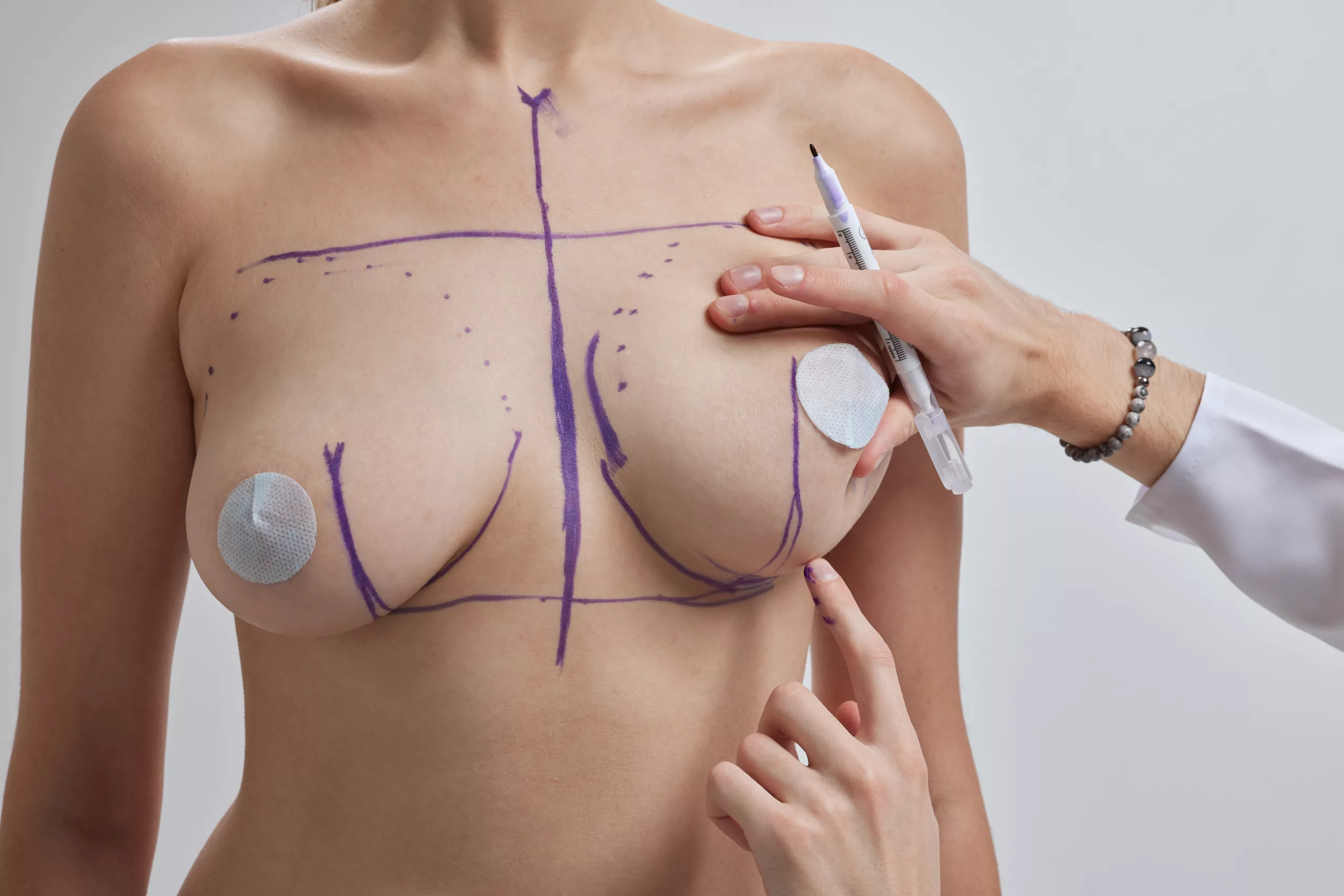
Mammary plastic surgery, one of the most sought-after in the aesthetic world, offers different techniques to meet the individual needs and desires of each patient. Thus, one of these techniques is periareolar mastopexy. Focusing on a more subtle and minimally invasive approach, this technique stands out for those seeking breast correction and lift with reduced scarring.
What is Periareolar Mastopexy?
So, periareolar mastopexy, or donut mastopexy, aims to lift and reposition the breast by concentrating the intervention around the areola. This technique results in a less visible scar, camouflaged by the natural contour of the areola.
Advantages over Implant Placement
Therefore, when compared to the simple insertion of breast implants, periareolar mastopexy offers several advantages:
-
Does not require the use of very large implants: In many cases, the desire is to lift and firm the breast without necessarily increasing its volume significantly. The use of large implants can lead to future complications, while periareolar mastopexy focuses on treating sagging and repositioning the breast.
-
Prevention of early ptosis: Implants, especially larger ones, can accelerate ptosis (breast sagging) due to additional weight. The periareolar technique combats sagging, reducing the risk of future early ptosis.
-
Correction of NAC asymmetries: This technique allows for precise adjustments to the NAC (nipple-areola complex), effectively treating asymmetries that simple implants may not address or even worsen.
-
Avoids "bottoming out": This complication, where the implant shifts to a lower position, leaving most of the breast volume in the lower portion of the breast, is a risk associated with implant placement. Periareolar mastopexy, by reinforcing breast tissues, reduces the chance of this problem.
Indications and Contraindications
This technique is primarily indicated for:
- Patients with pseudoptosis and a lower positioned NAC.
- Those with grade I ptosis without hypertrophy.
- Patients with pseudoptosis, mild hypertrophy, and who do not desire significantly augmented breasts.
- Cases of breast asymmetry, where one breast presents pseudoptosis or grade 1 ptosis.
However, there are situations where periareolar mastopexy is not the ideal choice:
- Breasts and NAC that are very divergent.
- Patients with grade II and III ptosis.
- Cases of moderate hypertrophy.
- Excessively enlarged areolas.
- Patients with exaggerated expectations regarding breast projection and cleavage definition.
Conclusion
Therefore, the success of any aesthetic surgical procedure rests on a combination of appropriate techniques, realistic expectations, and clear communication between patient and surgeon. Because periareolar mastopexy is a valuable tool in the arsenal of mammary plastic surgery, offering an alternative for those seeking correction with minimized scars.
However, an individualized assessment is essential. But also, consultation with a trusted plastic surgeon will determine the most suitable technique for each patient, ensuring harmonious and satisfying results.
Periareolar Mastopexy
1. Introduction
- Definition of mastopexy and its importance.
- Common causes of breast ptosis: pregnancy, breastfeeding, aging, weight loss, genetic factors.
2. Periareolar Technique
- Brief description: Breast lift that uses incisions around the areola.
- Advantages: Fewer visible scars, faster recovery, and less invasive compared to other techniques.
3. Ideal Candidates
- Women with mild to moderate ptosis.
- Breasts with dilated or lower-positioned areola.
- Realistic expectations about the results.
4. Procedure
- Anesthesia: Local with sedation or general.
- Incision: Around the areola.
- Removal of excess skin and remodeling of breast tissue.
- Resizing and repositioning of the areola, if necessary.
5. Results and Recovery
- Immediate visible results, but the final shape and appearance stabilize over weeks to months.
- Postoperative instructions: Use of a surgical bra, avoid strenuous activities, follow medical recommendations for incision care.
6. Risks and Complications
7. Final Considerations
- Periareolar mastopexy is an excellent option for women who wish to lift and reshape their breasts with minimal incisions.
- The choice of technique should be based on the patient's individual needs and the plastic surgeon's recommendations.
Related articles



Agendar consulta
Precisa de orientação personalizada?
Marque uma avaliação com o Dr. Fernando Amato e tire as suas dúvidas sobre cirurgia plástica.
Falar no WhatsApp