- Treatments
Lipomatoses: Diagnosis, Classification, and Treatment Options
- June 23, 2024
- By Fernando Amato
Have you ever heard of lipomatoses? This condition involves the abnormal growth of adipose tissue, resulting in benign tumors called lipomas. Although generally harmless, they can cause significant discomfort and, in some cases, important metabolic complications. Therefore, early diagnosis and proper treatment make all the difference. In this article, you will understand the different types of lipomatoses, their symptoms, and the available treatment options.
What are Lipomatoses and Why They Deserve Attention
Lipomatoses are conditions characterized by the abnormal proliferation of adipose tissue in certain areas of the body, forming lipomas — benign fat tumors. These lipomas can be single or multiple, encapsulated or not, and appear in both subcutaneous tissue and visceral organs.
Despite their benign nature, lipomatoses can cause functional discomfort, aesthetic impact, and, in certain cases, relevant metabolic complications. For this reason, identifying the correct type of the condition is fundamental to guiding treatment effectively.
Important highlights:
- 💡 Lipomas are benign fat tumors that can be single or multiple.
- 💡 Lipomatoses can occur in various parts of the body, including internal organs.
- 💡 Proper diagnosis and treatment are essential to control symptoms and prevent complications.
- 💡 There are different types of lipomatoses, each with specific characteristics.
- 💡 Treatments vary according to the type and severity of the condition, and include surgery and medicinal therapies.
Types of Lipomatoses: Isolated, Syndromic, and Visceral
They are divided into three main categories: isolated, syndromic, and visceral. Each group presents distinct clinical characteristics and requires specific diagnostic and therapeutic approaches.
Isolated Lipomatoses
Isolated lipomatoses primarily affect subcutaneous tissue and, in general, are not associated with genetic syndromes. The main types are:
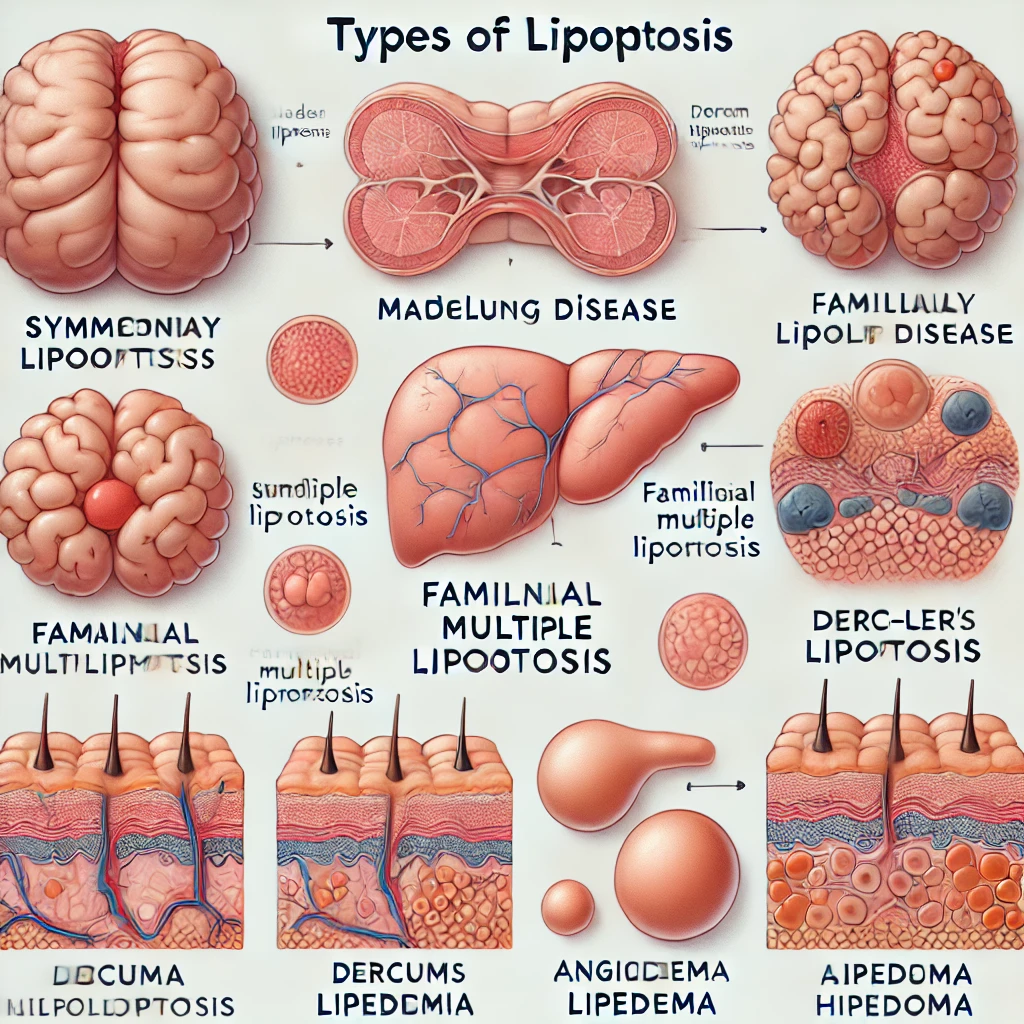
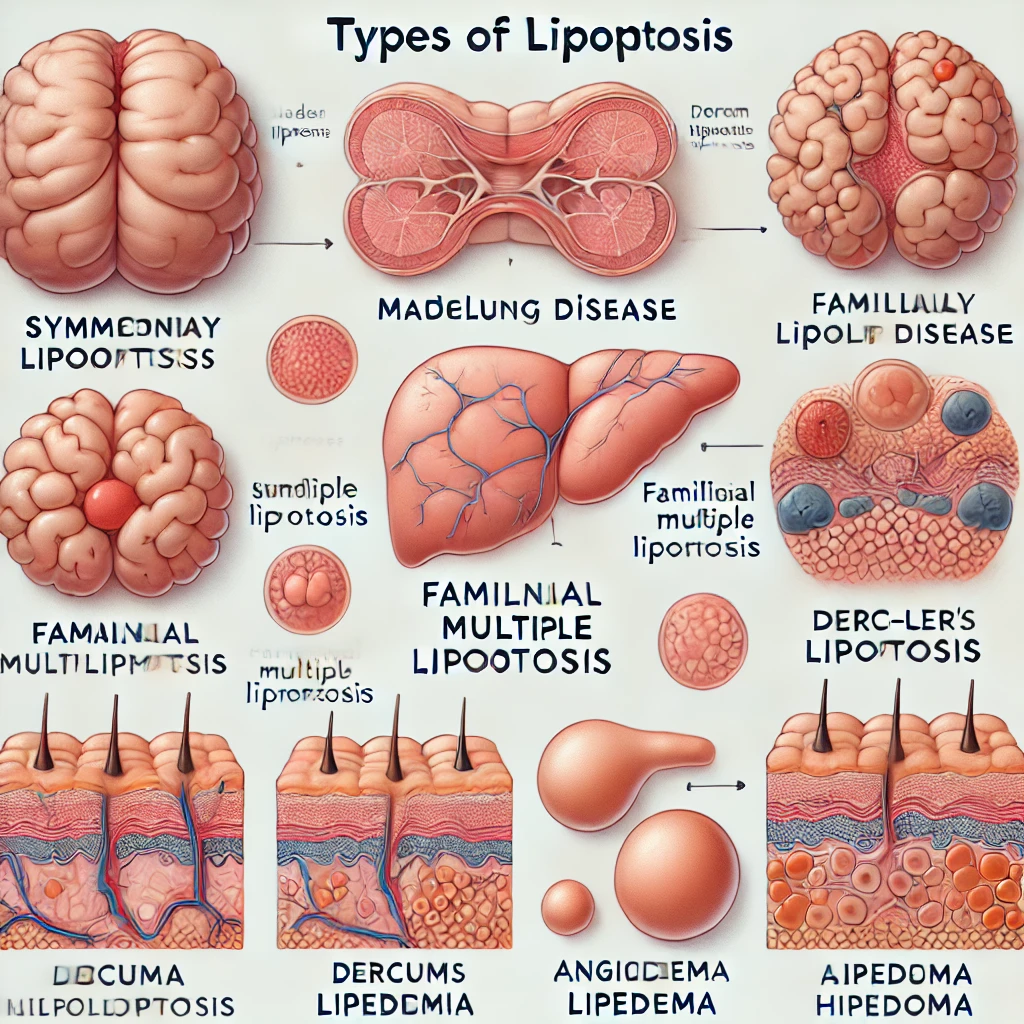
- Multiple Symmetrical Lipomatosis (Madelung's Disease): characterized by symmetrical fat accumulations, usually in the neck and upper body.
- Familial Multiple Lipomatosis: involves multiple subcutaneous lipomas, usually painless, located on the trunk and extremities.
- Dercum's Disease (Adiposis Dolorosa): characterized by painful lipomas on the trunk and upper and lower extremities.
- Mesosomatic Lipomatosis (Roch-Leri): presents multiple small lipomas, usually painless, located between the breasts and knees.
- Angiolipomatosis: lipomas with vascular components that can be painful to the touch.
- Lipedema: abnormal fat accumulation, often painful, in the lower extremities and, rarely, in the arms.
- Hibernomas: benign tumors formed by brown adipose tissue, rare, usually found in areas such as thighs, shoulders, and back.
Syndromic Lipomatoses
Syndromic lipomatoses are associated with genetic alterations and, often, are part of broader clinical pictures. Among the main ones are:
- PIK3CA-Related Disorders: include various overgrowth syndromes and vascular malformations.
- Cowden Syndrome/PTEN: characterized by multiple hamartomas and increased cancer predisposition.
- Familial Partial Lipodystrophy Syndrome: caused by mutations in genes such as LMNA and LIPE, promoting abnormal body fat distribution.
- Mitochondrial Diseases: such as MERRF syndrome, which may include lipomas as part of the clinical presentation.
- Multiple Endocrine Neoplasia Type 1 (MEN1): includes lipomas, hibernomas, and other associated neoplasms.
- Neurofibromatosis Type 1 (NF1): associated with the development of lipomas in some patients.
- Wilson's Disease: copper accumulation in this disease may be related to the appearance of lipomas.
- Pai Syndrome: characterized by central nervous system lipomas and facial polyps.
- Encephalocraniocutaneous Lipomatosis (Haberland Syndrome): includes ocular, cutaneous, and central nervous system anomalies.
Visceral Lipomatoses
Visceral lipomatoses affect internal organs and, therefore, deserve special attention. The main types are:
- Pancreatic Lipomatosis: can result in steatotic pancreatitis and neoplastic transformations.
- Adrenal Myelolipomas: benign tumors composed of fat and myeloid elements located in the adrenal glands.
- Abdominal Lipomatosis: can affect any abdominal structure, causing symptoms due to the mass effect on neighboring organs.
- Spinal Epidural Lipomatosis: fat accumulation in the spinal epidural space, with a risk of spinal cord compression.
How Lipomatoses are Diagnosed
The diagnosis of lipomatoses requires a detailed clinical evaluation. The doctor considers the patient's history, the location and characteristics of the lipomas, and requests complementary exams.
The main diagnostic resources include:
- Ultrasound: useful for identifying superficial lipomas and evaluating their characteristics.
- Magnetic Resonance Imaging: indicated for evaluating deep or visceral lipomas, with greater precision.
- Biopsy: performed when there is suspicion of liposarcoma, to rule out malignancy.
Differentiation between benign lipomas and liposarcomas is essential, as both can have similar clinical presentations but require completely different approaches.
Available Treatments for Lipomatoses
The treatment of lipomatoses varies according to the type and severity of symptoms. There is no single approach, as each case demands an individualized strategy.
The main therapeutic options are:
- Surgery: is the most common form of treatment, indicated for the removal of lipomas that cause pain, compression of neighboring structures, or relevant aesthetic impact.
- Liposuction: used to reduce fat volume in cases such as multiple symmetrical lipomatosis and lipedema, with good tolerance and satisfactory results.
- Medicinal Therapies: include analgesics for pain control, medications for metabolic regulation, and, in syndromic cases, targeted therapies — such as mTOR inhibitors for PIK3CA-related disorders.
Multidisciplinary follow-up, with endocrinologists, surgeons, and geneticists, is often necessary in the syndromic and visceral forms of lipomatoses.
Conclusion
Lipomatoses form a heterogeneous group of conditions with a common point: the abnormal proliferation of adipose tissue. Although generally benign, they can cause significant discomfort and reduce the patient's quality of life. Therefore, early diagnosis and appropriate treatment are essential to control symptoms and prevent complications.
If you or a family member presents symptoms suggestive of lipomatoses, seek a specialist for proper evaluation and guidance. Timely medical care is always the best course.
Frequently Asked Questions About Lipomatoses
1. What are lipomatoses? They are conditions characterized by the abnormal proliferation of adipose tissue, forming lipomas that can be single or multiple.
2. What types exist? There are three main categories: isolated, syndromic, and visceral.
3. Are lipomatoses cancerous? Generally, no. They are benign, but correct diagnosis is essential to rule out the possibility of liposarcoma.
4. What is the treatment for lipomatoses? Treatment may include surgery, liposuction, and medicinal therapies, depending on the type and severity of the condition.
5. Do they cause pain? Some types, such as Dercum's Disease, are characteristically painful.
6. Are lipomatoses associated with other medical conditions? Yes. They can be related to genetic syndromes, metabolic disorders, and other systemic diseases.
7. How is lipomatosis diagnosed? Diagnosis involves clinical evaluation, imaging exams — such as ultrasound and magnetic resonance imaging — and, when necessary, biopsy.
8. Can lipomatoses be hereditary? Yes. Some types, such as familial multiple lipomatosis, have a hereditary nature.
9. Which specialist treats lipomatoses? Depending on the type, treatment can be conducted by a plastic surgeon, endocrinologist, or geneticist.
10. Is there a cure for lipomatoses? There is no definitive cure, but available treatments control symptoms and significantly improve quality of life.
#lipoma #lipomatosis
Related articles


Agendar consulta
Precisa de orientação personalizada?
Marque uma avaliação com o Dr. Fernando Amato e tire as suas dúvidas sobre cirurgia plástica.
Falar no WhatsApp