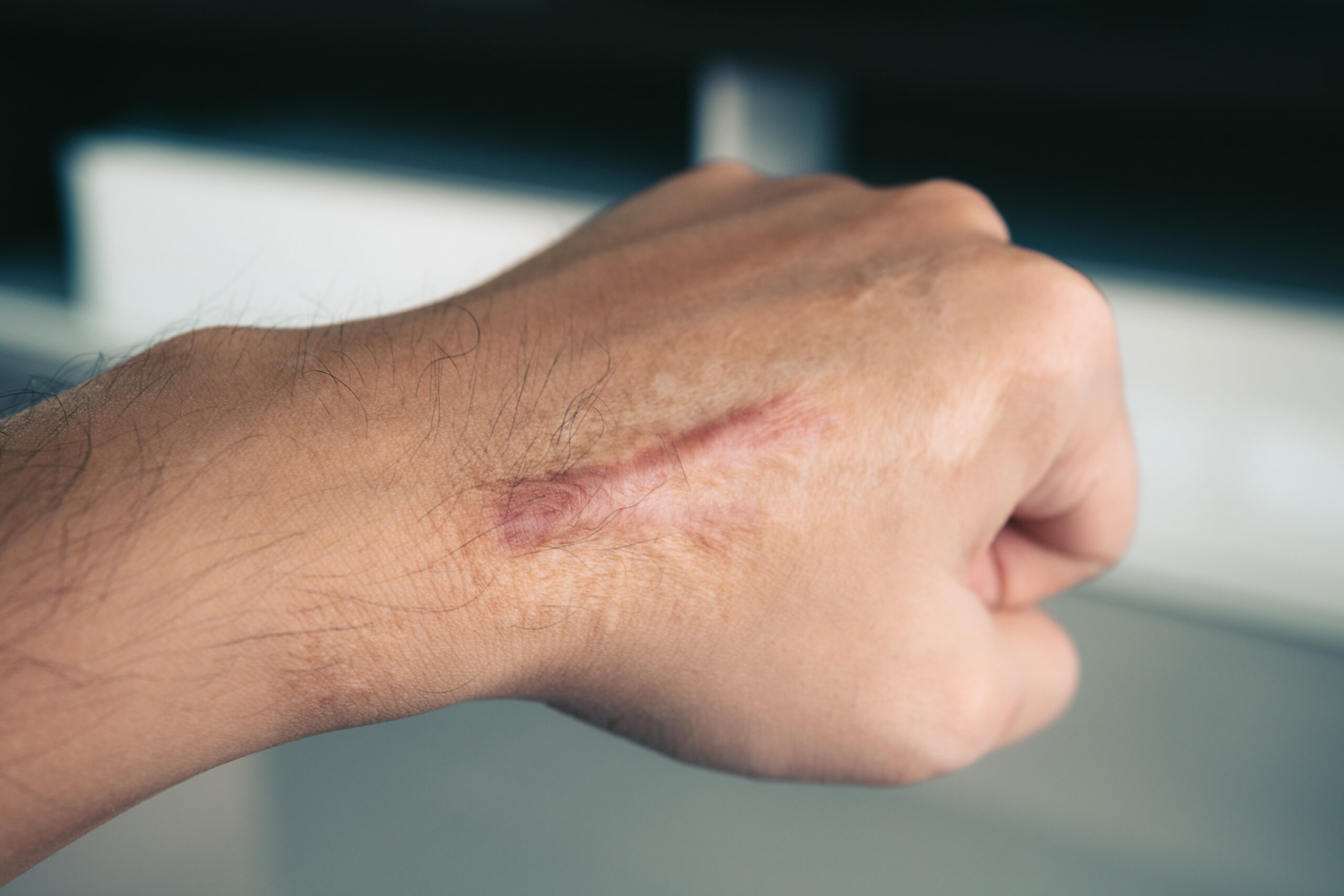
Those who have had severe acne often carry several types of scars simultaneously. Fractional CO₂ laser is the backbone of treatment — but rarely used alone. Good results come from recognizing each type and combining techniques within the same plan.
The 3 types of atrophic acne scars
| Type | Appearance | Best approach |
|---|---|---|
| Ice pick | Narrow and deep "pits" | TCA CROSS + Fractional CO₂ |
| Boxcar | Sharp vertical edges, flat base | Fractional CO₂ + microneedling |
| Rolling | Gentle waves, deep fibrous bands | Subcision + Fractional CO₂ |
Why combine techniques
- Subcision — needle that releases the fibrous bands that "pull" the scar from underneath. Without this, the laser does not level rolling scars.
- TCA CROSS — concentrated trichloroacetic acid applied point by point to ice pick scars. Stimulates focal collagen.
- Fractional CO₂ — remodels collagen throughout the area, improves texture and color.
- Microneedling — maintenance and gradual improvement between larger sessions.
Typical plan (moderate to severe case)
- Initial evaluation — phototype, scar types, expectations
- Preparation (2–4 weeks) — lightening cream for high phototypes, suspension of retinoids in the week
- Session 1: subcision + fractional CO₂ (full area)
- Session 2: fractional CO₂ + TCA CROSS on selected points (after 60 days)
- Session 3: fractional CO₂ touch-up (after 60–90 days)
- Maintenance: microneedling or light CO₂ every 6–12 months
Recovery (quick reminder)
- Day 0–2: redness and edema
- Day 3–7: thin scabs, peeling — do not pick
- Day 7–10: normal social life, mineral makeup
- Day 10–30: residual redness, strict sun protection
- Day 60–90: session result evaluated
What harms the result
- Direct sun exposure or tanning between sessions — risk of hyperpigmentation
- Uncontrolled active acne
- Skipping mineral sunscreen
- Expecting magical results in one session
- Comparing with photos of other people — phototype and scar type change everything
Honest expectation
Acne scars do not disappear. With a well-executed plan, it is possible to achieve a face where the texture is discrete enough to go unnoticed in natural light and under light makeup. Anyone who promises "baby skin in one session" is selling an expectation that does not correspond to the biology of the scar.
Frequently asked questions
How much does CO₂ laser improve acne scars?
In a series of 3 to 5 sessions spaced 30–60 days apart, typical improvement of 40 to 70% in depth and visibility. 'Rolling' scars respond better; 'ice pick' (deep punctiform) scars often require combination with TCA CROSS or subcision.
In how many sessions do results appear?
After the first session, visible improvement in 60 to 90 days (collagen stimulation is progressive). Consolidated results typically after the third session. Patients with severe scarring may benefit from 5 to 6 sessions.
Can I do it immediately after an acne breakout?
No. Active acne must be controlled. If isotretinoin (Roacutan) was used, wait 6 months after discontinuation. Active acne contraindicates ablative laser.
Can dark skin tones undergo treatment?
Yes, with a careful protocol: milder parameters, prior lightening with hydroquinone for 2–4 weeks, strict sun protection, and a longer interval between sessions. The risk of post-inflammatory hyperpigmentation is higher — but avoidable.
How much does a session cost?
Varies according to area, phototype, parameters, and combined protocol. An in-person evaluation defines the number of sessions and provides a quote — the price per single session rarely reflects the true cost of the complete treatment.
Agendar consulta
Precisa de orientação personalizada?
Marque uma avaliação com o Dr. Fernando Amato e tire as suas dúvidas sobre cirurgia plástica.
Falar no WhatsApp