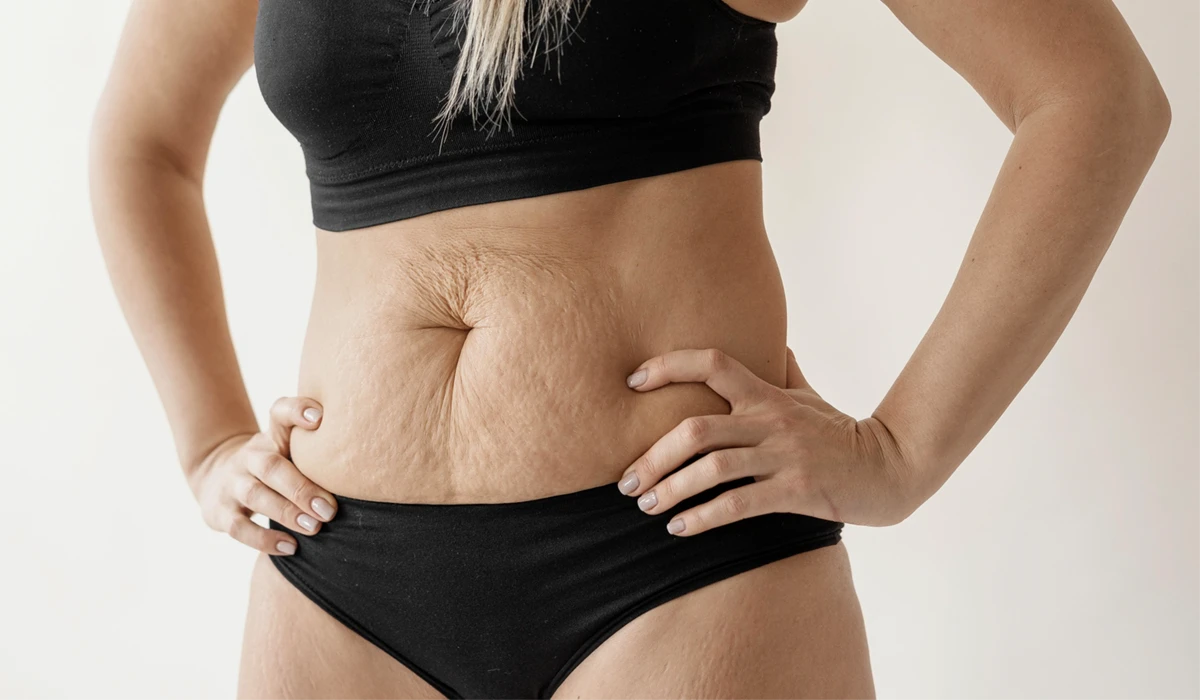
High stomach is a protrusion in the upper abdomen (above the navel) that does not disappear with diet or exercise. In almost half of the cases, the cause is not fat — it is diastasis recti, epigastric hernia or postural alteration. The correct treatment depends on the correct diagnosis.
The 4 most common causes
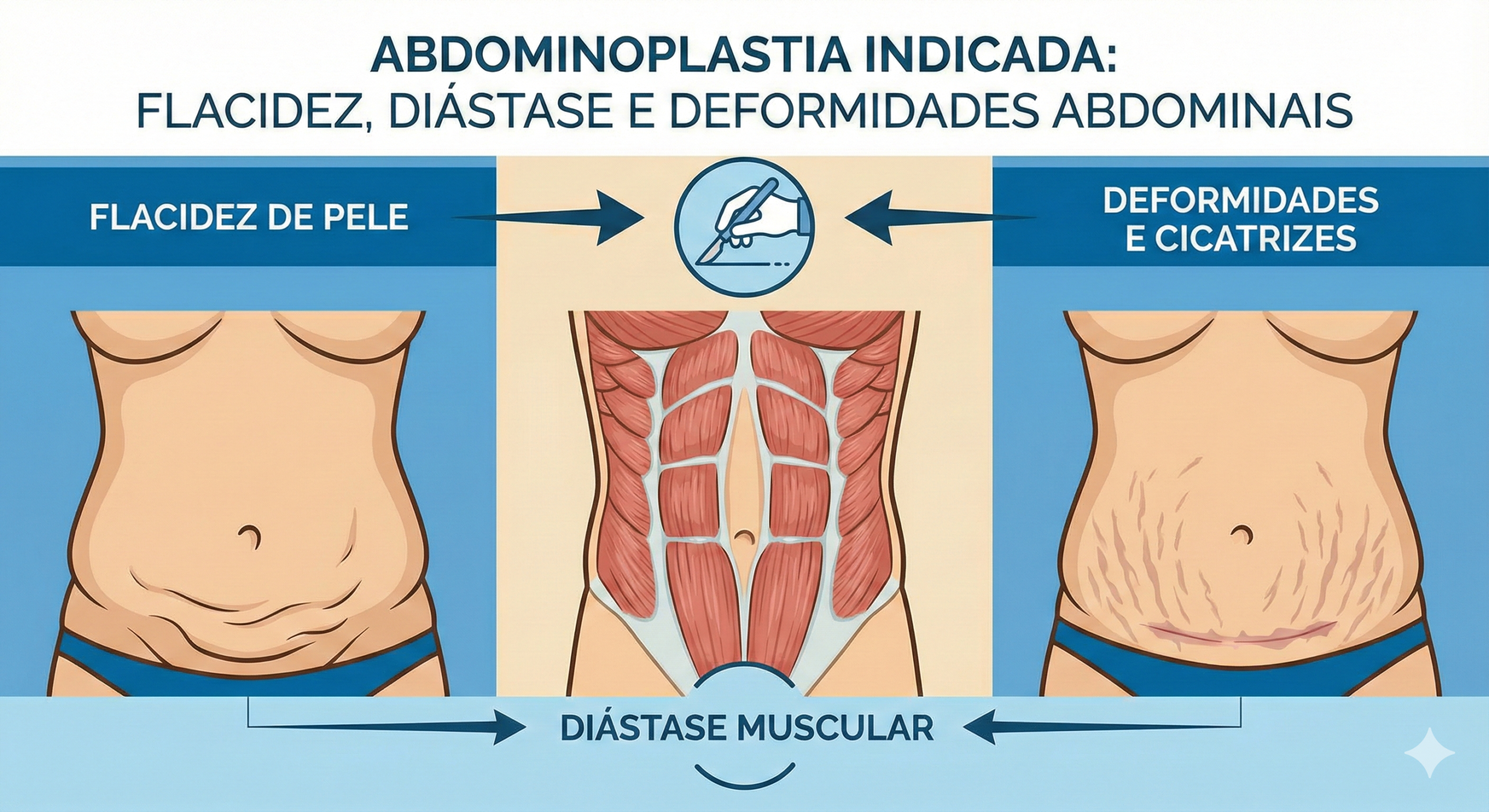
- Diastasis recti abdominis — separation of the rectus muscles (the "linea alba" stretches). Very common after pregnancy and in ex-obese individuals. The upper abdomen remains rounded even when lying down.
- Epigastric hernia — a nodule in the middle of the abdomen above the navel, which increases when coughing or straining. Small or large, it is a frequent cause of the "high lump."
- Localized supraumbilical fat — fat deposit specific to the upper region, more common in men. Partially responds to diet.
- Postural / hyperlordosis — when there is an increase in lumbar curvature, the viscera project forward, simulating a high stomach. Here the treatment is physical therapy, not surgery.
How to differentiate in the office
- Diastasis test — patient lying down, raises head; if a central "ridge" appears in the abdomen, there is diastasis.
- Abdominal wall ultrasound — measures the distance between the rectus muscles and identifies hernias.
- Pinching — if the "pinched" skin/fat is thin, the problem is not fat, it is the wall.
Treatment by cause
| Cause | Treatment |
|---|---|
| Small diastasis, no excess skin | Miniabdominoplasty or endoscopic plication |
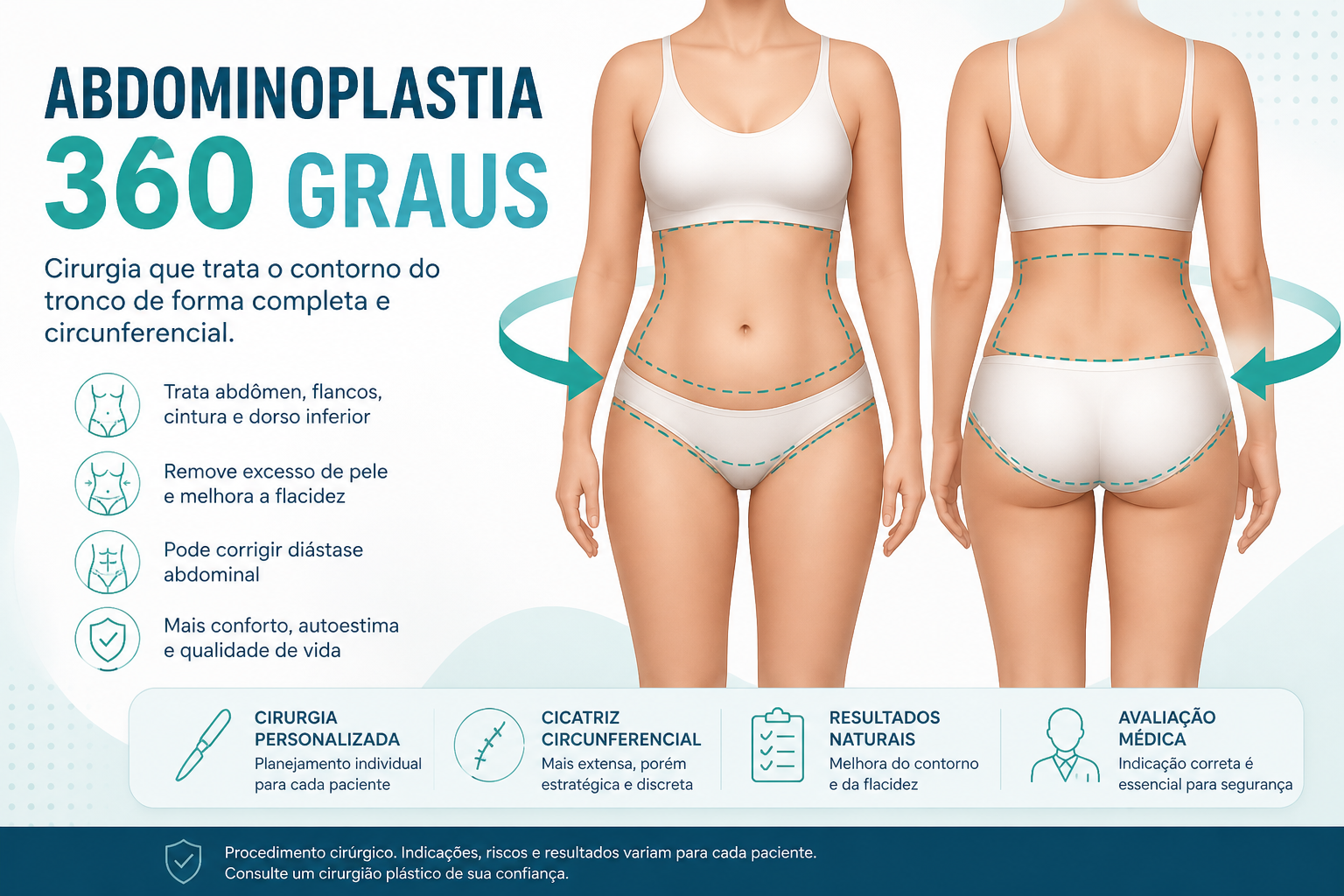
| Diastasis + skin laxity | Classic abdominoplasty |
| Isolated epigastric hernia | Hernioplasty (with or without mesh) |
| Supraumbilical fat | Liposuction of the region |
| Postural / lordosis | Physical therapy, Global Postural Reeducation (RPG), core strengthening |
What does NOT work
- Abdominal exercises "pulling the belly button in" — does not close diastasis
- Body shaper — only hides, does not treat
- Liposuction when the cause is diastasis or hernia
- Extreme diet — loses overall weight but the bulging remains
Why wrong diagnosis is expensive
Indicating liposuction for a patient with diastasis is the most common mistake for a high stomach. The result is frustration: the abdomen remains bulging, now with less fat to disguise. Investing time in the diagnosis (physical exam + ultrasound) before deciding on surgery completely changes the final result.
Frequently asked questions
What is a high stomach?
It is the protrusion in the upper part of the abdomen (above the navel) that persists even in thin people. The most common causes are diastasis recti abdominis, epigastric hernia, localized supraumbilical fat, or altered posture/spine.
Is a high stomach fat?
Not always. In many cases, it is diastasis (separation of the rectus muscles) or a hernia — the intestinal loop or visceral fat pushes the abdominal wall forward. That's why exercise and diet alone usually don't solve it.
How to know the cause of a high stomach?
Physical examination and abdominal wall ultrasound determine whether it is diastasis, hernia, or fat. The plastic surgeon evaluates the musculature, skin, and adipose panniculus to indicate the correct treatment — abdominoplasty, mini-abdominoplasty, liposuction, or hernioplasty.
Does liposuction resolve a high stomach?
It only resolves it if the cause is exclusively localized fat. If there is diastasis or a hernia, liposuction does not correct the bulging — it can even worsen the appearance. That's why a correct diagnosis comes before surgical choice.
Does abdominoplasty correct a high stomach?
Yes, in most cases. Classic abdominoplasty treats diastasis (with rectus plication), removes excess skin and fat, and corrects epigastric and umbilical hernias in the same procedure. It is the most complete solution when there is more than one associated cause.
Especialidade
Saiba mais sobre os procedimentos relacionados.
Agendar consulta
Precisa de orientação personalizada?
Marque uma avaliação com o Dr. Fernando Amato e tire as suas dúvidas sobre cirurgia plástica.
Falar no WhatsApp