
- Articles, Plastic Surgery, Surgeries
3 Care Measures That Most Impact Wound Healing After Plastic Surgery
- January 8, 2026
- By Fernando Amato
Wound healing care depends more on you than you imagine — discover the three factors that truly make a difference.
When undergoing an aesthetic or reconstructive procedure — such as a Mammoplasty, a Mastopexy, or a liposuction — wound healing care is as important as the surgical technique itself.
This healing process involves different biological phases and can be influenced by internal factors (such as nutrition, smoking, diseases) or external factors (such as technique, postoperative care, environment). However, studies show that delayed or failed healing increases the risk of infections, dehiscence, and unsatisfactory aesthetic results.
- ✅ Smoking control and cessation have a direct impact on tissue oxygenation.
- ✅ Adequate nutrition / diet after surgery promotes regeneration and collagen synthesis.
- ✅ Local wound care and a sterile environment reduce infection and promote proper closure.
- ✅ The surgical technique and type of suture are important, but the patient also plays an active role in the outcome.
- ✅ Investing in these care measures then reduces the risk of complications and improves the final aesthetic result.
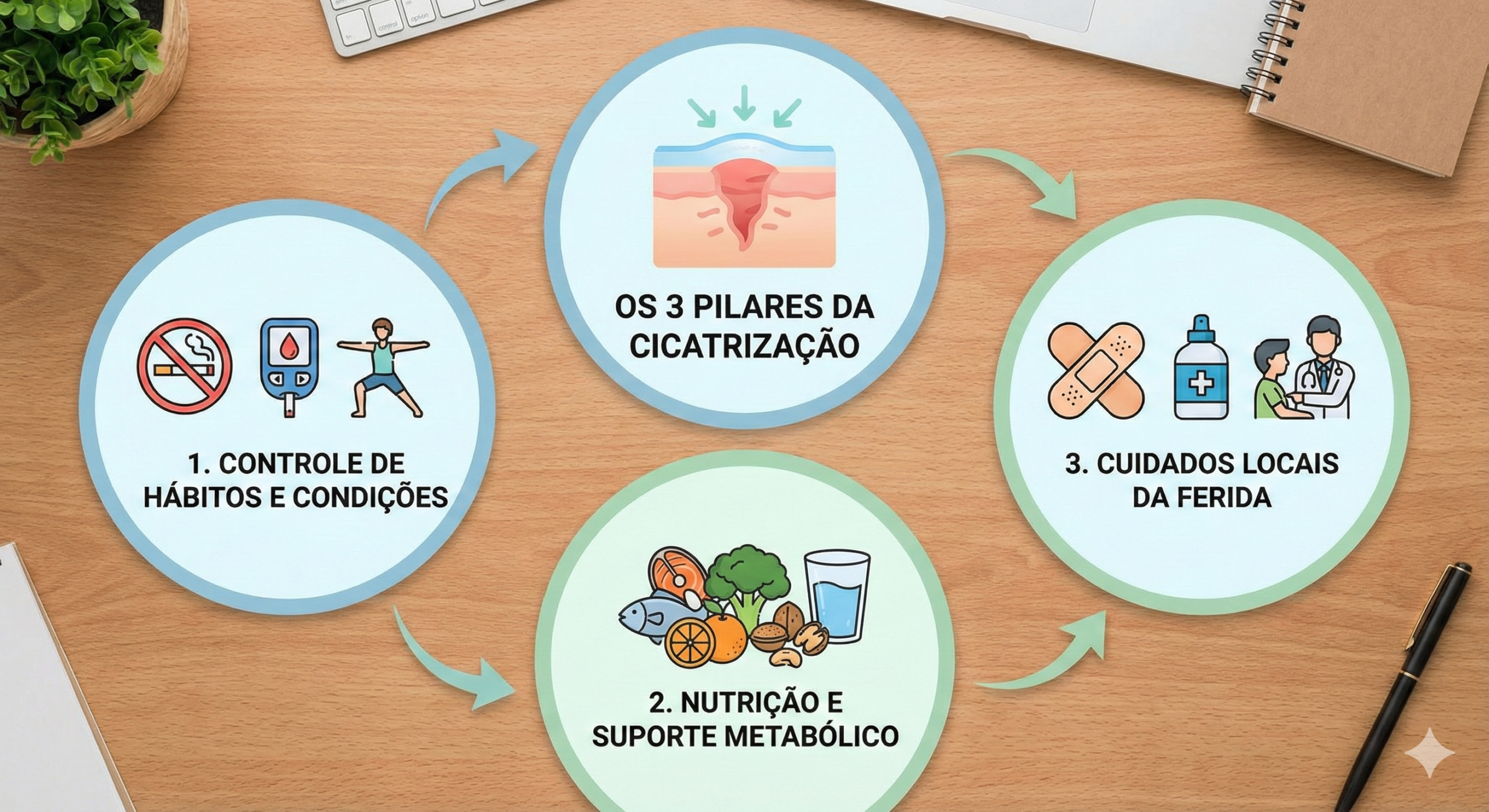
Wound Healing Care: The 3 Essential Pillars
1. Control of habits and systemic conditions
Smoking and nicotine consumption
Smoking significantly impairs the wound healing process. Nicotine, as well as other components of cigarettes, reduces blood perfusion, decreases tissue oxygenation, and delays cell migration.
For those undergoing plastic surgery, quitting smoking at least four to six weeks before and after surgery is one of the most important recommendations.
Chronic diseases: diabetes, obesity, and circulation
Conditions such as diabetes mellitus, obesity, and poor circulation interfere with collagen synthesis, new blood vessel formation, and inflammation control.
For example, diabetic patients have a higher risk of infection, dehiscence, and slow healing.
Adequate preoperative preparation
Preoperative care includes risk assessment, tobacco cessation, nutritional adjustment, medication review, and informing the surgeon about pre-existing conditions. This period is fundamental for the body to enter surgery in the best possible condition for healing.
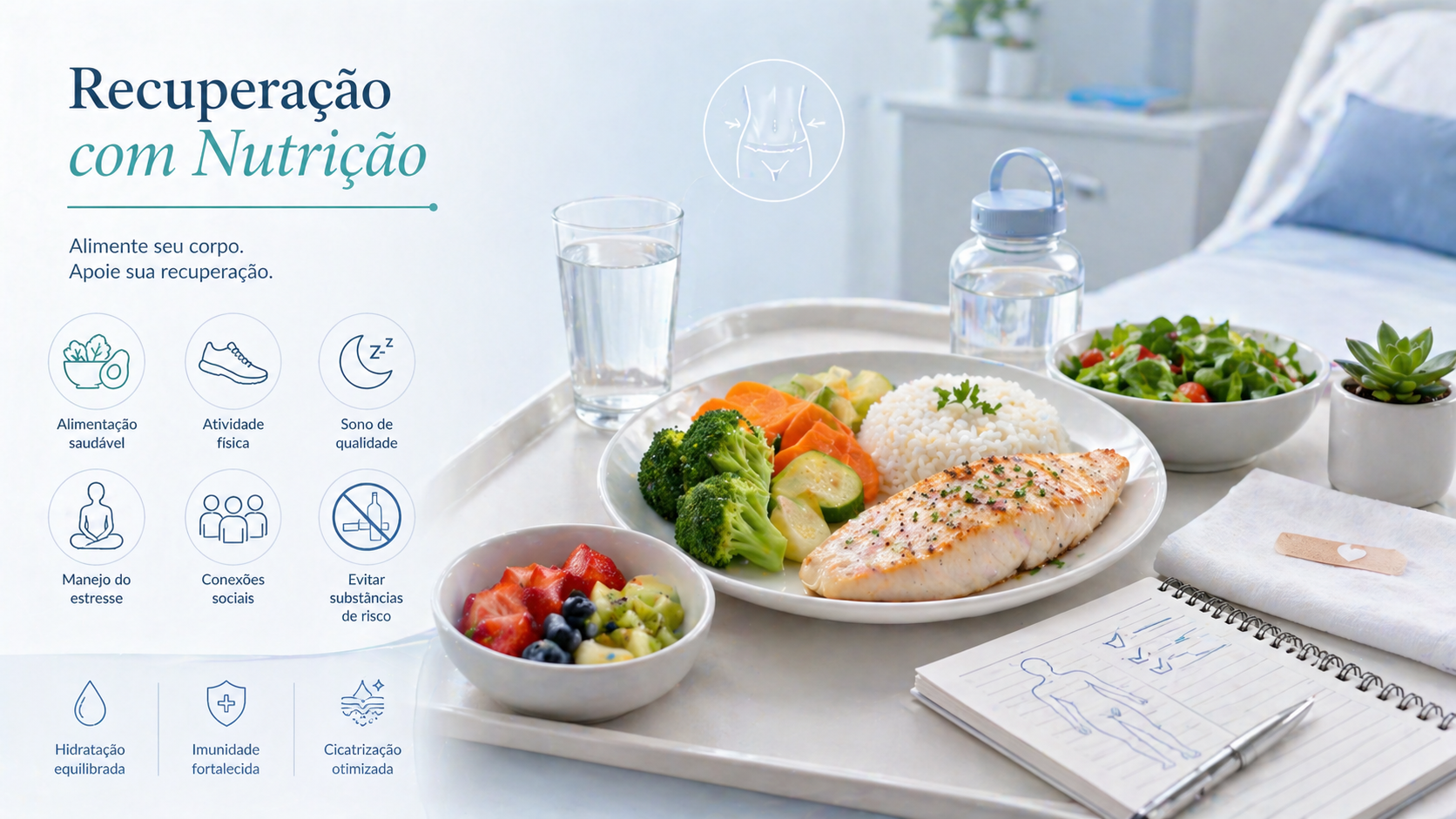
2. Nutrition and metabolic support
Importance of diet in wound healing
Wound healing requires energy, proteins, vitamins, and minerals. Nutritional deficiencies delay the proliferation and remodeling phases of tissues.
Therefore, investing in a good “post-surgery diet” is part of wound healing care.
Practical diet tips
- Adequate protein intake (ideally 1.2–1.5 g/kg/day postoperatively).
- Foods rich in vitamin C (orange, guava, acerola), zinc (lean meats, nuts), and vitamin A (liver, carrots).
- Adequate hydration: water is essential for cellularization and nutrient transport.
- Avoid very restrictive diets or prolonged fasting after surgery.
- Nutritional guidance, if there are restrictions.
3. Local wound care and sterile environment
Understanding the wound healing process
Wound healing goes through phases: hemostasis, inflammation, proliferation, and remodeling.
Any interruption or alteration (such as infection, suture tension, hematoma) compromises the aesthetic and functional result.
Wound hygiene and protection practices
- Strictly follow instructions regarding dressings and hygiene.
- Keep the area clean, dry (when indicated), and protected.
- Avoid friction, pressure, or tension on the wound.
- Be alert for signs of infection: redness, pain, purulent discharge.
- Attend postoperative follow-up appointments.
Conclusion
Wound healing care is crucial for obtaining a safe and aesthetic result after plastic surgery.
Controlling smoking and diseases, maintaining good nutrition, and rigorously following local wound care are the three pillars for successful recovery.
Schedule a consultation with your surgeon to discuss your case and ensure you are ready for quality wound healing.
Related articles

Agendar consulta
Precisa de orientação personalizada?
Marque uma avaliação com o Dr. Fernando Amato e tire as suas dúvidas sobre cirurgia plástica.
Falar no WhatsApp