Clitoromegaly is the medical term for an enlarged clitoris beyond the size considered normal (glans larger than 10 mm in adult women). It can be congenital (present from birth) or acquired (developed over time). Differential diagnosis is essential — before considering surgery, it is necessary to understand why the clitoris is enlarged.
Definition and reference measurements
The normal size of the clitoral glans in adult women is between 3.7 mm and 10 mm. Above this, it is considered clitoromegaly. In newborns and children, there are specific reference tables by age — evaluation in childhood requires an endocrinological protocol.
Causes — differential diagnosis
Congenital causes
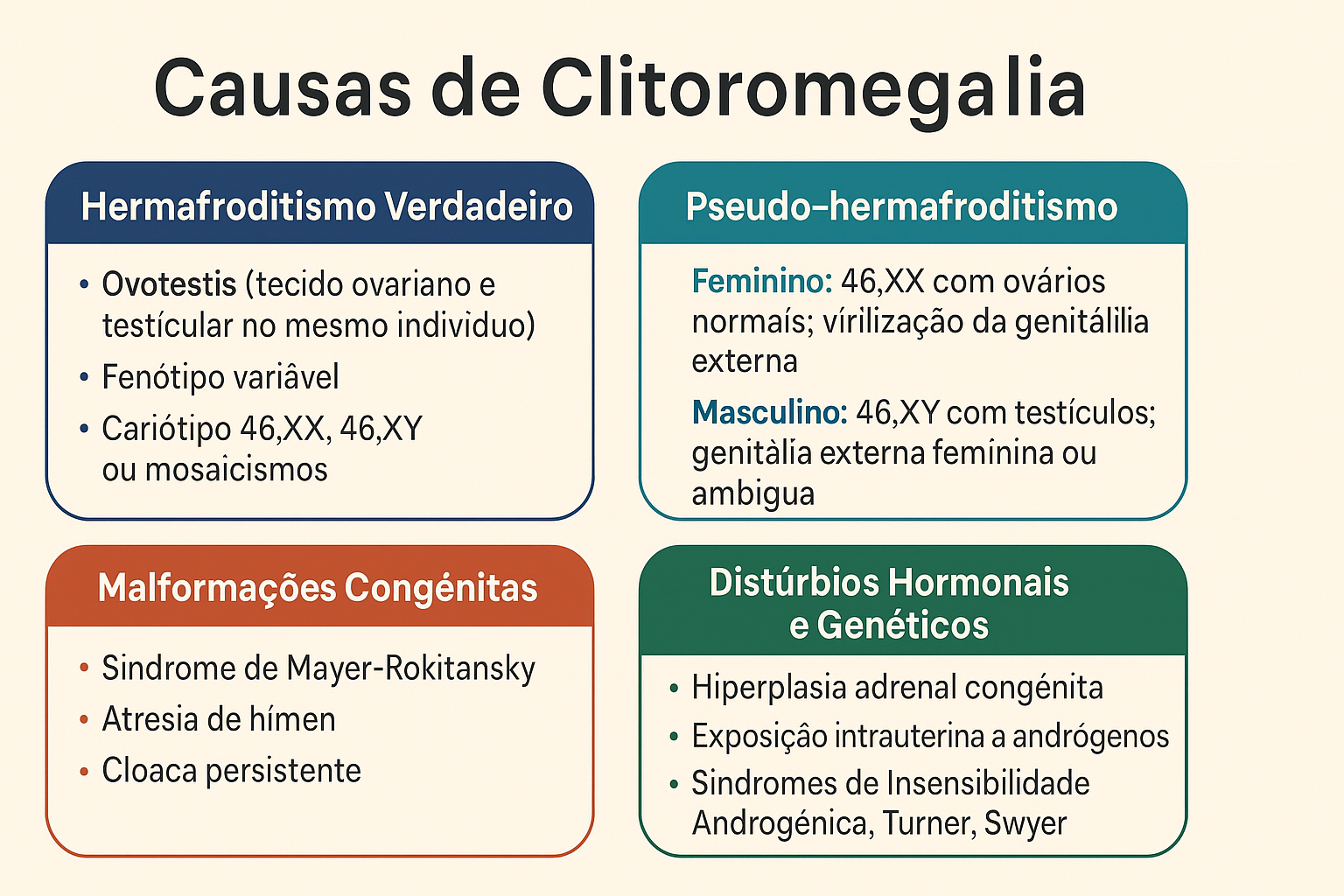
- Congenital adrenal hyperplasia (CAH) — 21-hydroxylase deficiency is the classic form; it produces excess androgens from fetal life.
- Disorders of sex development — rare syndromes involving chromosomes and gonadal differentiation.
- Maternal exposure to androgens during pregnancy — inadvertent use of androgenic medications.
Acquired causes
- Use of testosterone or anabolic steroids — the most frequent cause of acquired clitoromegaly in practice today, linked to the increasing use of hormones in gyms.
- PCOS in hyperandrogenic form — mild to moderate clitoromegaly may accompany hirsutism and acne.
- Androgen-producing tumors — ovarian (arrhenoblastoma) or adrenal. Rapid growth of the clitoris in an adult woman requires immediate investigation.
- Cushing's Syndrome and other endocrinopathies.
How clinical investigation is done
Investigation combines:
- Anamnesis: age of onset, speed of growth, hormone use, menstrual cycle, fertility.
- Physical exam: measurement of the clitoral glans, hair evaluation (Ferriman-Gallwey scale), acne, body fat distribution.
- Laboratory: total and free testosterone, SHBG, DHEA-S, 17-OH-progesterone, prolactin, TSH, cortisol.
- Imaging: pelvic ultrasound (polycystic ovaries, ovarian tumors); adrenal MRI if DHEA-S is elevated.
- Genetics / karyotype: in congenital cases or with genital ambiguity.
Treatment
1. Treat the cause. Discontinue anabolic steroids, control PCOS, replace cortisol in CAH, resect androgen-producing tumor. Part of the clitoral enlargement may regress.
2. Surgery (clitoroplasty). Indicated when the enlargement persists after treating the cause, when the cause is anatomical, or when physical and psychological discomfort is significant. Modern techniques — subcutaneous clitorotomy and clitoropexy — reduce volume while preserving the dorsal neurovascular bundle of the clitoris, maintaining sensitivity.
When to seek evaluation
Recent growth, associated symptoms (menstrual changes, hair, voice, severe acne), or persistent discomfort are clear indications for specialized evaluation. The ideal approach is multidisciplinary — gynecologist, endocrinologist, and plastic surgeon working together.
Frequently asked questions
What is clitoromegaly?
Clitoromegaly is the medical term for an enlarged clitoris — glans larger than 10 mm in adults or disproportionate to development in childhood. It can be congenital or acquired.
What are the main causes of clitoromegaly?
The most common causes are: individual anatomical variation; use of testosterone or anabolic steroids; polycystic ovary syndrome (PCOS); congenital adrenal hyperplasia; androgen-producing tumors (rare); and disorders of sex development.
How is differential diagnosis made?
It combines physical examination, anamnesis (hormone use, age of onset), hormonal dosages (testosterone, DHEA-S, 17-hydroxyprogesterone, SHBG), pelvic ultrasound, and, in selected cases, adrenal MRI or karyotype.
Can clitoromegaly be cured?
When there is a hormonal cause, treating that cause (discontinuation of anabolic steroids, control of PCOS, replacement in adrenal hyperplasia) can partially reduce the clitoris. When the cause is anatomical or the enlargement persists, clitoroplasty offers definitive correction.
Is clitoral reduction surgery safe?
Yes, when performed by a plastic surgeon experienced in intimate surgery. Modern techniques (subcutaneous clitorotomy, clitoropexy) preserve the dorsal neurovascular bundle, maintaining sensitivity and orgasm capacity.
Consultation in São Paulo
In-person evaluation with Dr. Fernando Amato
Office in Jardim América (Av. Brasil, 2283), São Paulo. Discreet service, with detailed clinical evaluation and individualized surgical plan.
WhatsApp (11) 98101-1234 Clitoral Surgeries
Read also: Clitoromegaly Treatment · Clitorotomy and Clitoropexy · Testosterone and Clitoris
General guide: this article delves into a specific aspect of the topic. For the complete picture — reference measurements, hormonal causes (PCOS, CAH, testosterone, tumor), investigation exams, and surgical decision — read the guide Enlarged clitoris: what it could be and when to investigate.
Agendar consulta
Precisa de orientação personalizada?
Marque uma avaliação com o Dr. Fernando Amato e tire as suas dúvidas sobre cirurgia plástica.
Falar no WhatsApp