Breast Asymmetry
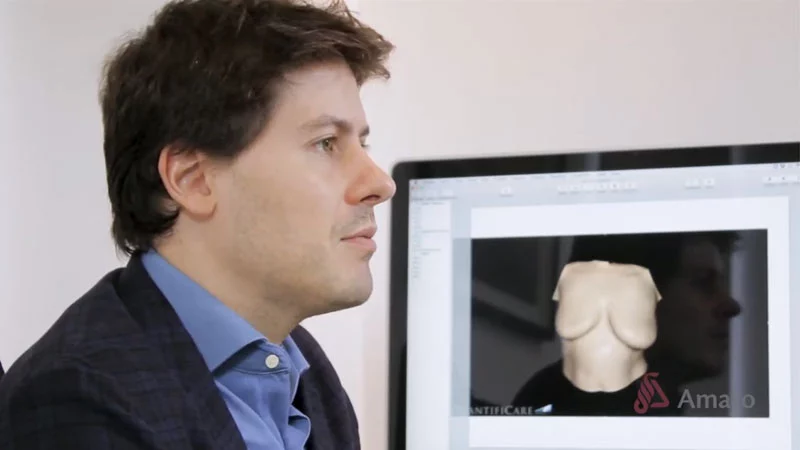
Breast asymmetry is the difference in size between the breasts. It is common for virtually all women to have some degree of asymmetry, which can be subtle and is considered acceptable. However, sometimes it can be associated with changes in posture or spinal conditions, such as scoliosis. Small differences are acceptable, but in some cases, it can affect the patient's quality of life or cause back or spinal pain. Asymmetry can present in different forms, such as type 1, when only one side is small, type 2, when both sides are small, but one is smaller than the other. There may be hypertrophy, when one side is very large and requires breast reduction, or hypomastia, when one side is undeveloped and the other is very developed. Treatment varies according to each case and may include the use of implants, fat grafting, breast reduction (mammoplasty), and repositioning of the areola (mastopexy). Current technology allows predicting the result or at least the volume with 3D simulations, and it is believed that this is the future of volume correction between the breasts.
https://www.youtube.com/watch?v=pt-_dG_Qo-k DescriptionBreast Asymmetry is the difference between breasts, whether in size, shape, or position. Treatment varies in each case, and may involve mammoplasty and mastopexy, with or without breast implants. Watch the video for more details with Dr. Fernando Amato (CRM 133826).
TranscriptBreast asymmetry is the difference in size between the breasts. This difference can be quite subtle and is very frequent. It can occur in almost all women, at least with some asymmetry, which is acceptable. This asymmetry can even be associated with a change in the patient's posture or a spinal condition, such as scoliosis. Small differences are acceptable, but depending on the case, it can interfere with the patient's quality of life or even lead to incorrect posture, causing back pain or spinal pain. This asymmetry can present in various forms, with some classifications, one of which is type 1, when only one side is small. There is type 2, when both sides are small, but one is smaller than the other. It can present with hypertrophy, meaning one side is very large and therefore may even require breast reduction, which can be unilateral hypertrophy, meaning on one side only. This hypertrophy can also occur on both sides with a very large difference. In addition, there may be hypomastia, meaning one side is undeveloped and one side is very developed, and in rare cases, hypomastia, meaning a small breast with some deformity of the thoracic wall, may occur. Treatment will vary according to each case. So, in cases where the breast is small, it can be done only with implants, fat grafting can be done, and in large breasts, breast reduction, mammoplasty, can be performed, and there are cases that require repositioning of the areola, which is mastopexy. And this mastopexy can be done with or without a breast prosthesis, the breast implant. Current technology makes it possible to predict a result or at least predict a volume through 3D simulations, and I believe that this is the future, being able to use technology to assist in this volume correction between the breasts. Did you like our video? Follow us on our social media.
Especialidade
Saiba mais sobre os procedimentos relacionados.
Agendar consulta
Precisa de orientação personalizada?
Marque uma avaliação com o Dr. Fernando Amato e tire as suas dúvidas sobre cirurgia plástica.
Falar no WhatsApp