
- Plastic Surgery
What does it mean to have fibrocystic breast changes?
- May 2, 2025
- By Fernando Amato
🧬 Fibrocystic breast tissue: What is it?
📰 Headline:
Breasts with lumps and pain? Understand what fibrocystic changes in the breasts are!
🩺 Understanding fibrocystic changes in the breasts
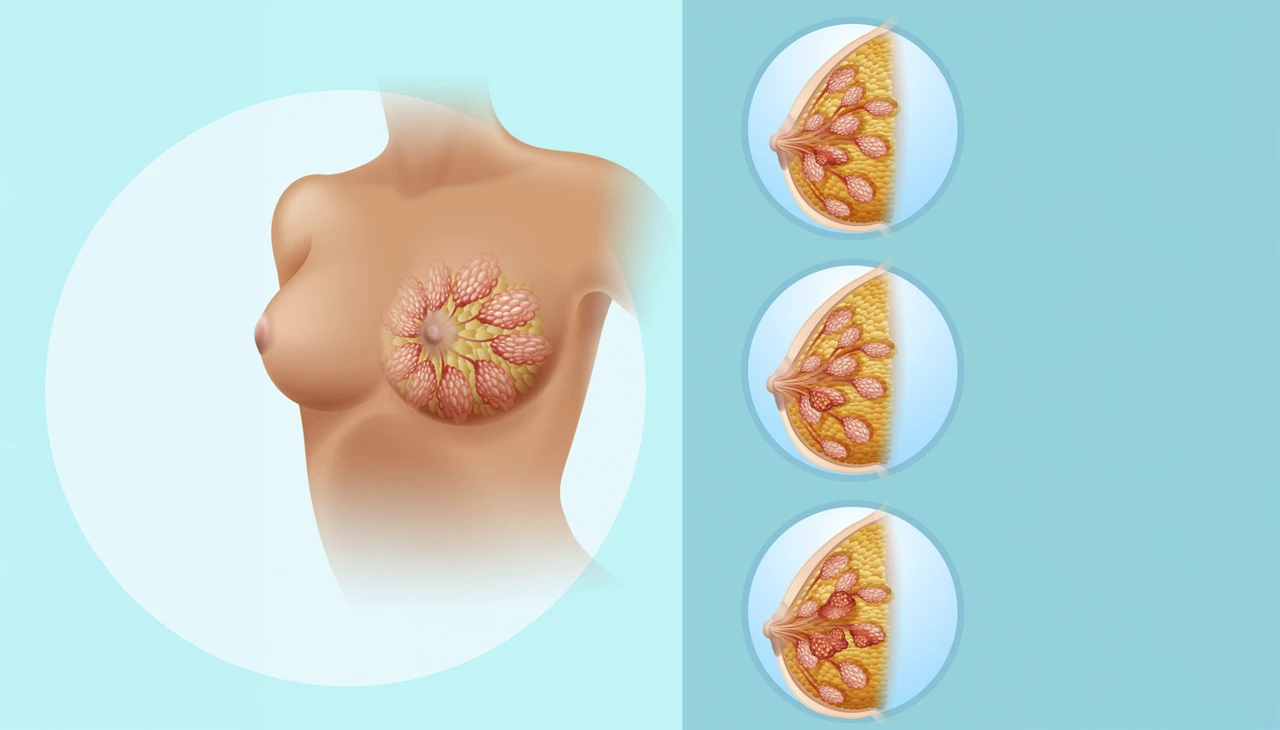
Fibrocystic breast changes are therefore a benign (non-cancerous) finding that affects a large proportion of women, especially between 30 and 50 years of age. However, the condition is related to hormonal variations during the menstrual cycle, causing changes in breast tissue.
📌 Article Highlights:
✅ Common and benign: fibrocystic changes are frequent and do not indicate cancer
💡 Hormonal: influenced by estrogen and progesterone
🧪 Detected in imaging exams such as mammography and ultrasound
🔍 Can cause pain, lumps, and tenderness in the breasts
📅 Symptoms vary with the menstrual cycle and may improve after menopause
🧠 What does “fibrocystic change” mean?
The term therefore refers to modifications in breast tissue, such as the appearance of cysts (small fluid-filled sacs), areas of fibrosis (tissue hardening), and hyperplasia (mild cell growth).
These changes can result in:
- Breast tenderness or pain (mastalgia)
- Palpable lumps, which often change in size
- Sporadic nipple discharge
- Dense appearance on mammography
🔬 Why does this happen?
The causes are multifactorial, but are strongly related to:
- Normal hormonal fluctuations of the menstrual cycle, especially estrogen
- Genetic predisposition
- Use of exogenous hormones (such as contraceptives)
- Lifestyle and diet
Fibrocystic changes tend to regress after menopause, when hormone levels decrease.
📷 How are they diagnosed?
Thus, the diagnosis is usually made through imaging exams, especially:
- Mammography
- Breast ultrasound
- Magnetic resonance imaging (in specific cases)
These exams, however, can show simple cysts, duct dilation, areas of fibrosis or increased density. Thus, when necessary, the doctor may request a biopsy to rule out other diseases, especially when there are atypical findings.
🧘♀️ Common symptoms of fibrocystic changes
The most common clinical manifestations include:
- Cyclic or continuous breast pain (mastalgia)
- Feeling of heaviness or swelling in the breasts
- Presence of mobile and painful lumps
- Changes that worsen before menstruation
👉 Important: not all breast pain indicates a serious disease. Fibrocystic changes are benign but should be monitored by a specialist.
🔎 Is there a risk of breast cancer?
Although some forms of fibrocystic changes may have a small increased risk, the vast majority of cases are not associated with cancer. Therefore, medical evaluation is essential to determine the degree of the change and the need for specific monitoring.
💊 Treatment: is it necessary?
Most of the time, specific treatment is not necessary, but some measures can relieve symptoms:
- Use of mild analgesics or anti-inflammatories
- Reduction of caffeine and fatty foods
- Supplementation with vitamin E, evening primrose oil, or magnesium (with medical guidance)
- Adequate support bras
When symptoms are very intense or there are diagnostic doubts, the mastologist may indicate biopsies or other more specific approaches.
🏥 When to seek a mastologist?
Consult a specialist if you notice:
- New lump or one that grows rapidly
- Persistent or intense pain
- Bloody discharge from the nipple
- Skin changes (redness, retraction, scaling)
👉 Schedule your evaluation with Dr. Fernando Amato, Plastic Surgeon, and clarify all your doubts on the subject.
🔁 Follow-up and Prevention
Thus, it is ideal to maintain regular follow-up with routine exams and annual clinical evaluation. Avoiding smoking, maintaining a balanced diet, and practicing physical activities also help breast health.
Learn more about:
💬 Conclusion
Fibrocystic changes are a benign and very common condition, especially in women during their reproductive phase. Although they can cause discomfort and concern, the most important thing is to maintain regular medical follow-up to ensure a correct diagnosis and differentiate from other more serious conditions.
✅ If you have noticed lumps or breast pain, do not delay: seek a specialist and have the peace of mind of a secure diagnosis.
📅 Schedule your consultation with Dr. Fernando Amato and receive the care you deserve!
🤔 Frequently Asked Questions (FAQ)
1. Can fibrocystic changes turn into cancer?
Rarely. Most are benign, but require follow-up.
2. Does someone with fibrocystic changes need surgery?
Generally, no. Surgery is only indicated in very specific cases.
3. Is breast pain always a sign of fibrocystic change?
Not always. It can have other hormonal or muscular causes.
4. Can men have fibrocystic changes?
It is extremely rare, but benign changes can also occur.
5. Is it possible to prevent fibrocystic changes?
Not entirely, but a healthy diet and hormonal control help.
6. Is there a specific medication for this condition?
There is no medicinal cure, but there are ways to relieve symptoms.
7. Is nipple discharge normal with fibrocystic change?
It can occur, but if it is bloody or constant, it should be evaluated.
8. Does the change appear on mammography?
Yes, and ultrasound usually complements the analysis.
9. Is a biopsy necessary?
Only in suspicious cases or with doubtful findings on exams.
10. Do fibrocystic changes disappear with menopause?
In many cases, yes, as there is a reduction in ovarian hormones.
Related articles

Diet before and after plastic surgery

Healthy eating in post-operative plastic surgery

Agendar consulta
Precisa de orientação personalizada?
Marque uma avaliação com o Dr. Fernando Amato e tire as suas dúvidas sobre cirurgia plástica.
Falar no WhatsApp