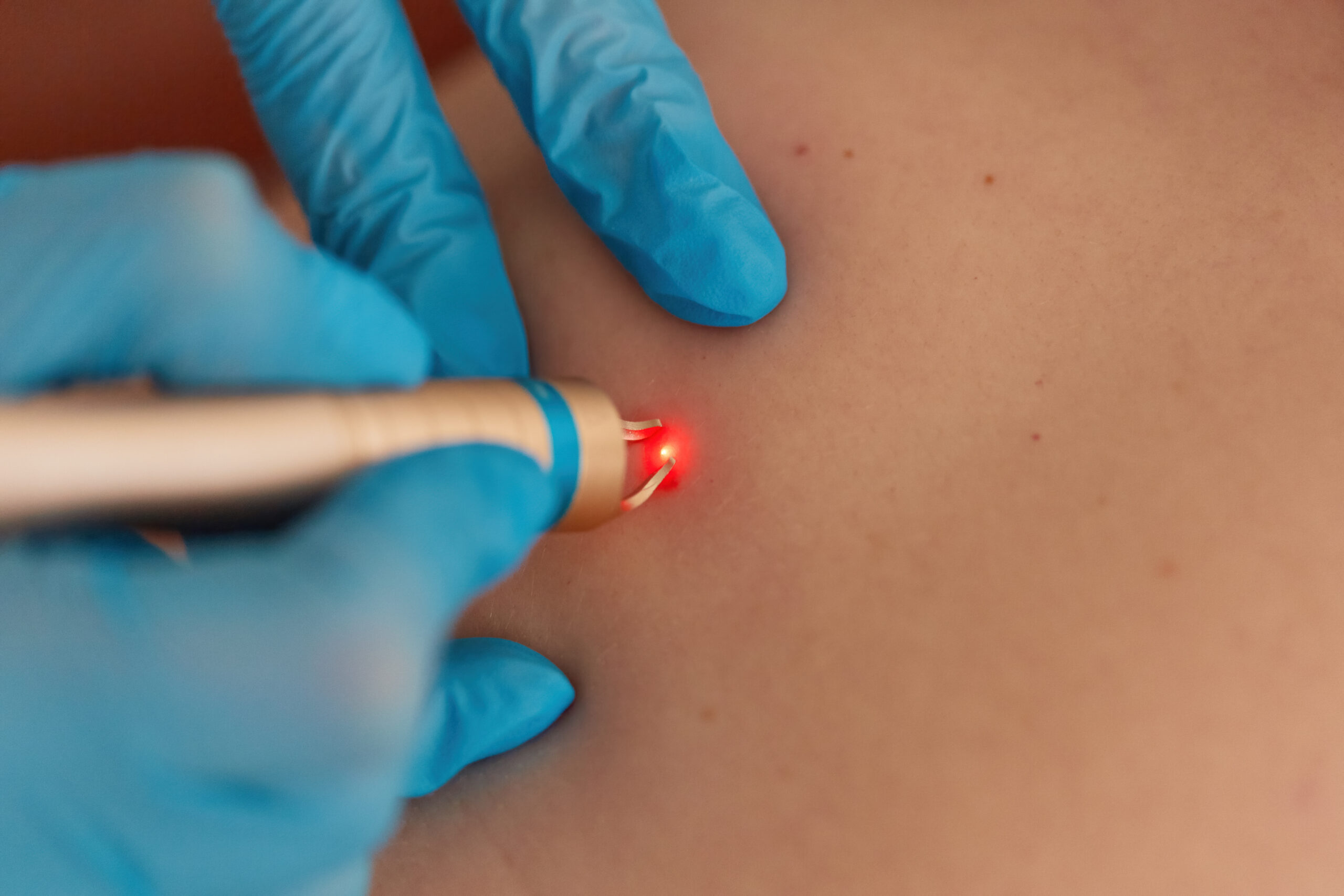
Labiaplasty (or nymphoplasty) is the most sought-after female intimate surgery. "Laser" means using a CO₂ laser as a cutting and coagulating instrument — it doesn't change the indication, the planning technique, nor does the result depend exclusively on it. What changes is the intra and post-operative comfort.
When there is a real indication
- Physical discomfort — friction with underwear, tight pants, cycling
- Pain or discomfort during sexual intercourse
- Significant asymmetry between the sides
- Discomfort when sitting or crossing legs
- Persistent aesthetic complaint that affects self-esteem and intimacy
Important: there is no rigid "normal size" for the labia minora. The indication comes from the patient, not from an imposed anatomical standard.
Surgical techniques (with or without laser)
- Trim — linear resection along the free edge. Simpler, indicated for uniform hypertrophy.
- Wedge (Alter) — "V"-shaped resection in the middle third, preserving the natural border. Less visible scar, requires more experience.
- Deepithelialization — in selected cases, reduces volume while preserving all borders.
- Combined with clitoral hood reduction — when there is associated preputial excess, it can be treated in the same procedure.
What the CO₂ laser adds
- Simultaneous cutting and coagulation — less bleeding
- Post-operative hematoma and edema tend to be smaller
- Frequently more discreet scar on the mucosal edge
- Procedure can be performed with local anesthesia in selected cases
What the laser DOES NOT change
- Correct indication and planning — anatomy dictates
- Need for an experienced plastic surgeon or gynecologist
- Post-operative care — intimate rest for 30 to 45 days is the same
- Risk of complication if poorly indicated (asymmetry, visible scar, chronic pain)
How the surgery is performed
- In-person evaluation with photographic marking (in a private setting, with a companion if desired)
- Local anesthesia with sedation (most common) or general anesthesia
- Careful marking before infiltrative anesthesia
- Resection with CO₂ laser using the chosen technique
- Suture with fine absorbable threads
- Simple dressing, discharge on the same day
Risks (exist with any technique)
- Mild residual asymmetry (revision can be done after 6 months)
- Visible scar (rare with correct technique)
- Pain during initial intercourse (usually transient)
- Partial suture dehiscence (rare, more related to premature strain)
- Dissatisfaction due to unrealistic expectations — minimized with frank pre-operative discussion
Frequently asked questions
What is laser labiaplasty?
It is the surgery for reduction of the labia minora (labiaplasty/nymphoplasty) performed with a CO₂ laser instead of a scalpel. The laser cuts and coagulates simultaneously, resulting in less intra-operative bleeding, smaller hematoma, and a typically more discreet scar.
When is labiaplasty indicated?
Physical discomfort (friction with underwear, cycling, when sitting), discomfort during sexual intercourse, significant aesthetic complaint, significant asymmetry between the labia, pain during exercise. The indication comes from the patient — there is no fixed 'normal' size.
What is the difference between the trim technique and the wedge technique?
Trim: removes the excess from the free edge of the labia minora. Simpler, with a scar on the border. Wedge (Alter): removes a triangle, preserving the natural border. Less visible scar, but requires more experience. The choice depends on the anatomy and patient preference.
How long is the recovery time?
Significant swelling for 7 to 14 days, mild to moderate discomfort for the first 3 days. Return to work (light activity) in 5–7 days. Sexual intercourse permitted after 30 to 45 days. Final result consolidates in 60 to 90 days.
Does health insurance cover it?
Only in specific clinical situations (documented hypertrophy with functional symptoms, malformation). Aesthetic labiaplasty is not covered. Always confirm with your plan beforehand.
Can it be done before getting pregnant?
Yes. Labiaplasty does not affect fertility, gestation, or childbirth. Subsequent cesarean or vaginal delivery are possible. Ideally, it should be done when the patient has made a mature decision — there is no urgency related to pregnancy.
Agendar consulta
Precisa de orientação personalizada?
Marque uma avaliação com o Dr. Fernando Amato e tire as suas dúvidas sobre cirurgia plástica.
Falar no WhatsApp