
- Diseases, Breasts
Breast Deformities
- November 23, 2022
- By Fernando Amato
BREAST ASYMMETRY
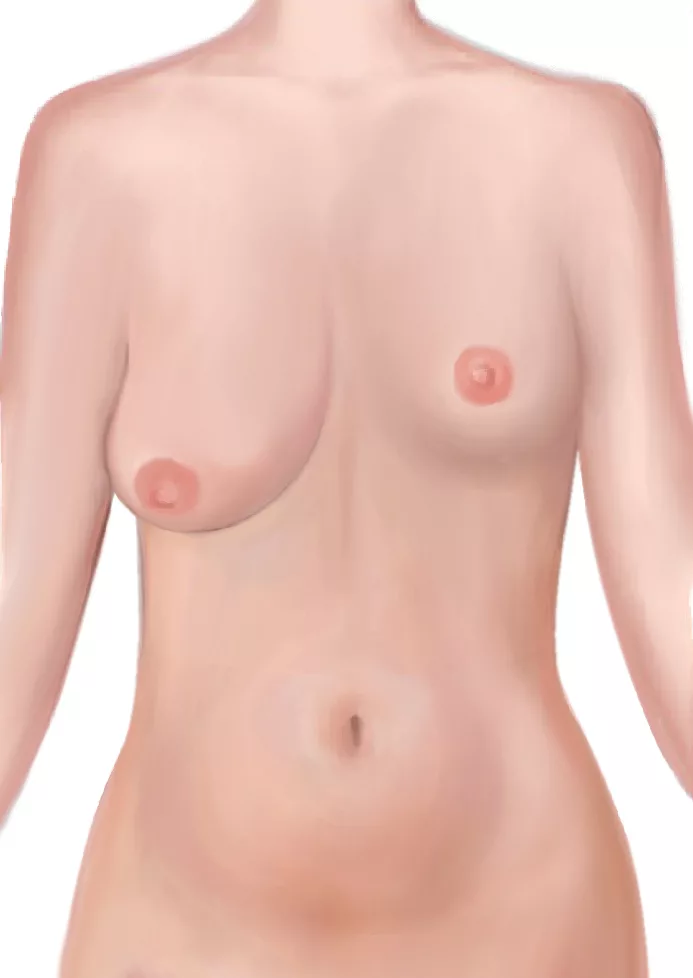
ACCESSORY BREAST TISSUE
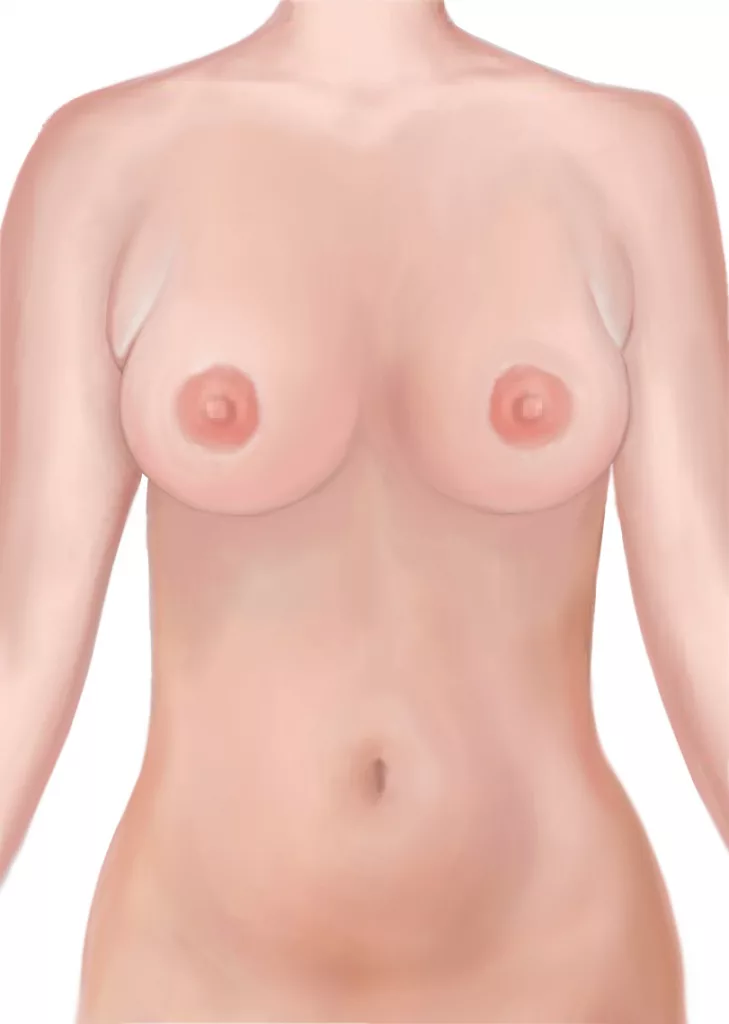
CHEST WALL DEFORMITIES
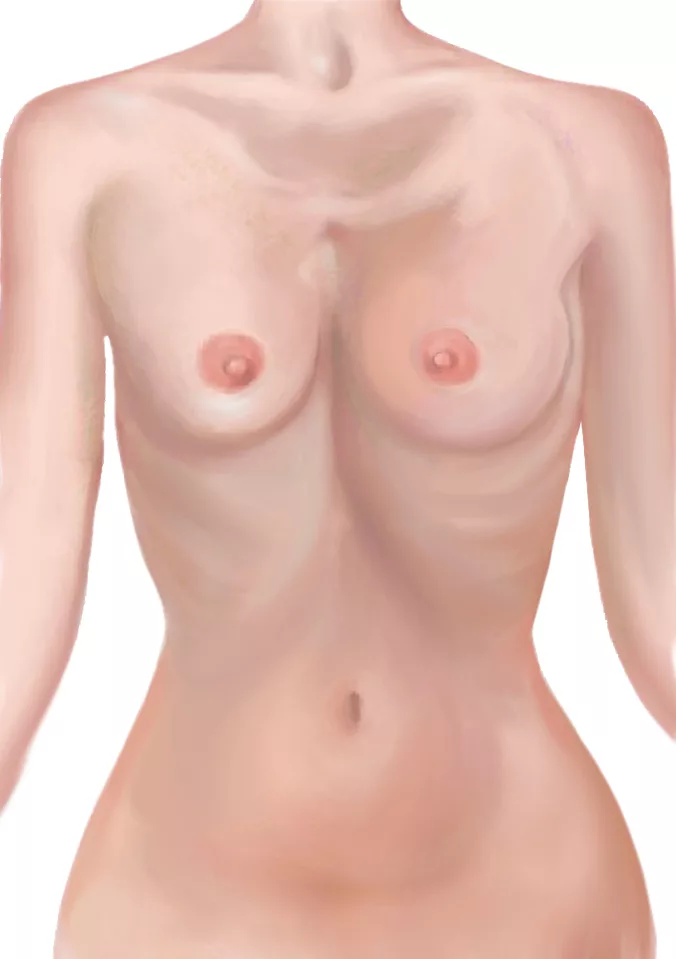
TUBEROUS BREAST
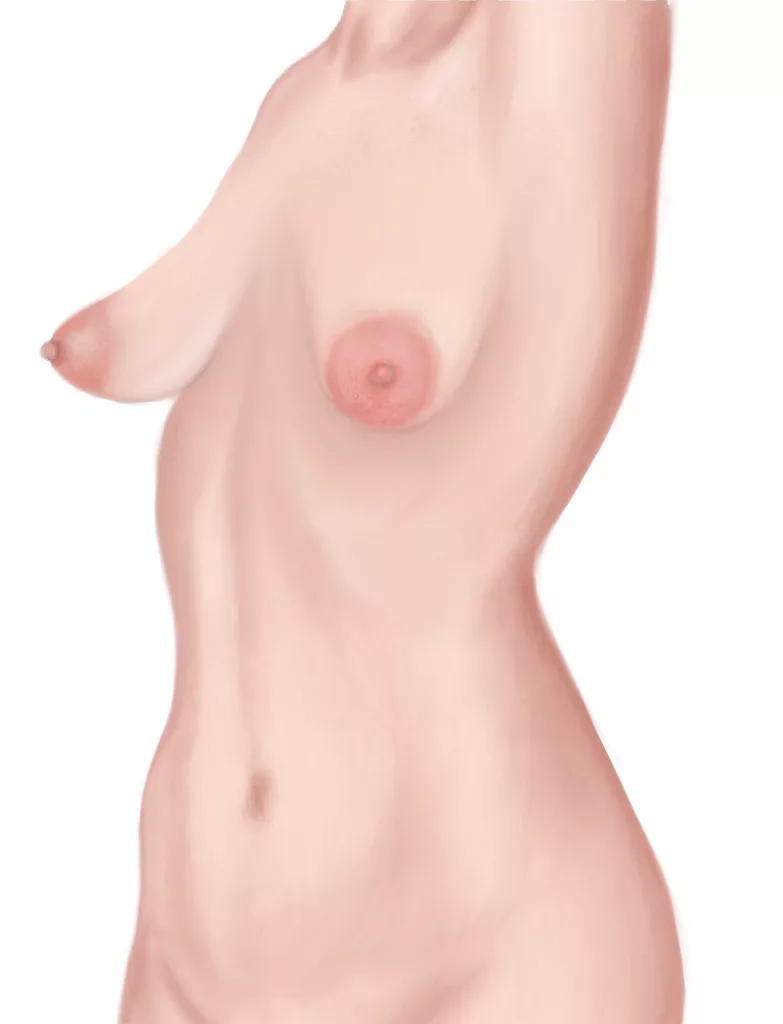
INVERTED NIPPLE
It is a relatively common condition of the nipples that may not interfere with breastfeeding and local sensitivity in most cases, but can still cause aesthetic and psychological discomfort. It can have acquired causes such as local trauma and breast cancer. Treatment varies, including releasing local fibrosis, placing sutures for nipple structuring, and even performing local flaps and fat grafting.
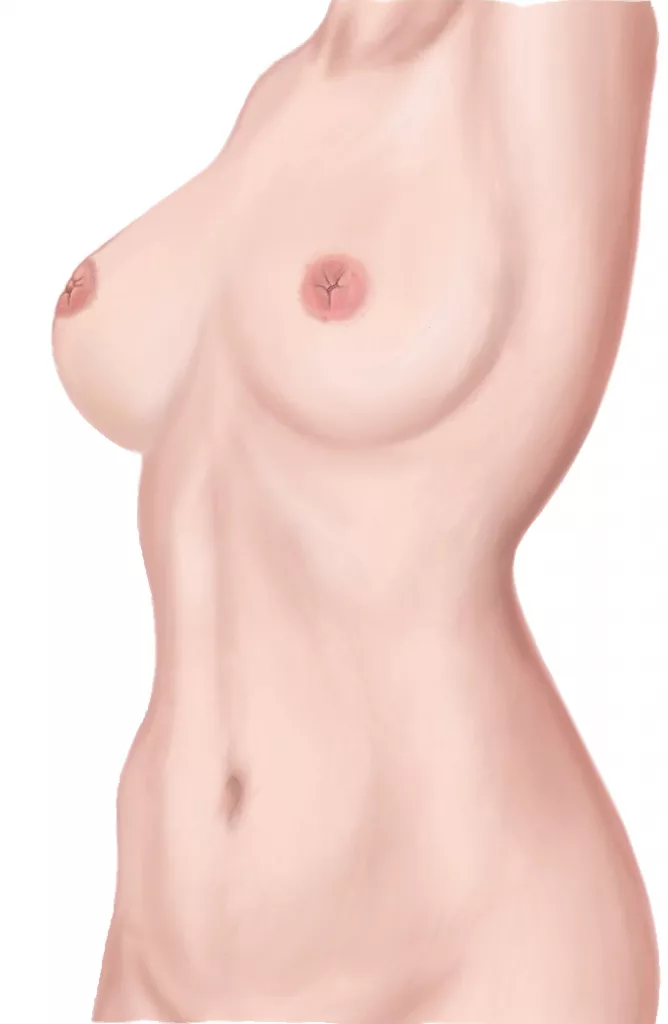
BREAST LUMPS
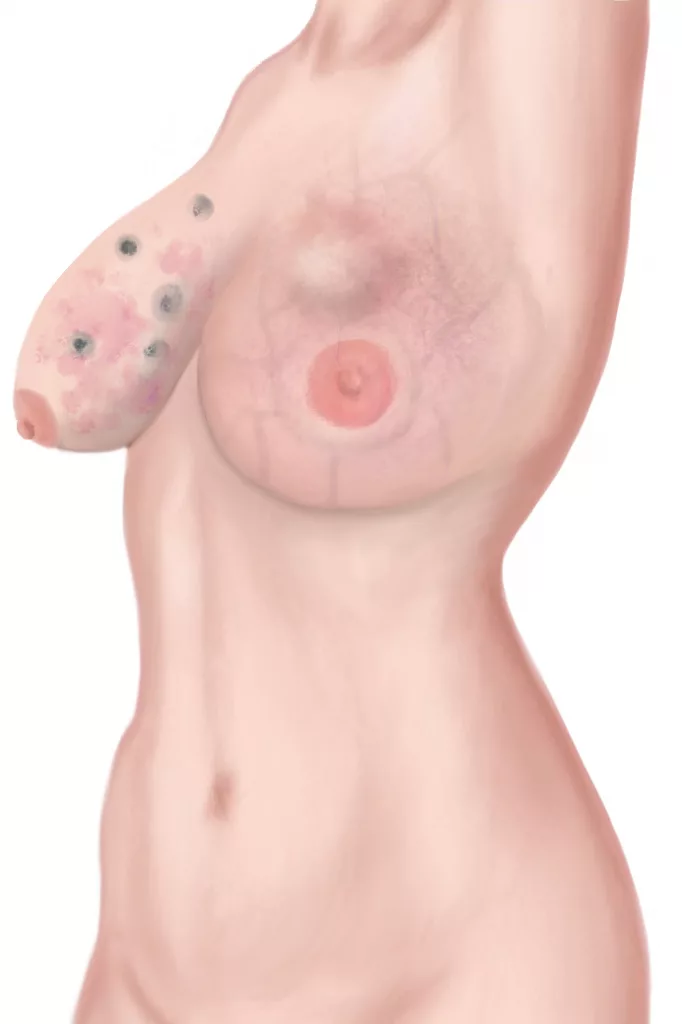
The vast majority of breast lumps are not cancer. They require medical investigation, usually complemented by ultrasonography, mammography, and in some cases, biopsy and MRI. Even excluding the risk of cancer, it is worth remembering that lumps are sometimes palpable and cause discomfort, and can be treated surgically. In these cases, patients may benefit from a combined approach with a plastic surgeon for reconstruction.
Dr. Fernando Amato (CRM 133826) talks about breast reconstruction. In addition to being an organ for breastfeeding, the breast is a symbol of sensuality and plays a fundamental role in the aesthetics of the female body. Breast cancer treatment can be mutilating and cause breast deformities. More important than that is the emotional impact. Reconstruction will depend mainly on how the breast is, that is, its size, volume, shape, and especially on the surgical proposal made by the mastologist.
Hello, I'm Dr. Fernando Amato, a plastic surgeon, and today I will talk about breast reconstruction. Breasts represent much more than a breastfeeding organ. They are a symbol of sensuality and play a fundamental role in the aesthetics of the female body. Breast cancer treatment can be mutilating,
in addition to breast deformities, it causes a significant emotional impact.
In Brazil, it is a woman's right, both in the
SUS and in health plans, to undergo breast reconstruction
during or after cancer treatment.
The best time for surgery is chosen
according to each patient.
It will depend on her desire, as well as various
factors, including her clinical conditions.
Reconstruction will depend mainly
on how this breast is, that is, its size,
its volume, its shape, and, mainly,
on the surgical proposal made by the mastologist.
What will he do?
Quadrantectomy, which is the removal of only
a part of the breast, or mastectomy, which
is the removal of the entire breast.
With this information, for example, reconstruction
can be done only with the use of tissues
remaining from the breast, that is, with flaps,
and depending on the location, it can have a
result similar to a breast reduction
or a mastopexy.
It can be done using silicone implants
or breast expanders.
What is an expander?
The expander is a small balloon that, once
placed, saline is infiltrated in the outpatient clinic
and it grows, gaining skin, to later replace
this expander with a breast implant.
And when a lot of skin is removed for breast removal,
a flap needs to be made, and a flap
is the movement of tissues from other places.
One example of this is the latissimus dorsi muscle flap,
where skin from the back is removed with the muscle,
and it is rotated to the front, and this flap
and this skin cover an implant.
There is also another well-known flap,
which is the TRAM.
This TRAM is an abdominal flap, and the
skin, along with the musculature, is
transferred to the breast to reconstruct the breast,
and the final result of the abdomen can be similar
to an abdominoplasty.
In addition, there are other more refined
breast reconstruction techniques, with the transplantation
of the patient's own tissue to the breast.
For example, from the gluteus and the thigh.
After the breast has been formed, it is possible to create
the areola and nipple, and this can be done
with flaps and grafts.
In addition, a less invasive technique is
micropigmentation.
It is worth remembering that it is also the patient's right
to have plastic surgery on the other breast to make it
more similar to the reconstructed breast.
That's what I had to say about breast reconstruction.
Stay tuned for upcoming videos and
follow us on social media.

In this video, Dr. Fernando Amato, Plastic Surgeon at Instituto Amato, will talk about: What is the Best Surgery for Breast Reconstruction? A controversial topic worth discussing. Get to know Dr. Fernando Amato's channel @DrAmato : https://www.youtube.com/channel/UCMKZgFxE_OYThWk2avl0Xhw?sub_confirmation=1 Check out the channel's exclusive playlist on Plastic Surgery: https://youtube.com/playlist?list=PLgZHHPRpXG58JhiJ6EU1Hy6-e433dKqeU Follow Dr. Fernando on Instagram: @meu.plastico.pro Visit Dr. Fernando's Website: www.plastico.pro Watch the recommended video from the CHANNEL right now: https://bio.amato.io/indicado Watch this video on how to care for the drain in the postoperative period: https://www.youtube.com/watch?v=mnGmQsLPWnw Also watch this video on Hematoma: https://www.youtube.com/watch?v=xY6sN1Fy-Ys https://www.youtube.com/watch?v=56AaGlgVAAc&t=1s
What is the best surgery for
breast reconstruction? Well, I
am Dr. Fernando Amato,
I am a plastic surgeon here at
Instituto Amato, one of the
surgeries I perform most often
are breast surgeries,
especially breast reconstructions.
And today I will talk
about what is the best surgery
for your breast. Obviously, there is no
surgery that meets the demands of all
patients. Breast reconstruction
should always be individualized for the patient
and will be according to the
demand, how the patient
sees herself. What does she have
in the other breast? What is the shape of the thorax? What tissue
does she have that can be used to
reconstruct this breast? So,
we already know that implants are not
the only alternative for
breast reconstruction. In addition to implants,
flaps can be made, but when we say flaps,
we use tissue from
other locations, such as from the
back to the front area,
or even from the abdomen, which are
the most common. We call it TRAM,
which is an acronym for this
type of surgery where we take tissue from the abdomen, like the
muscle, to fill the
breast volume. There are also
possibilities of taking tissue
from other regions and even performing an autotransplant,
where for the transplant, we need
to make a connection between the vessels
of the tissue we are taking, for example, it can be
from the buttocks or thigh, and
we make a connection between the
vessels of this flap with the vessels in the breast. So, this is what we call an autotransplant.
We can also use the latissimus
dorsi muscle. It is an interesting
technique, but it does not
provide much volume to the breast.
So, most of the time we have
to combine it with the use of a breast implant.
It is also possible to use
fat from various regions of the body, but fat has
a limit that it can be
injected and remain in the region,
often if we put in too large a volume, it ends up
absorbing this fat and can
even form cysts and even
infection if we overdo it, so we must
always do it in stages in the breast. Breast reconstruction also
depends on what was removed
from the patient's breast.
There are surgeries that are more
conservative, it is not necessary
to remove the entire breast, which is mastectomy,
and increasingly we have
conservative surgeries, because the
diagnosis of breast cancer
is increasingly early, which is
very good. So, if we identify breast cancer
in an initial phase, it is
possible to perform conservative surgery,
where only a part of the breast is removed.
When only a part is removed,
mammoplasty techniques are used, right? So, often what comes out of the breast is tissue that would come out of the breast in a
mammoplasty, so the patient
ends up having a very favorable aesthetic result
and very similar to someone who
would undergo a mammoplasty or even a
mastopexy. This patient ends up
benefiting greatly, but she also
has to undergo other treatments such as radiotherapy.
And it is obvious that we
need to treat the other breast.
We cannot have different breasts,
beautiful, but different. We have to
make them as symmetrical and harmonious as possible. So,
these are the techniques for
breast reconstruction and, therefore,
we have to individualize them for each
patient, and the most important thing
for someone undergoing breast reconstruction
is to have their treatment individualized according to their
needs, and the patient must
choose and coordinate these choices.
The patient needs to know about these
limitations, these possibilities, the risks of
each technique. What she will have
to do after a few years, whether she will have to replace the
implant, whether she will have to undergo
new fat grafts, whether reconstructions will be done in stages,
whether everything will be done in one surgery,
or if other surgical stages will be necessary.
So, all of this makes a difference for the patient who
needs breast reconstruction, especially breast reconstruction due to
breast cancer. So, if you
know someone who is going to have a mastectomy or
will undergo cancer treatment,
please forward this video. This will probably
help the patient a lot
to clarify some doubts. If you
know someone who had a mastectomy or quadrantectomy
or has already undergone some breast cancer treatment
and is dissatisfied with her breast,
also show her this video, because there are indeed
possibilities to reconstruct
this breast. So, I am Dr. Fernando, a plastic surgeon
here at Instituto Amato, and if you have any
questions, you can comment here in
the comments, like, and share this video.
Thank you very much!
Related articles


Agendar consulta
Precisa de orientação personalizada?
Marque uma avaliação com o Dr. Fernando Amato e tire as suas dúvidas sobre cirurgia plástica.
Falar no WhatsApp