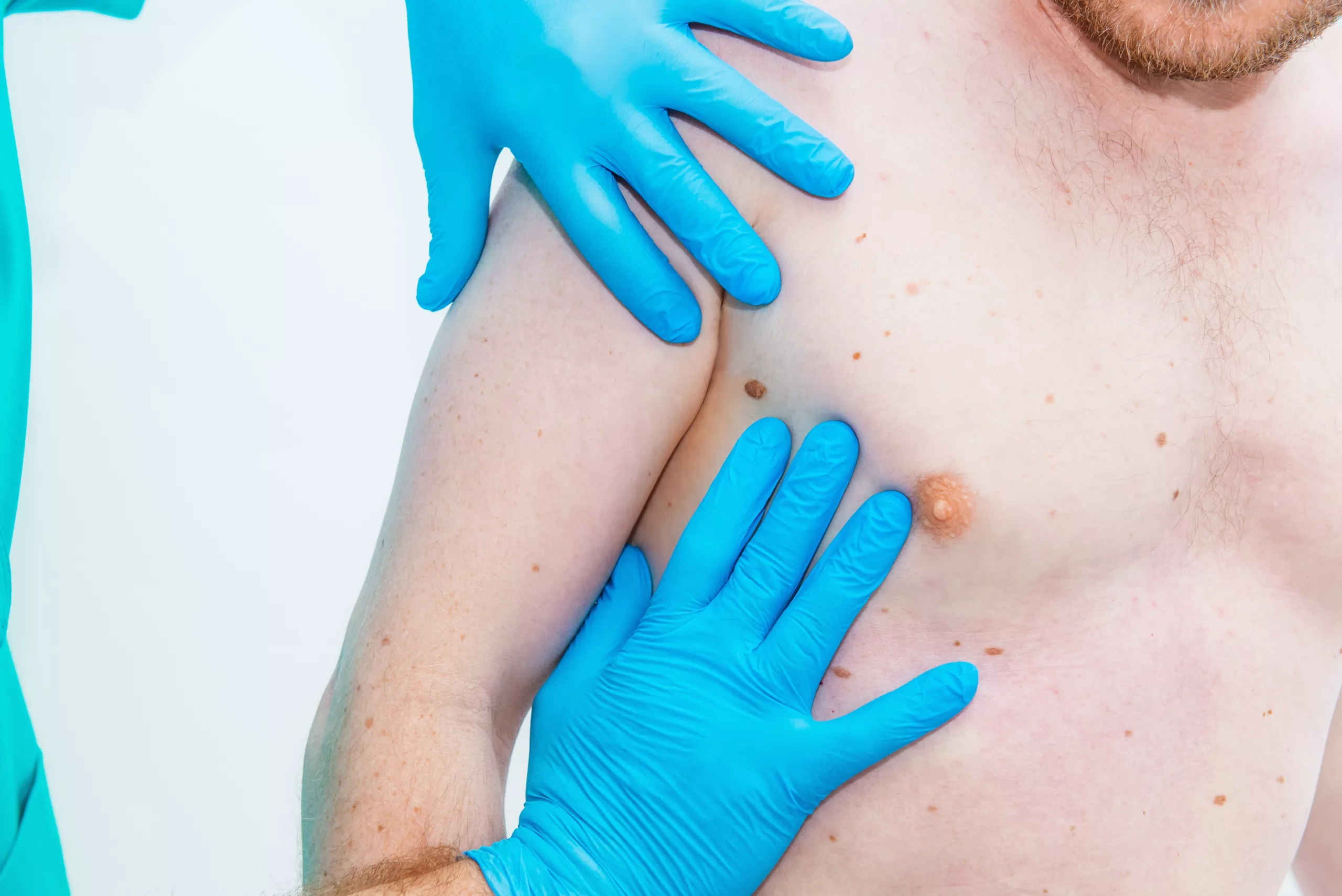
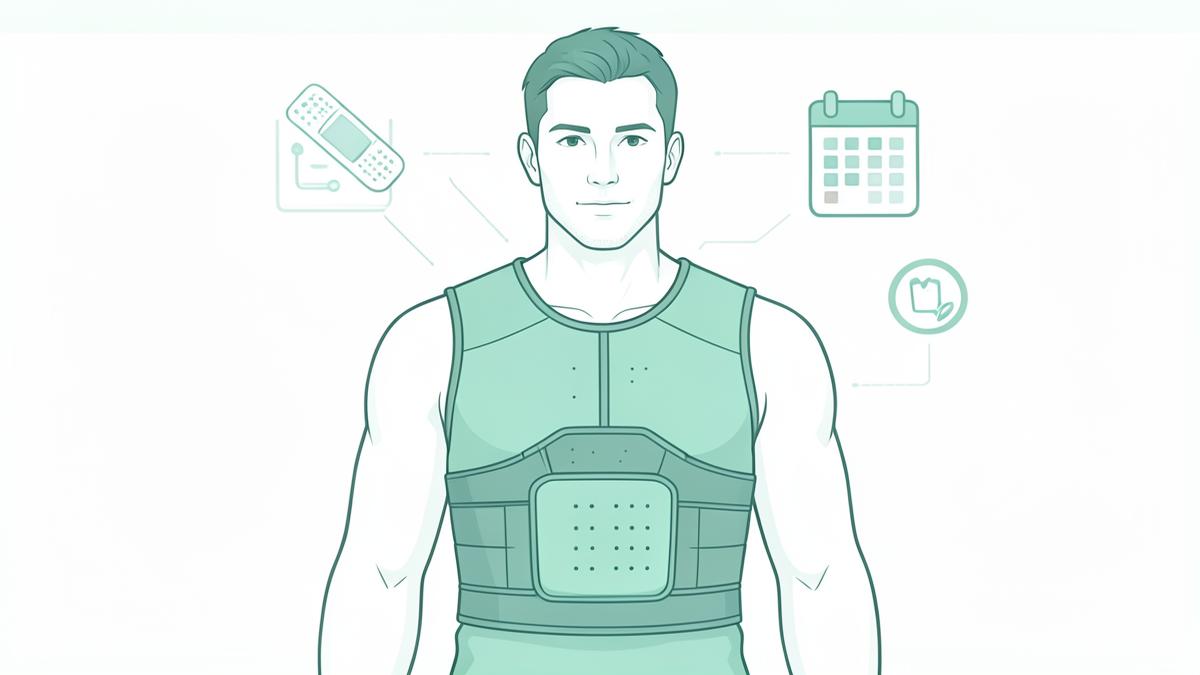
Underwent gynecomastia surgery and eager to return to physical exercise?
Generally, we use elastic compression garments to compress and shape the operated area for the first 30 to 60 days, depending on each case. The return to physical activities must be individualized; each patient is unique, as is their post-operative recovery. Therefore, returning to the gym will only be cleared after evaluations during medical follow-ups.
 But be careful: after returning, exercises should be progressive, starting with low impact and low intensity. For chest, shoulder, and back areas, weight training can usually only be performed after two months from the date of surgery. Be sure to ask your doctor everything, even the simplest doubts. The more information you have, the better your result will be!
#cirurgiaplastica #cirurgiãoplastico #saude #novembroazul #autoestima #saudedohomem #ginecomastia #posoperatorio #drenagemlinfatica
https://youtu.be/APqgIBISk7w DescriptionHello, I'm Dr. Fernando Amato.
Today I'm going to talk about gynecomastia.
Gynecomastia is the enlargement of the mammary gland
in men; men can have an enlarged mammary gland.
The most affected age group is adolescents,
but of course, when this enlargement of the mammary gland is identified,
an adequate investigation must be carried out,
because there are diseases that can occur at the same time; it can even be a symptom of
a much more serious disease.
Treatment can even be done with medication
in an initial phase, but when the breast has grown quite a lot
and there has been skin distension,
the treatment is surgical and is indicated when symptoms persist
for more than one or two years.
What is the surgical treatment like?
An incision is made around the areola to remove the gland,
and part of the gland is removed. Often, the patient already has a lot of skin,
so skin adjustment can be done with a slightly larger incision, and when there is excess fat along with gynecomastia,
liposuction can also be performed.
TranscriptHello, I'm Dr. Fernando Amato.
Today I'm going to talk about gynecomastia.
Gynecomastia is the enlargement of the mammary gland
in men; men can have an enlarged mammary gland.
The most affected age group is adolescents,
but of course, when this enlargement of the mammary gland is identified,
an adequate investigation must be carried out,
because there are diseases that can occur at the same time; it can even be a symptom of
a much more serious disease.
Treatment can even be done with medication
in an initial phase, but when the breast has grown quite a lot
and there has been skin distension,
the treatment is surgical and is indicated when symptoms persist
for more than one or two years.
What is the surgical treatment like?
An incision is made around the areola to remove the gland,
and part of the gland is removed. Often, the patient already has a lot of skin,
so skin adjustment can be done with a slightly larger incision, and when there is excess fat along with gynecomastia,
liposuction can also be performed.
https://youtu.be/APqgIBISk7w DescriptionIn this video, Dr. Fernando Amato, Plastic Surgeon at Instituto Amato, will talk about: Know EVERYTHING about Gynecomastia. A controversial topic worth discussing. These patients suffer from their body contour; they often feel embarrassed to take off their shirt in front of others or even wear certain T-shirts that are more revealing. The indication for surgery, in most cases, is aesthetic, but in some patients, this breast enlargement, in addition to causing loss of self-esteem and quality of life, in exacerbated cases, such as large-volume breasts, can present local changes such as dermatitis and skin infections in fold regions due to friction.
TranscriptHello! I'm Dr. Fernando Amato, and today I'm going to talk about gynecomastia.
Do you know what gynecomastia is? Gynecomastia is the enlargement of male breasts, primarily due to the enlargement of the mammary gland, but breast enlargement in men can also occur due to fat.
This is what we call pseudogynecomastia. Generally, in gynecomastia, where there is an enlargement of the gland, there is also an accumulation of fat.
This fat deposit.
Well, the causes of gynecomastia are varied.
So, we don't call it a disease in itself, but a sign, a symptom, which is the enlargement of the breasts.
There are three main peaks of breast enlargement in men.
One is during the breastfeeding phase when the baby is still nursing, and due to the influence of the female hormone from the mother's breast, which comes through the milk, this hormone comes through the milk, there is a stimulation of the mammary gland. Generally, in babies, the gland enlarges a bit and then it decreases and returns to normal.
The second moment of breast enlargement in men is during puberty, when there is a hormonal imbalance, and yes, breast enlargement can happen, and it usually regresses. The third moment of mammary gland enlargement, which is also physiological, is during andropause, that is, when male hormones drop, and yes, there is an influence on the mammary gland, causing it to enlarge during this andropause when the man loses male hormones.
So, there are these three physiological causes, but there are also other causes.
Among them are testicular cancer, lung cancer, a differential diagnosis since we are talking about cancer, is breast cancer; it's not gynecomastia. Breast cancer can present with gland enlargement, with a nodule,
so it is a differential diagnosis that needs to be investigated.
There are also uses of medications, use of hormones, people who use anabolic steroids, hormones to increase muscle volume can also have this stimulation in the mammary gland and enlargement of the gland.
Obesity is also important to know why? There is an enzyme called aromatase. This enzyme converts male hormones into female hormones, and estrogen. That's why there is an increase in gynecomastia in obese patients. Also, the use of some drugs, such as marijuana, can also cause this imbalance and influence breast volume. Among these causes, there are several causes, and many cases end up being idiopathic, meaning they remain undiagnosed, and it is the most common and what frustrates patients the most not knowing the cause, what led to this glandular enlargement.
Most likely, it could have been one of these peaks, especially during puberty, when the adolescent experiences glandular enlargement, and it doesn't regress.
It regresses in almost all cases during puberty, but in about 5% to 10% of cases, it doesn't regress. When there is a persistence of these idiopathic cases, not identifying a cause, medicinal. What caused this, not being able to identify after two years,
the treatment ends up being surgical, mainly for aesthetic reasons, psychological, self-confidence, but there are also extreme cases that can even have breast sagging, can have chafing, as if it were a large breast.
All the discomforts that a large breast already causes in a woman can cause in a man, and with a negative psychological impact.
And how is it, what do we do, what exams do we end up ordering to investigate?
We order thyroid exams, we end up ordering hormonal exams, testosterone, estrogen, we order hormones related to the pituitary gland, we order breast ultrasound, mammography to rule out nodules or other causes,
the differential diagnosis. And the surgery,
what is the surgery like? The surgery consists of the resection of the excess gland.
Note, it's the excess gland.
We don't perform a mastectomy, which is the removal of the entire gland.
We need to resect up to the nipple.
So, since we preserve the nipple, we often end up leaving a little bit of the gland, and this can even favor a recurrence of gynecomastia.
Therefore, investigation is important; investigating gynecomastia helps us even avoid a recurrence after surgical treatment.
So, for gynecomastia, we perform this gland resection, and it can be associated with liposuction to remove this excess fat, and sometimes these patients who have a lot of skin,
we need to perform skin resection and repositioning.
Well, this is what I can help you understand about gynecomastia.
If you have any questions, comment, ask, don't hesitate to ask.
Like and share this video with whoever might need it.
Thank you!
Agendar consulta
Precisa de orientação personalizada?
Marque uma avaliação com o Dr. Fernando Amato e tire as suas dúvidas sobre cirurgia plástica.
Falar no WhatsApp