- Surgeries, Face and Head
Lower Blepharoplasty: Which Technique is Best?
- April 26, 2024
- By Fernando Amato
Ocular Rejuvenation: Choosing Between Transconjunctival and Transcutaneous Blepharoplasty
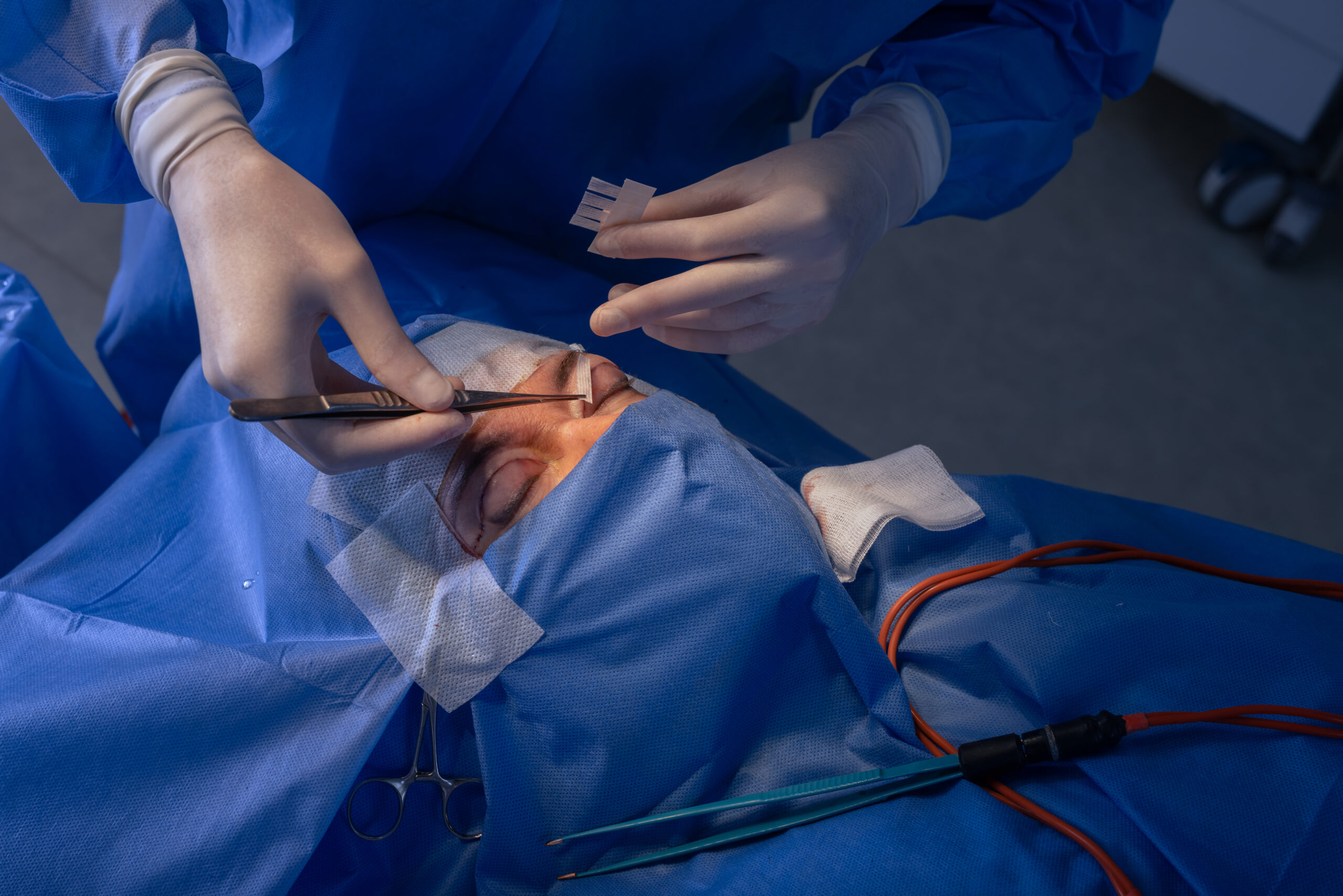
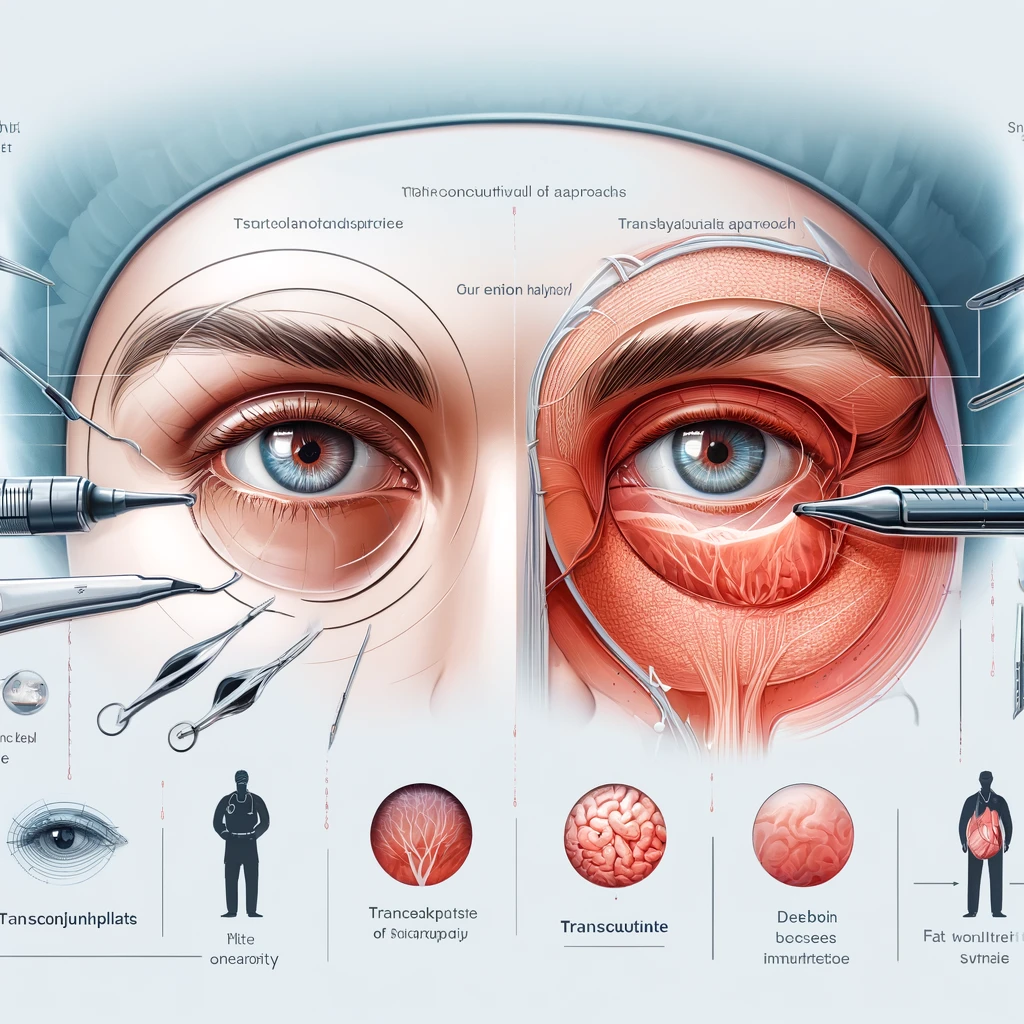
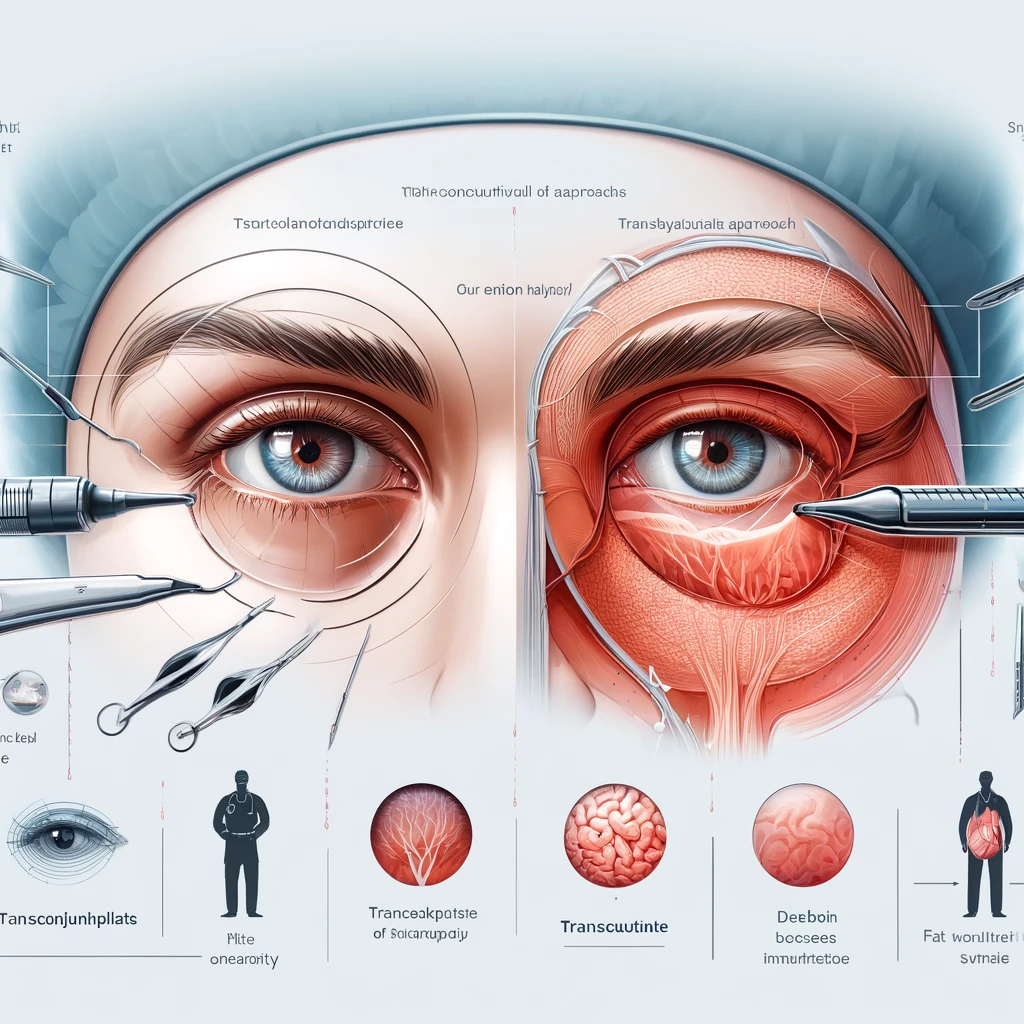
Lower blepharoplasty is an aesthetic and functional procedure that aims to rejuvenate the area around the eyes. This article discusses two main approaches: transconjunctival and transcutaneous, detailing their advantages, limitations, and specific indications.
- 🌟 Lower blepharoplasty is a key technique for oculofacial rejuvenation.
- 🛠️ Two main approaches: transconjunctival and transcutaneous.
- 🔍 Transconjunctival is ideal for removing fat bags without excess skin.
- 🎨 Transcutaneous addresses both fat and excess skin.
- 🔄 The choice of technique depends on the individual needs of the patient.
Transconjunctival Approach
The transconjunctival technique, which leaves no visible scars, is ideal for patients with fat bags under the eyes but no excess skin. However, this minimally invasive method allows for faster recovery and presents a reduced risk of complications such as ectropion (retraction of the lower eyelid with scleral show).
Transcutaneous Approach
The transcutaneous approach is more comprehensive, allowing for the treatment of excess skin in addition to fat bags. This technique, suitable for patients who require correction of both fat and skin, may result in a discreet scar below the eyelashes.
Clinical Decision
The choice between techniques depends on a careful assessment of the patient's individual needs. While transconjunctival blepharoplasty is preferred for those with primary concerns about fat bags, transcutaneous is recommended for patients who also have excess skin.
Final Considerations on Lower Blepharoplasty
Both techniques have their advantages, with the choice depending on the patient's specific rejuvenation goals and anatomical characteristics. Therefore, detailed consultations with an experienced plastic surgeon are essential to determine the most suitable approach for each case.
For more information on each technique and how they can address your specific ocular rejuvenation needs, consider scheduling a consultation with Dr. Fernando Amato, a specialist in plastic surgery.
Frequently Asked Questions:
- What is lower blepharoplasty?
- It is a surgical procedure to correct problems in the lower eyelid, including fat bags and excess skin.
- What are the advantages of the transconjunctival approach?
- Less invasive, no visible scars, faster recovery, and reduced risk of ectropion.
- And the advantages of the transcutaneous approach?
- Allows for treating excess fat and skin, making it ideal for patients who require more extensive corrections.
- Which technique is most suitable for me?
- It depends on your specific needs, such as the amount of excess skin and fat. Thus, a consultation with an experienced surgeon can help determine the best option.
- Can blepharoplasty be combined with other procedures?
- Yes, it is often combined with other facial rejuvenation procedures for more comprehensive results.
- How long does recovery take?
- It varies depending on the technique used, but patients generally return to normal activities within one to two weeks.
- Are there risks associated with blepharoplasty?
- Like any surgery, there are risks, but they can be minimized by choosing a qualified surgeon and following post-operative care instructions.
- Are the results of blepharoplasty permanent?
- Results can be long-lasting, but the natural aging process will continue to affect the area around the eyes.
- What are the recommended post-operative care measures?
- They include rest, application of cold compresses to reduce swelling, and following your surgeon's specific guidelines.
- Is it possible to correct both eyes in the same surgery?
- Yes, lower blepharoplasty generally treats both eyes in a single surgical session.
Keywords: #Blepharoplasty #OcularRejuvenation #Transconjunctival #Transcutaneous #PlasticSurgery
Related articles



Agendar consulta
Precisa de orientação personalizada?
Marque uma avaliação com o Dr. Fernando Amato e tire as suas dúvidas sobre cirurgia plástica.
Falar no WhatsApp