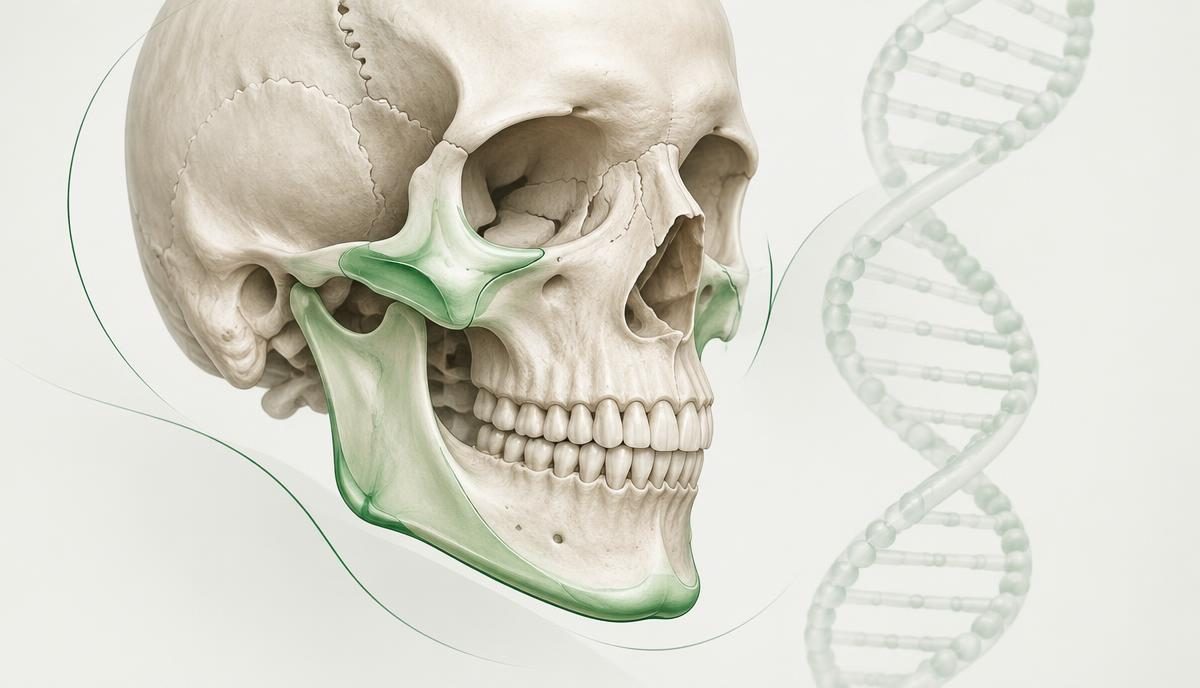
Treacher Collins syndrome, also known as mandibulofacial dysostosis, is a rare genetic condition characterized by anomalies in the development of facial bones and other tissues. Its presentation ranges from mild to more complex, with distinct care needs for each individual. This article presents its main features, causes, diagnosis, and treatment options.
Clinical features of Treacher Collins syndrome
Features can vary considerably and include:
- A small or recessed jaw and chin, with a convex facial profile and a relatively prominent nose.
- Downward-slanting palpebral fissures and lower eyelid abnormalities, such as colobomas—notches or defects in eyelid formation.
- Hypoplasia, or reduced development, of the zygomatic bones, which form the cheekbones.
- Dental and jaw anomalies, a high-arched palate, or, in some cases, a cleft palate.
- Small or malformed ears and hearing loss related to anomalies of the ear canal or middle ear ossicles.
In more complex cases, breathing and feeding difficulties may occur, especially during infancy. Intelligence is generally preserved. Facial appearance does not indicate a person's intellectual capacity.
Genetics and etiology
The syndrome can be associated with pathogenic variants in the TCOF1, POLR1B, POLR1C, or POLR1D genes, which are involved in ribosome biogenesis and embryonic facial development.
Inheritance is most commonly autosomal dominant, linked to TCOF1, POLR1B, or POLR1D. There are also autosomal recessive forms associated with POLR1C and, rarely, POLR1D. Approximately 55% to 61% of dominant inheritance cases result from a new variant, termed de novo, without being inherited from the parents. “De novo” describes the origin of the variant, not a different inheritance pattern.
Genetic counseling helps clarify the recurrence risk within the family based on test results and the identified inheritance pattern.
Diagnosis
Diagnosis is based on clinical evaluation and can be confirmed by genetic testing. Investigation also guides differential diagnosis and family counseling. Results should be interpreted by qualified healthcare professionals: a variant of uncertain significance, on its own, neither confirms nor rules out the syndrome.
Treatment of Treacher Collins syndrome
Care is multidisciplinary and individualized, taking into account function, development, and well-being. Breathing difficulties require priority attention. Approaches may include:
- Breathing and feeding: assessment of the airway, sleep, swallowing, and growth, with supportive measures as needed.
- Orthodontics and craniofacial surgery: procedures such as mandibular distraction and zygomatic reconstruction may be indicated in selected cases. The choice and timing depend on anatomy, age, and functional needs; they are not mandatory for everyone.
- Eye care: ophthalmologic follow-up and, when indicated, eyelid reconstruction to protect the eyes and improve function. The technique depends on the specific anomaly found.
- Hearing rehabilitation: hearing aids, including bone-conduction devices in selected cases, along with speech therapy follow-up.
- Psychosocial support: support for the individual and the family, respecting their priorities and addressing the stigma associated with facial differences.
Conclusion
Treacher Collins syndrome requires personalized follow-up throughout development. Collaboration among specialists in genetics, craniofacial surgery, otolaryngology, ophthalmology, dentistry, speech therapy, and psychology contributes to comprehensive care. Decisions should be shared with the individual and their family, without promises of outcomes.
This content is for informational purposes only and does not replace an individualized medical evaluation.
To learn who conducts the plastic surgery evaluation, see Dr. Fernando Amato's team.
References
- GeneReviews: Treacher Collins Syndrome — updated June 20, 2024.
- MedlinePlus Genetics: Treacher Collins syndrome.
- Children's Hospital of Philadelphia: Treacher Collins Syndrome.
Dr. Fernando Amato — CRM-SP 133826 · RQE 51573 and 51436.
Agendar consulta
Precisa de orientação personalizada?
Marque uma avaliação com o Dr. Fernando Amato e tire as suas dúvidas sobre cirurgia plástica.
Falar no WhatsApp