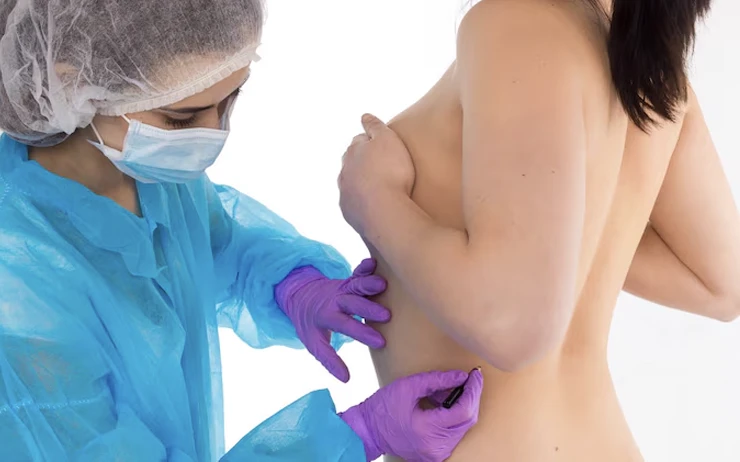
Liposuction is one of the most popular aesthetic procedures in the world, used to remove excess adipose tissue from specific areas of the body. Despite its popularity, many people still have doubts about the risks and complications associated with this technique. This article aims to clarify these points based on a systematic review and meta-analysis published in 2024, along with the limitations that must be considered when interpreting its results.
Introduction to Liposuction
Liposuction is a surgical technique popularized by surgeons such as Illouz and Fournier in the 1980s. Since then, the technique has evolved. Its goal is to treat localized fat deposits and improve body contour; it is not a weight loss treatment.
- In the 2024 meta-analysis, the overall estimated complication rate was 2.62%—not a prediction of individual risk.
- Contour deformity was the most common complication in the review, with an estimated rate of 2.35%.
- Hyperpigmentation and seroma are less common complications, with prevalences of 1.49% and 0.65%, respectively.
- Venous thromboembolism had an estimated rate of 0.017% in this review; although rare, it can be fatal.
- Some complications can be treated in the office; others require hospitalization or revision surgery.
Risks and Complications of Liposuction
The review by Comerci and colleagues gathered 39 studies and 29,368 patients. The overall estimated complication rate was 2.62% (95% confidence interval: 1.78% to 3.84%). The most common complications include contour deformity (2.35%), hyperpigmentation (1.49%), seroma (0.65%), and hematoma (0.27%).
These estimates refer to liposuction as an isolated procedure; combined surgeries and high-definition liposuction were excluded. The studies differed from one another and in their methods of recording complications. Therefore, the percentages should not be added together or used as a guarantee of safety for a specific patient.
Reference: Comerci AJ et al. Risks and Complications Rate in Liposuction: A Systematic Review and Meta-Analysis. Aesthet Surg J. 2024;44(7):NP454–NP463.
Contour Irregularities and Local Complications
- Contour Deformity: In the cited review, contour deformity was the most common complication, with an estimated rate of 2.35%. It may be related to uneven fat removal and individual skin and healing characteristics. In some cases, surgical revision may be necessary.
- Hyperpigmentation: Hyperpigmentation, or darkening of the skin, had an estimated rate of 1.49% in the review. Its progression and the need for treatment must be evaluated individually; complete resolution cannot be guaranteed.
- Seroma: A seroma is the accumulation of serous fluid in the treated area, with an estimated rate of 0.65% in the cited review. Treatment depends on the volume and progression and may include needle aspiration or drainage performed by the medical team.
- Hematoma: Hematomas are collections of blood and had an estimated rate of 0.27% in the review. They should not be confused with ecchymoses, the common bruising seen after surgery. Severity varies.
Potentially Serious Complications
- Venous Thromboembolism: Although it is a rare complication (0.017%), venous thromboembolism can be fatal. Risk assessment and preventive measures must be individualized.
- Infection: The review estimated infection at 0.020%, but this figure does not apply equally to all situations. Treatment requires medical evaluation and may include antibiotics, drainage, or hospitalization.
- Skin Necrosis: Skin necrosis, or the death of skin tissue, had an estimated rate of 0.046% in the review and may require surgical intervention.
Advances in Liposuction
There are ultrasound-, laser-, and radiofrequency-assisted techniques. The cited meta-analysis did not demonstrate that these technologies reduce complications compared to other techniques. Energy-based devices can also cause thermal injuries. The choice should consider the indication and the surgical team's experience.
Importance of Preparation and Postoperative Care
Proper preparation for surgery and postoperative care are essential to minimize risks. Patients must strictly follow medical instructions, including completing preoperative tests and smoking cessation as advised by their physician. Smoking increases the risk of complications.
Conclusion
Liposuction showed a low complication rate in the cited review, but it is not risk-free. A detailed understanding of specific risks can improve preparation for both patients and healthcare professionals, resulting in better clinical outcomes and greater patient satisfaction.
If you are considering liposuction, it is important to consult a specialized plastic surgeon to discuss your expectations and understand all the risks and benefits associated with the procedure. Schedule a consultation with Dr. Fernando Amato, Plastic Surgeon, for a detailed and personalized evaluation.
Questions and Answers
- What are the most common complications of liposuction?
- The most common complications include contour deformity, hyperpigmentation, and seroma.
- Is liposuction safe?
- It can be performed with risk-reduction measures, but zero risk does not exist. The 2.62% estimate from the review does not replace individual evaluation.
- What is a seroma?
- A seroma is the accumulation of serous fluid in the treated area, the treatment of which may include aspiration or drainage by the medical team, depending on evaluation.
- What are the risks of infection after liposuction?
- The cited review found an estimated rate of 0.020%, but infections can be severe and require medical evaluation and treatment.
- Is bruising common after liposuction?
- Bruising (ecchymosis) is common. Hematomas are collections of blood, had an estimated rate of 0.27% in the review, and may require treatment.
- What is a contour deformity?
- These are irregularities on the skin surface, which may be related to fat removal, skin quality, and healing.
- Is hyperpigmentation permanent?
- It may improve, but it can also persist. Treatment depends on medical evaluation, with no guarantee of complete resolution.
- How can the risk of complications in liposuction be reduced?
- Following all medical instructions, completing preoperative tests, and avoiding smoking are essential measures.
- Who is a candidate for liposuction?
- Indication is individual. Overall health, skin quality, smoking status, expectations, and risks must be evaluated by a plastic surgeon. Having localized fat alone does not guarantee candidacy.
- When can I see the final results of liposuction?
- Final results are usually visible after a few months as swelling subsides; the timeline varies depending on the extent of the surgery and individual recovery.
Informational content; does not replace medical consultation.
Dr. Fernando Amato — CRM-SP 133826 · RQE 51573 and 51436.
Additional sources
Agendar consulta
Precisa de orientação personalizada?
Marque uma avaliação com o Dr. Fernando Amato e tire as suas dúvidas sobre cirurgia plástica.
Falar no WhatsApp